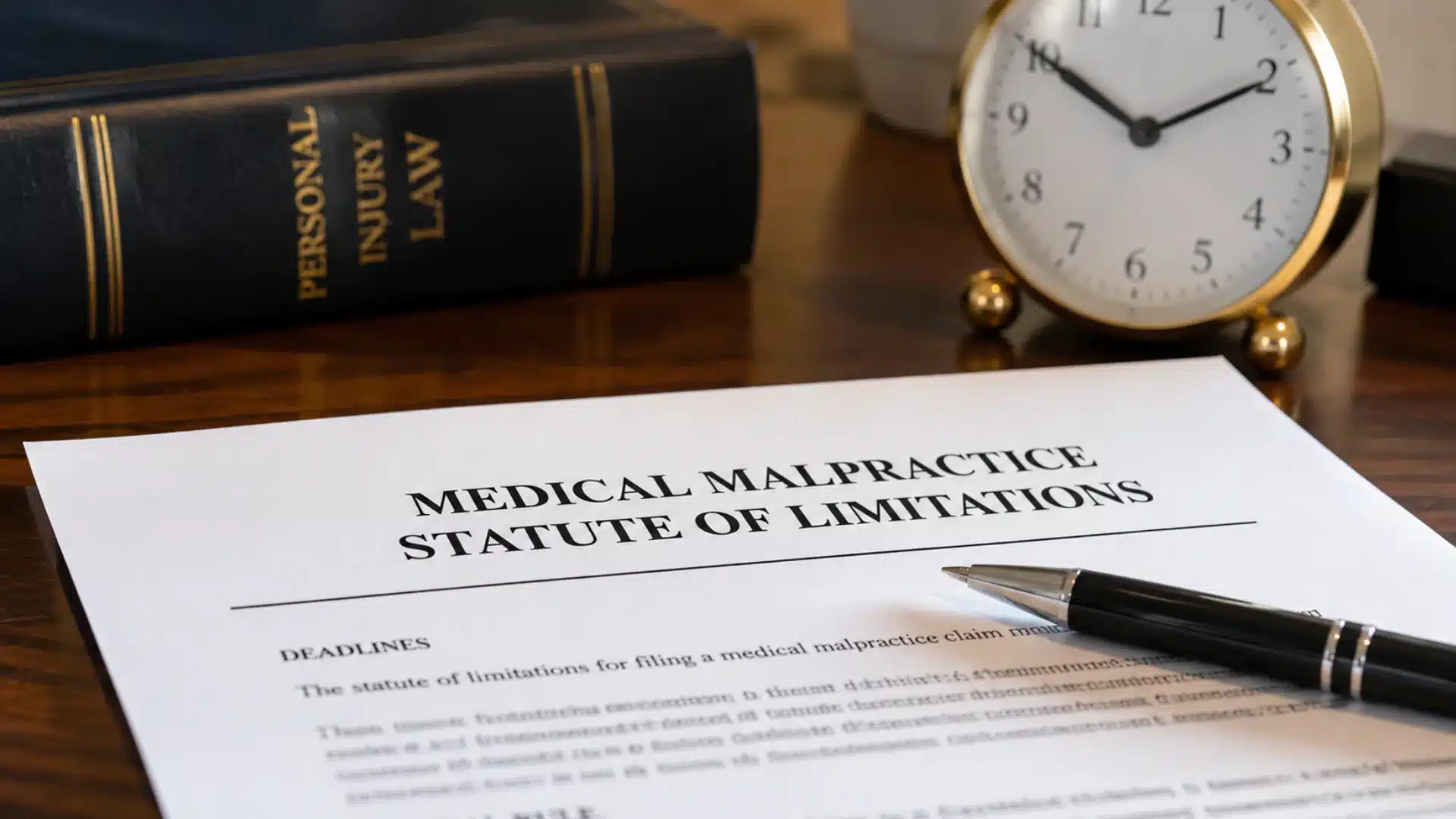
The statute of limitations for medical malpractice is the legal deadline by which a patient must file a lawsuit after being harmed by negligent medical care.
Most states set this window at two to three years, though the exact deadline depends on where the injury occurred, when it was discovered, and whether any exceptions apply.
Missing this deadline generally ends the case entirely, no matter how strong the evidence is.
If you or someone you love was hurt by negligent medical care, understanding your timeline is the first thing you need to do, not the last.
This guide covers how medical malpractice deadlines work nationally, what Colorado law specifically requires, and which exceptions can shift your clock.
What Counts as Medical Malpractice?
Medical malpractice occurs when a licensed healthcare provider fails to meet the accepted standard of care, and that failure causes measurable harm to the patient.
The standard of care is not perfection; it is what a reasonably competent provider in the same field would have done under the same circumstances.
Common examples include:
- Misdiagnosis or delayed diagnosis of a serious condition
- Surgical errors, including wrong-site surgery or retained instruments
- Medication errors, wrong drug, wrong dose, or harmful drug interactions
- Failure to obtain informed consent before a procedure
- Birth injuries caused by negligent obstetric care
- Inadequate follow-up or monitoring after treatment
To have a viable medical malpractice case, a patient generally must show that a provider-patient relationship existed and that the provider was negligent.
That negligence should have directly caused an injury, and that the injury produced actual damages. Proving all four elements is not simple, which is why retaining an experienced attorney early matters.
How the Statute of Limitations for Medical Malpractice Works Nationally
Medical malpractice deadlines are governed by state law, not federal law. Each state sets its own statute of limitations, and they are not uniform.
Across the country, filing windows typically range from one to four years, with most states landing at two years.
Two separate rules often work together to determine the actual deadline:
- Statute of limitations: The standard window to file, usually measured from the date of injury or discovery.
- Statute of repose: A hard outer limit that cuts off claims after a set period from the negligent act, regardless of when the injury was discovered.
Medical malpractice cases turn heavily on which deadline governs a specific claim, and that calculation depends on when the harm occurred, when it was discovered, and whether any exceptions apply.
Note: This article is for general informational purposes only. It is not legal advice. Laws vary by state and change over time. Consult a licensed attorney before taking any action on a potential claim.
Discovery Rule and When the Clock Starts

In most states, the discovery rule sets the deadline when a patient knew or should have known about the injury and its possible link to medical care, since some errors are not immediately obvious.
Wrong-site surgery causes immediate, obvious harm. A misdiagnosis may appear months later, often after worsening symptoms or a second opinion reveals the original medical error.
Courts may start the clock when a reasonable patient would investigate warning signs and connect them to possible medical error, even without formal knowledge of negligence.
Factors courts often weigh include:
- Whether symptoms suggested something had gone wrong
- Whether available medical records could have revealed the issue
- Whether the patient sought a second opinion
Medical Malpractice Deadlines by State and Recent Changes
Several states revised their medical malpractice deadlines in 2024 and 2025. According to the National Conference of State Legislatures, state medical liability laws are among the most frequently updated areas of civil law.
- Louisiana: Extended its filing deadline from 1 year to 2 years, effective July 1, 2024.
- Utah: Expanded the discovery period from 2 years to 4 years and the statute of repose from 4 years to 8 years, effective May 2025.
- Missouri: Updated guidance reflects a 2-year filing deadline, replacing the previous 5-year period.
- Minnesota: Recent updates reflect a 2-year deadline instead of the former 4-year period.
- North Carolina: Continues to use a 3-year limitations period but allows extended filing windows for certain claim categories.
These changes may apply differently depending on the filing date, injury date, and the law in effect when the claim arose. An attorney can determine which version of the law governs your case.
Statute of Limitations for Medical Malpractice in Colorado
Colorado malpractice claims generally have a 2-year filing deadline from the date of injury or discovery, plus a 3-year repose period. Warning signs can start the clock before formal diagnosis or a second opinion.
Exceptions that can extend or pause Colorado’s deadline
Exception How it works Foreign objects left in the body The 2-year clock typically starts when the object is discovered and may override the 3-year repose period. Deliberate concealment If a provider knowingly concealed negligence, the clock may start when the concealment was or should have been discovered. Minors under age 6 A lawsuit may generally be filed any time before the child’s eighth birthday. Wrongful death The wrongful death deadline usually begins on the date of death rather than the date of the underlying malpractice. Defendant unavailable The clock may pause while the defendant is out of state or cannot be served. Continuing treatment If the same provider continued treating the same condition, the repose period may begin from the last treatment date. Colorado usually requires a certificate of review in malpractice lawsuits. A qualified medical professional must support the claim, or the case may be dismissed.
Special Rules for Public Hospitals in Colorado
Patients injured at a public hospital, such as Denver Health, the University of Colorado Hospital, or a county-run facility, face a shorter and stricter process under the Colorado Governmental Immunity Act (CGIA).
Before filing a lawsuit against a public entity, Colorado law requires the injured party to file a written notice of claim within 182 days (roughly six months) of discovering the injury.
This notice requirement is separate from the two-year statute of limitations. Missing the 182-day notice window can permanently bar the claim, even if the lawsuit itself would still be timely.
If you received care at a public or government-affiliated medical facility, contact an attorney as early as possible. The notice deadline runs much faster than the standard malpractice clock, and it applies even when the injury itself is not yet fully understood.
Common Exceptions that Can Shift the Deadline
Several exceptions apply across many states, not just Colorado. If any of these apply to your situation, the standard filing window may not be the right starting point.
- Minors: Most states extend or pause the clock for patients who were children when the harm occurred. The exact age threshold and filing window vary by state.
- Mental incapacity: Some states toll the deadline while a patient lacks the mental capacity to file.
- Fraudulent concealment: If the provider or facility actively concealed the negligence, the deadline typically starts when the concealment is discovered.
- Foreign objects: Most states treat retained surgical items as a separate category, often allowing the discovery rule to override the standard repose period.
- Wrongful death: When malpractice results in death, the filing window usually starts at the date of death rather than the date of the negligent act.
When to Call a Medical Malpractice Attorney


Some situations make independent research genuinely risky. Contact an attorney as soon as possible if your case involves criminal charges, major financial losses, deadlines, injuries, or complex legal disputes.
- The two-year deadline (or your state’s equivalent) is approaching
- The injury was discovered long after the treatment occurred
- Medical records are incomplete, disputed, or difficult to obtain
Early attorney review protects evidence, secures witnesses, and helps meet deadlines, such as a certificate of review, before valid claims lose momentum.
Conclusion
The statute of limitations for medical malpractice is strict. Courts strictly enforce deadlines, and late claims usually cannot move forward, even when the case has merit.
If you believe a healthcare provider’s negligence caused you harm, the most important first step is confirming the deadline that applies to your case.
Missing that deadline can permanently limit your right to seek compensation, even when the facts support your claim.
Have questions about medical malpractice deadlines in your state? Drop them in the comments below, and our team will help point you in the right direction.
Frequently Asked Questions
Does Filing a Complaint with a Hospital or Insurance Company Pause the Statute of Limitations?
No. Complaints filed with hospitals, insurers, or state medical boards do not pause the legal filing deadline. Only filing a lawsuit in court protects your right to sue.
What Counts as the “Date of Discovery” if I Saw Multiple Doctors?
The date of discovery depends on when a reasonable patient would have connected the injury to medical negligence, not simply when a new doctor first saw them. Seeing additional providers does not automatically restart the clock.
Can I Still File if My Doctor Retired or the Hospital Closed?
Possibly. Retirement or closure does not automatically end a claim. Insurance, successor entities, or personal assets may still apply. An attorney can trace liability when the original practice no longer operates.