
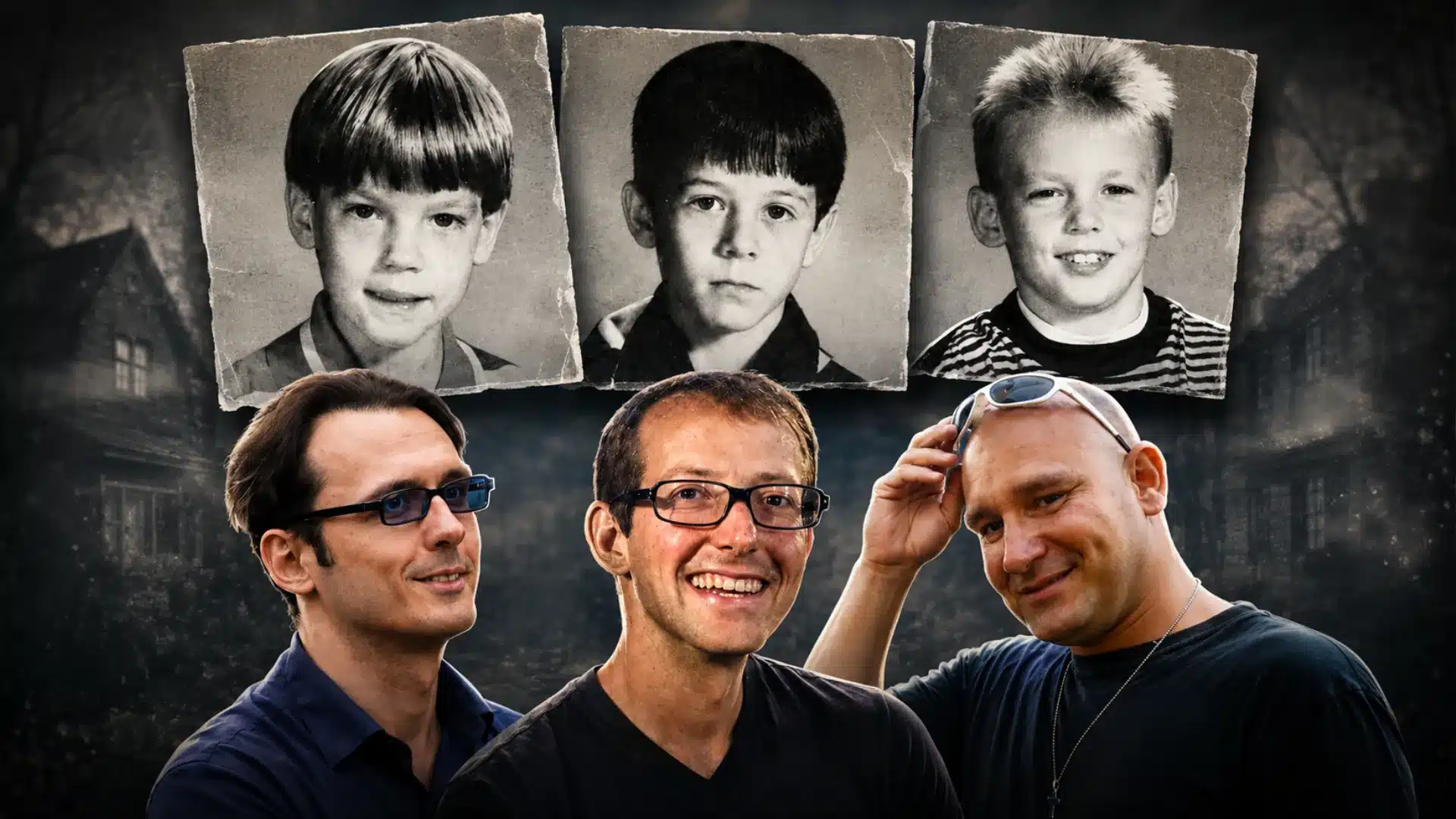
A teenager with documented intellectual limitations sat through hours of police questioning without a lawyer or parent in the room.
By the end, Jessie Misskelley had given a confession that became the backbone of the West Memphis Three case. By that same evening, he had taken it back.
For any attorney, that is where the case becomes hard to ignore. A confession can carry enormous weight in court, but only if it is reliable, voluntary, and backed by evidence.
Misskelley’s case still raises the same question decades later: what happens when the most powerful evidence in a murder case may also be the weakest?
Who is Jessie Misskelley?
Jessie Misskelley Jr. grew up in West Memphis, Arkansas. He was 17 years old when police arrested him in June 1993.
His IQ has been documented between 65 and 72, and court proceedings later described his intellectual functioning as equivalent to that of a young child.
His attorney, Dan Stidham, a young part-time public defender at the time, later wrote that virtually every adult Misskelley encountered daily was intellectually superior to him.
Stidham, now a district judge, published a book in early 2025 titled A Harvest of Innocence, in which he states plainly: “The killer is alive today. I am sure of it.”
He has described the interrogation as coerced and has said the confession contained glaring inaccuracies from the start. Misskelley barely knew Damien Echols or Jason Baldwin.
Police brought him in because a local woman helping investigators had introduced him to Echols, and that thin connection was enough to make him a target.
Stidham later called him an “easy mark.”
The West Memphis Victims: Christopher, Stevie, and Michael
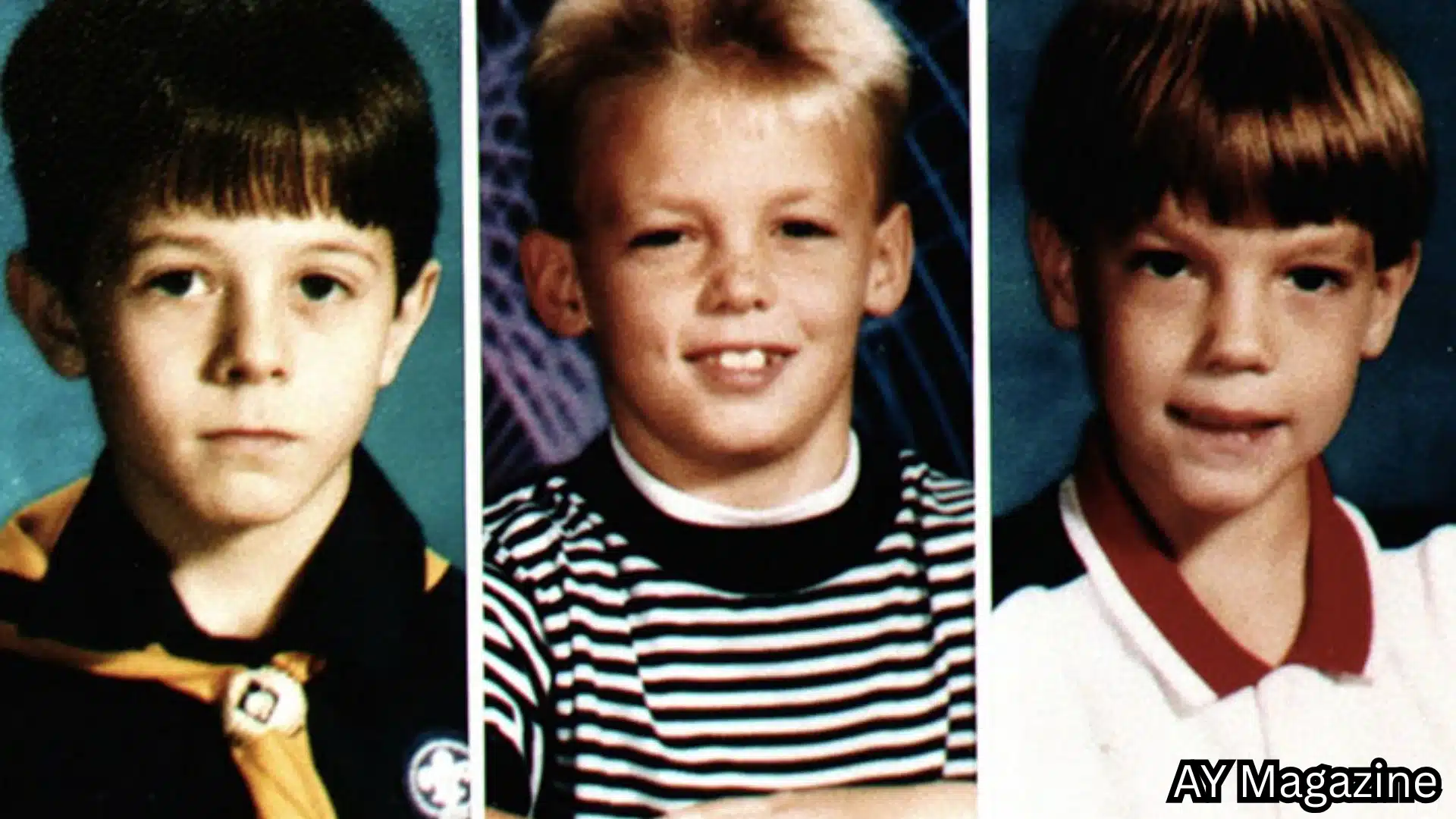
Image source: AY Magazine
On May 5, 1993, three second-grade boys disappeared from their West Memphis neighborhood after an afternoon of bike riding.
Their bodies were found the next day in a water-filled drainage ditch in the Robin Hood Hills area. They had been stripped, bound with their own shoelaces, and beaten.
- Stevie Branch, 8: Last seen near Robin Hood Hills on May 5, 1993. He lived with his mother, Pamela, and stepfather, Terry Hobbs.
- Christopher Byers, 8: Adopted by John Mark Byers. His injuries became a major point of forensic dispute at trial and afterward.
- Michael Moore, 8: A close friend of Branch and Byers who attended Weaver Elementary School with them.
All three boys were in the same Cub Scout pack. Their deaths put enormous pressure on the West Memphis Police Department to make arrests quickly. That pressure shaped what came next.
The Interrogation that Built the Case Against Misskelley
On June 3, 1993, police brought Jessie Misskelley to the station. His father allowed officers to take him, but did not explicitly authorize an interrogation.
No attorney was present. No parent sat in the room. The questioning lasted approximately 12 hours. Only two recorded segments totaling 46 minutes were preserved.
During those recorded portions, Misskelley got basic facts wrong repeatedly: the time of the murders, how the victims were bound, and the cause of death. Each time, investigators corrected him. His answers then shifted to match what they told him.
Misskelley recanted the confession that same evening.
His attorney, Dan Stidham, told reporters that the lead prosecutors later met with his client behind his back during the proceedings, a clear ethical violation.
According to Stidham, the trial judge also made improper communications with the jury during deliberations.
The Innocence Project and legal experts who reviewed the interrogation transcript identified it as a textbook example of a false confession obtained through psychological pressure applied to a vulnerable suspect.
Why Satanic Panic Targeted the West Memphis 3
The 1993 investigation unfolded during a period when fears about occult activity were influencing criminal investigations across the United States.
Damien Echols wore black clothing, listened to heavy metal, and read about the occult.
A juvenile case worker reported suspicions of Satanism to police before any physical evidence had been collected.
Investigators focused on Echols, Jason Baldwin, and Jessie Misskelley, without forensic evidence linking any of them to the Robin Hood Hills crime scene.
Civil liberties groups later argued the prosecution relied on community bias and the atmosphere of moral panic rather than verified facts.
How a Confession the Jury Never Heard Still Shaped the Verdict
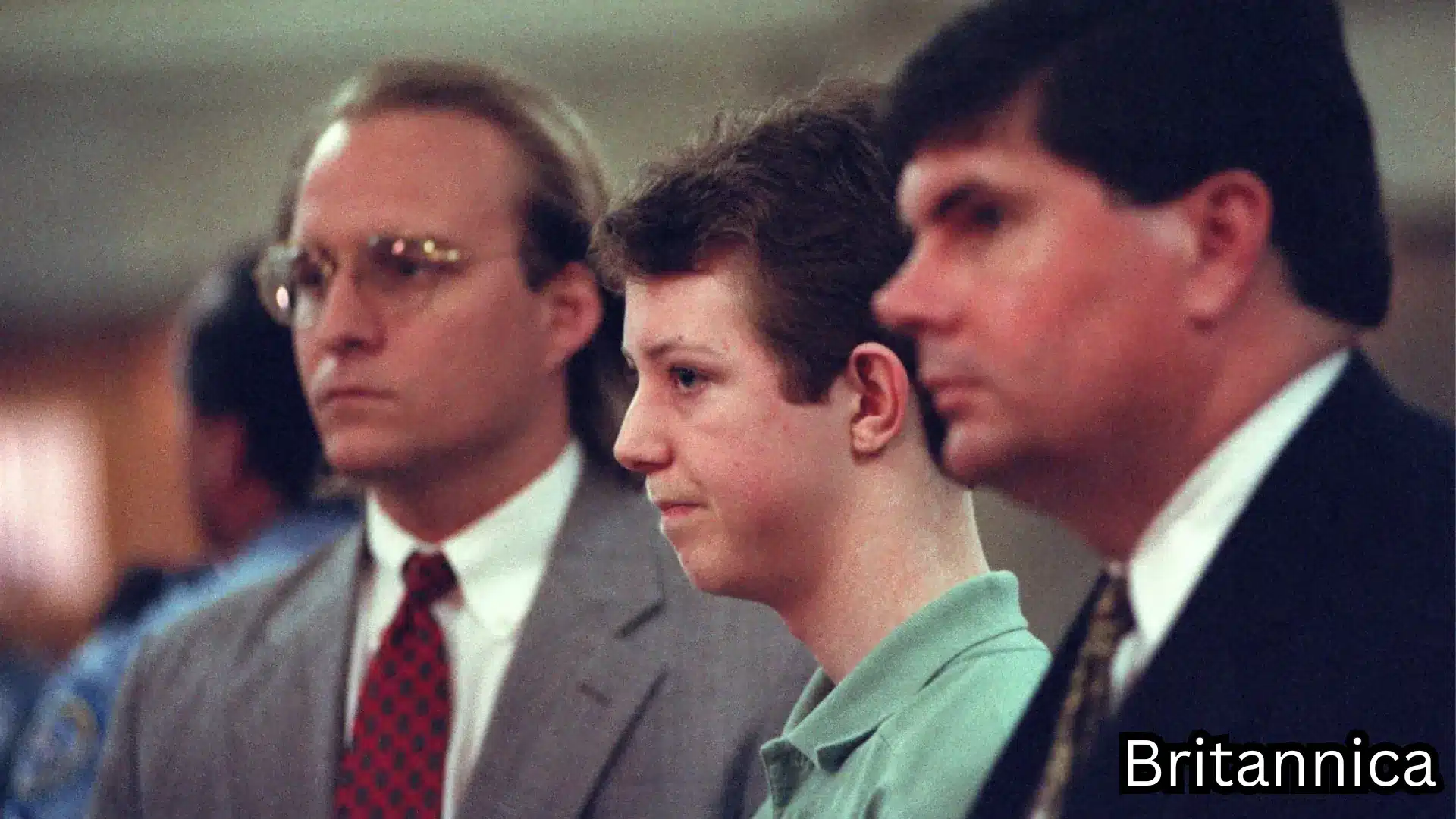
Image Source: Britannica
Jessie Misskelley was tried separately, and prosecutors leaned heavily on his confession.
The jury convicted him of first-degree murder and two counts of second-degree murder, leading to life in prison plus two consecutive 20-year terms.
Understanding how murder charges are classified by degree makes it clear why those distinctions mattered so significantly at sentencing.
Echols and Baldwin were tried together, but Misskelley’s confession was ruled inadmissible in their trial.
Local media had already reported the confession’s details, and the jury was not sequestered, raising concerns about outside influence.
Kent Arnold, the Echols-Baldwin jury foreman, later admitted to discussing the case with an attorney before deliberations.
He was also accused of sharing inadmissible details, including Misskelley’s statements, with other jurors.
Police found no murder weapon, fingerprints, or DNA tying the three teenagers to the crime scene.
Later, experts disputed key forensic claims, and critics argued that the knife-and-grapefruit courtroom demonstration about
Christopher Byers’ injuries may have unfairly shaped the jury’s view.
Jason Baldwin and the Alford Plea Decision
Jason Baldwin was 16 when he was arrested and spent 18 years in prison.
Insisting he was innocent. In 2011, Arkansas prosecutors offered all three men an Alford plea, which allowed them to maintain innocence while accepting convictions.
Baldwin initially refused because the deal did not clear his name. He accepted only because Damien Echols was still on death row, and the plea was the fastest way to free all three men.
After his release, Baldwin founded Proclaim Justice to support people who were wrongfully convicted.
In 2025, he attended the Crittenden County hearing where new DNA testing was approved.
The DNA Twist in the West Memphis Three Case
The 1996 documentary Paradise Lost brought national attention to the West Memphis Three case. By 2007, DNA testing excluded Misskelley, Echols, and Baldwin from crime scene evidence.
Testing also found a hair that could not exclude Terry Hobbs, Stevie Branch’s stepfather, and a separate partial match linked to Hobbs’ friend, David Jacoby.
Hobbs has denied involvement, and no charges have been filed against him.
In 2024, the Arkansas Supreme Court allowed Echols to seek new DNA testing. In 2025, evidence was sent to Bode Laboratories for m-Vac testing, with updates expected in 2026.
What the Misskelley Case Reveals About False Confessions
Jessie Misskelley’s case shows how a prolonged interrogation can yield a confession that later proves unreliable.
He was young, intellectually disabled, questioned for hours without a lawyer or parent, and corrected by investigators when his answers did not match known facts.
- He recanted the confession within hours, yet it became central to the case. That is why legal experts often point to his interrogation when discussing false confessions.
The pattern here, a murder prosecution shaped more by pressure than by evidence, echoes what unfolded in another high-profile case built on weak physical evidence.
The absence of a confirmed cause of death ultimately proved fatal to the prosecution.
Miranda rights are meant to protect suspects from that kind of pressure.
The right to remain silent and to speak with an attorney matters most when a person may not fully understand the risks of answering.
Where Does the Case Stand in 2026?
The West Memphis Three case remains active as key evidence continues to undergo advanced testing at Bode Laboratories in Virginia.
A court hearing is scheduled for late July 2026 in Marion, Arkansas, where both sides expect important updates on the DNA results.
The Innocence Project is closely involved in the process. Modern forensic methods are being used to determine whether usable evidence can still be recovered from the remaining materials after so many years.
For Jessie Misskelley, Damien Echols, and Jason Baldwin, the stakes continue to be extremely high. Their convictions remain legally intact under the 2011 Alford plea agreement.
This means they were released from prison but were never formally exonerated. The upcoming testing results could either strengthen their long fight for full exoneration or leave the entire case in continued legal uncertainty.
Conclusion
Thirty-two years after the Robin Hood Hills murders, the convictions of Jessie Misskelley, Damien Echols, and Jason Baldwin still stand.
They walked out of prison in 2011 through Alford pleas, but they were never formally exonerated.
The families of Christopher Byers, Stevie Branch, and Michael Moore still do not have a final answer.
The DNA testing now underway could either raise new questions, point toward another source, or leave the case in the same painful uncertainty.
At its center, this case still comes down to one issue: a confession without reliable evidence should never be enough to close a murder case.
What do you think matters most here: Misskelley’s confession, the lack of physical evidence, or the new DNA testing?
Share your take in the comments and keep the conversation focused on the evidence.
Frequently Asked Questions
What is an Alford Plea?
An Alford plea lets a defendant plead guilty while maintaining innocence. The court accepts it when there is sufficient evidence that a trial would likely result in a conviction. It does not constitute an exoneration.
Has Anyone Else Been Named as a Suspect?
No one else has been formally charged. DNA testing in 2007 produced partial links to Terry Hobbs, the stepfather of victim Stevie Branch, and his friend David Jacoby. Hobbs denies involvement. Authorities have not publicly investigated him as a formal suspect.
What is M-Vac DNA Testing?
M-Vac uses a pressurized, sterile solution to recover skin cells from porous materials such as rope or fabric. It matters here because the shoelace ligatures used to bind the victims may now yield biological material that older swabbing methods could not recover.