Most drivers have heard the term, but very few actually know what really goes on during a roadside stop. Things can shift fast in that moment, and what feels like a normal interaction can suddenly carry serious weight.
Knowing what a field sobriety test is before you are ever asked to take one can change how you handle the situation.
This blog breaks down how these tests work, what officers look for, your rights at the time, and what can happen depending on your response.
One detail often missed: drivers do not officially pass or fail these tests. Officers are trained to watch for specific signs in your behavior.
Those signs are then used to decide the next step. That matters because the outcome depends on how those observations are interpreted, not just what you actually do.
What is a Field Sobriety Test?
A field sobriety test is a set of physical and mental tasks done on the roadside to check if a driver may be impaired by alcohol or drugs.
These tests do not take place at a police station; they are usually conducted right after a traffic stop, when officers use them to observe signs before deciding whether to make an arrest or request a chemical test.
It helps to understand where these tests fit in the legal process, since an officer only needs reasonable suspicion to pull you over, which is a lower standard, and field sobriety tests are then used to build probable cause, the higher threshold required for an arrest.
Understanding the difference between being detained vs arrested can help you recognize which stage of this process you are in.
These tests are not designed as a neutral measure of sobriety, but rather as a way to collect observations that may support an arrest decision.
You may be asked to perform one if an officer notices signs like slurred speech, the smell of alcohol, glassy eyes, or unusual driving behavior, and even small actions such as drifting between lanes or being stopped late at night can lead to this step.
What Officers Observe Before You Step Out
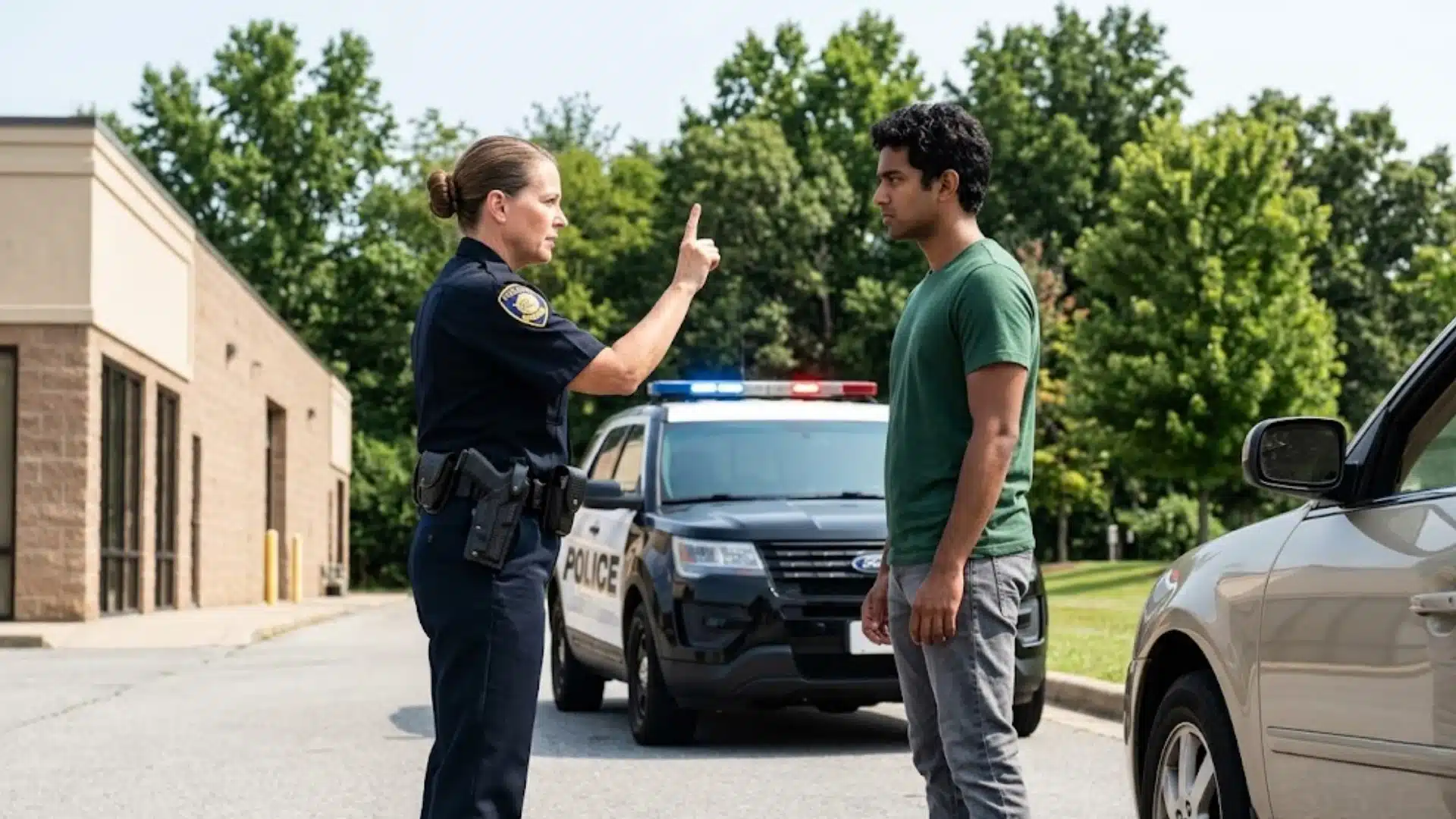
Officers follow a structured process to spot signs of impairment even before any roadside test begins.
The first phase starts while your vehicle is still moving, where they watch for patterns like drifting between lanes, wide turns, slow reactions to signals, or sudden stops, all of which can shape their initial suspicion.
The second phase begins as soon as the officer reaches your window, and this is where close observation continues.
They notice the smell inside the car, how you handle your license and registration, the clarity of your speech, and even the condition of your eyes, all while keeping track of your overall behavior.
By the time you are asked to step out, a mental record has already started to form. This matters because everything from those early moments can later be used as part of the overall case if the situation moves forward.
Common Types of Field Sobriety Tests
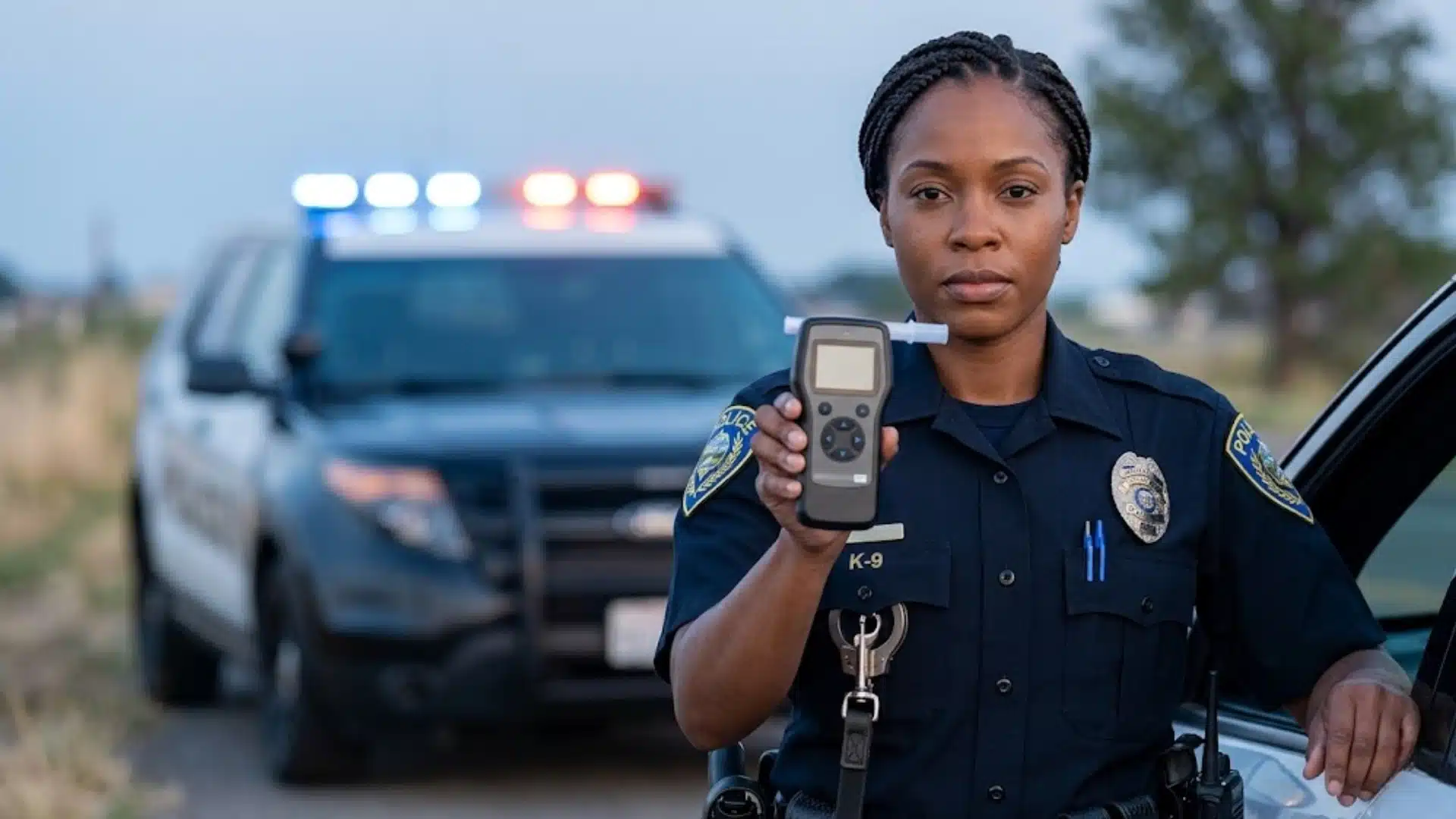
Officers are trained to use three standardized tests approved by the National Highway Traffic Safety Administration, and each one is designed to check how well a person can handle balance, coordination, and attention at the same time.
1. Horizontal Gaze Nystagmus (Eye Test)
In this test, the officer moves an object like a pen or finger slowly from side to side in front of your eyes while watching for involuntary jerking.
This movement, known as nystagmus, tends to become more noticeable when alcohol is in the system.
The officer looks for three signs in each eye, including whether the eye follows the object smoothly, whether jerking appears at the far edge of movement, and whether it starts earlier than expected. In total, six clues can be noted across both eyes.
2. Walk-and-Turn Test
This test checks your ability to divide attention between movement and instructions.
You are asked to take nine heel-to-toe steps in a straight line, turn in a specific way, and then take nine steps back while keeping your arms at your sides and counting out loud.
The officer observes for signs like losing balance, starting too early, stepping off the line, using arms for support, making an incorrect turn, or taking the wrong number of steps.
3. One-Leg Stand Test
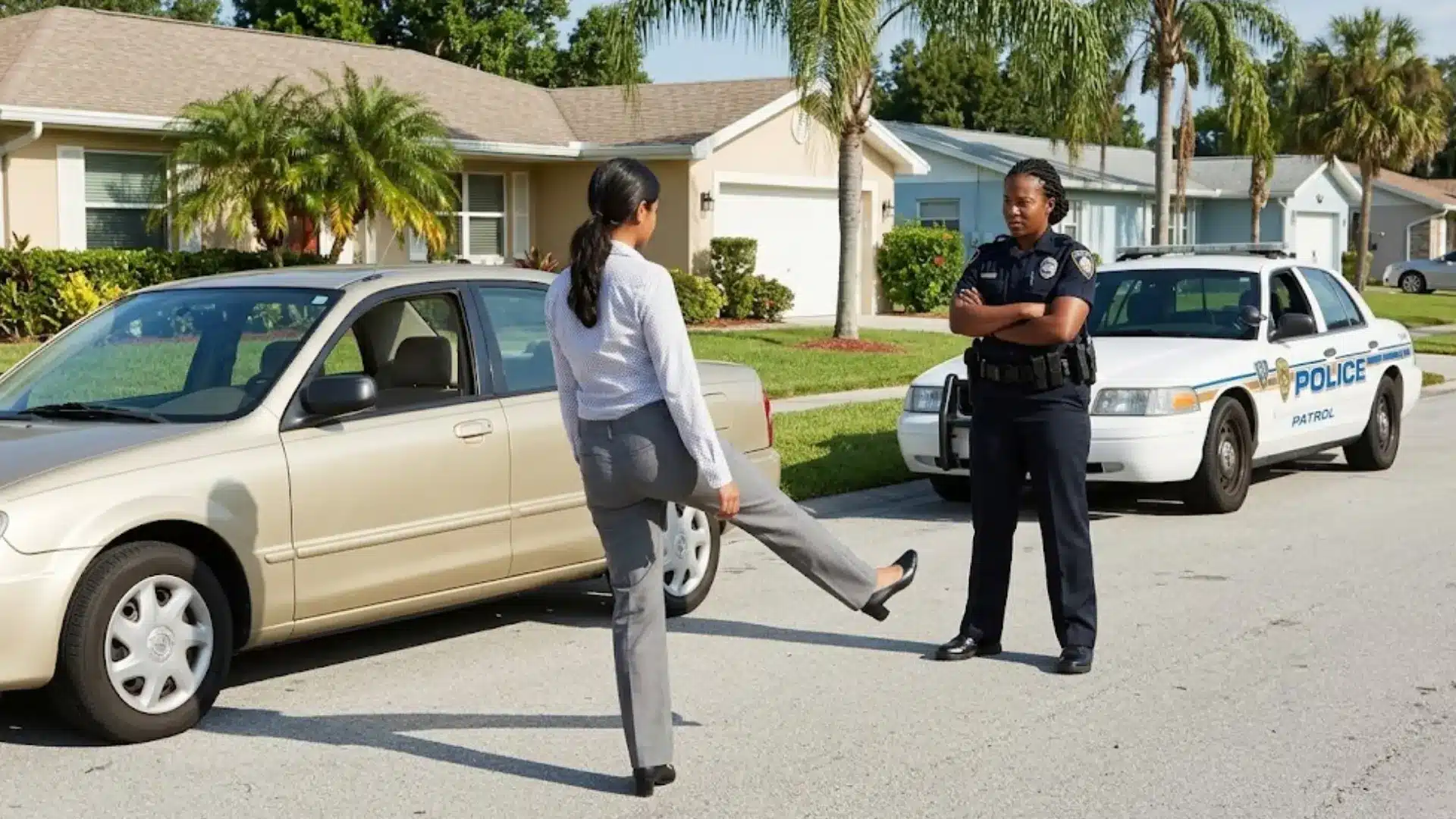
In this test, you are asked to stand on one leg while keeping the other foot raised a few inches above the ground, and at the same time, you need to count out loud in a steady rhythm until the officer tells you to stop, which is usually around 30 seconds.
The task may sound simple at first, but it requires focus, balance, and coordination all at once, especially under pressure.
During this time, the officer is closely watching for specific signs such as swaying while trying to maintain balance, using your arms to steady yourself, hopping to avoid losing balance, or placing your raised foot down before being told.
Each of these actions is treated as a clue, and if more than one is observed, it can be taken as an indication that impairment may be present.
How Field Sobriety Tests Are Conducted
These tests usually take place on the roadside, close to your vehicle, where officers try to choose a spot that is flat, visible, and away from moving traffic as much as possible.
Before each test begins, clear instructions are given, and in most cases, the officer will also show how the task should be done. You may be asked to confirm that you understand what is expected.
The way results are judged is more detailed than it may seem, since officers are not simply looking for a stumble or a mistake, but are scoring your actions based on a fixed set of clues tied to each test.
At the same time, performance can be affected by several outside factors such as medical conditions, footwear, uneven ground, nervousness, or even age, all of which can impact balance and coordination.
Because of this, the outcome is not always a clear reflection of impairment, and these results are often questioned later since they depend heavily on observation and interpretation rather than exact measurement.
What Happens If You Refuse a Field Sobriety Test
Refusing to perform a field sobriety test is allowed in many states, but it does not mean the situation ends or that you avoid further action.
An officer can still decide to arrest you based on other observations, such as your driving behavior, your appearance, the smell of alcohol, or anything you say during the stop.
The impact of refusal depends on state laws, which can differ in how they treat that decision. In some places, refusal is seen as neutral, while in others it may still be used later as part of the overall case.
Knowing local rules ahead of time can help you avoid surprises. Refusal also does not remove the possibility of further testing.
If an arrest happens, implied consent laws usually require a breath or blood test, and refusing that can lead to penalties like license suspension.
What Happens If You Fail a Field Sobriety Test
Failing one or more field sobriety tests allows the officer to move the situation forward, as the observed clues can be used to justify the next legal steps during the stop.
- Further detention: The officer can continue to detain you for a longer period to carry out additional checks based on what was observed during the tests
- Breathalyzer or blood test request: In most cases, you will be asked to take a chemical test to measure blood alcohol levels and support the officer’s observations
- Arrest for DUI or DWI: If the overall evidence meets the legal standard, this usually leads to an arrest, and you may be taken to a police station
- Field test results used as evidence: The observations noted during your performance can be recorded and later presented in court or administrative proceedings
- Right to contest results: These tests are not always accurate, and factors like health conditions, environment, or errors in how the test was conducted can be used to challenge them
Tips to Handle a Field Sobriety Test Situation
How you respond in the moment can shape what happens next, both legally and practically, since officers are observing not just the test but your overall behavior from start to finish.
- Stay composed: Feeling nervous is normal, but staying calm helps prevent your actions from being misread, so take a moment to steady yourself before responding
- Listen carefully to instructions: Officers score how closely you follow directions, so asking for clarification before starting is better than making a mistake midway
- Avoid sudden movements: Keep your actions slow and controlled, as quick or unsteady movements can be taken the wrong way during the test
- Know when to request an attorney: You have the right to speak with a lawyer before answering questions, and using that right is a legal choice, not an admission
- Document everything afterward: Once it is safe, note down details like location, lighting, road condition, what you were wearing, and what was said, as these can matter later
- Request dashcam or bodycam footage promptly: Video records can provide strong support, so requesting them early is important since retention periods may be limited
Conclusion
A traffic stop can go from routine to serious in just a few moments, and most people are not fully prepared for what that situation involves.
Knowing the purpose of these tests, how they are carried out, and what your rights are can give you a clear edge if you ever face one.
Understanding what a field sobriety test is is not just basic knowledge; it can help you make better decisions under pressure.
Your response in that moment matters, whether you choose to comply or not, and making that choice with awareness is always better than reacting without thinking.
It is also worth remembering that factors like fatigue, health conditions, or even uneven ground can affect performance, even when no impairment is present.
If you have ever been through a situation like this, share your experience in the comments. It could help someone else know what to expect.
Frequently Asked Questions
Can Field Sobriety Tests be Recorded by the Driver?
Yes, in most places you are allowed to record a traffic stop as long as it does not interfere with the officer’s duties. Using your phone to record can help capture what actually happened, which may be useful later if there is any dispute about your behavior or the officer’s observations.
Do Weather Conditions Affect Field Sobriety Test Results?
Yes, conditions like rain, wind, poor lighting, or extreme cold can make it harder to perform balance-based tasks. These factors can impact coordination and visibility, which may influence how your performance is interpreted.
Are Field Sobriety Tests the Same in Every State?
Not always. While many states follow NHTSA guidelines, some states allow additional or modified tests. The way results are used and challenged can also vary depending on local laws and court practices.
Can Medications Affect Your Performance on These Tests?
Yes, certain prescription or over-the-counter medications can affect balance, reaction time, or eye movement. Even when taken correctly, these effects can sometimes be mistaken for signs of impairment.
Do Officers Need Special Training to Conduct These Tests?
Yes, officers are typically trained under standardized programs, but the level of training and experience can vary. In some cases, improper administration or lack of proper training can be used to question the reliability of the test results.