
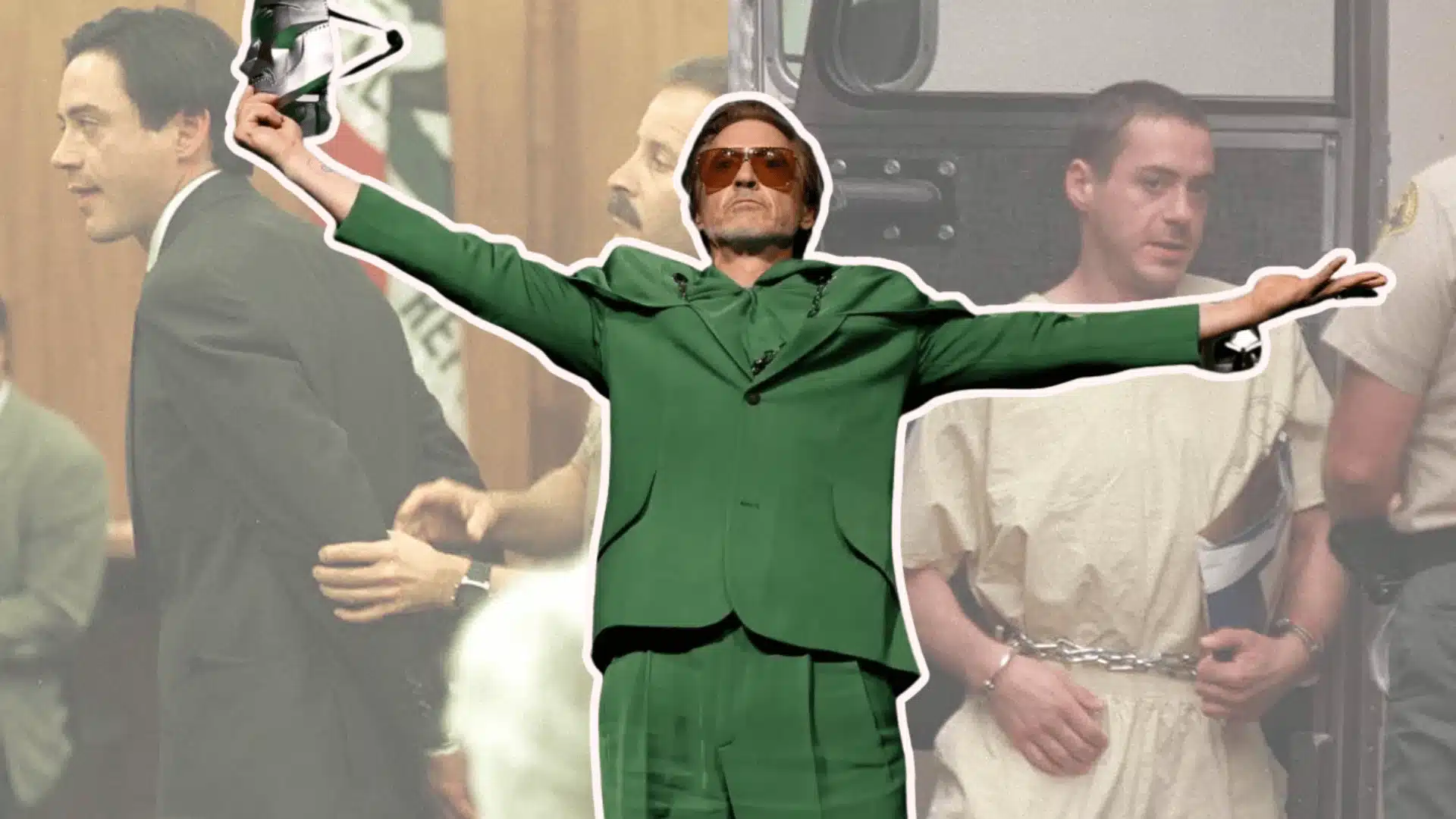
Before he suited up as Iron Man, Robert Downey Jr. walked into a California courtroom wearing an Orange County jail jumpsuit.
His legal story is one of the most documented in Hollywood history, yet most people still do not know the full legal picture.
As a criminal defense attorney, I find his case genuinely instructive.
It shows how drug possession charges escalate, how probation violations trigger imprisonment, and what a governor’s pardon actually means under California law.
This piece breaks down the complete Robert Downey Jr jail timeline, the specific charges he faced, the time he served, and what his 2015 pardon did and did not accomplish legally.
Why Did Robert Downey Jr Go to Jail?
In June 1996, Downey was arrested for possession of heroin, cocaine, crack cocaine, and an unloaded .357 Magnum handgun while speeding down Sunset Boulevard.
A month later, while under the influence, he entered a neighbor’s home through an unlocked front door and fell asleep on their child’s bed.
The family declined to press trespassing charges, but the 911 call made by the neighbor later became known online as the “Goldilocks incident.“
In September 1996, he pleaded no contest. Two months later, following a period in court-ordered rehab, he was sentenced to six months of live-in rehabilitation, three years’ probation, and compulsory drug testing.
From a criminal law standpoint, this is a fairly standard outcome for a first-time felony drug possession case in California, where courts lean toward structured rehabilitation before defaulting to incarceration.
The unloaded firearm added a weapons charge, though it did not result in additional prison time at that stage
The 1997 Probation Violation That Sent Him to County Jail
A year after his initial arrest, Downey skipped a court-ordered drug test and spent nearly four months in the Los Angeles County Jail.
In January 1998, he was briefly released from jail to film “U.S. Marshals,” then entered a court-mandated 120-day rehab program upon full release.
In my practice, missed drug tests are one of the most common triggers for probation violation hearings.
Courts view them as intentional evasion, not mere forgetfulness. That distinction matters significantly at sentencing.
The 1999 Arrest That Led to State Prison
After missing another court-ordered drug test, Downey was brought before Municipal Court Judge Lawrence Mira, who had presided over his original 1996 case.
The judge stated he had given Downey “many chances to rehabilitate himself” and that Downey had “manipulated doctors and psychiatrists.”
Defense attorney Roger Shapiro argued Downey should receive probation again, stating, “This is a person who is suffering from a disease he can’t control.
Even the dire threat of jail or prison is not enough of a deterrent.” The judge disagreed. Having already gone through six rehab programs and breached probation three times, Downey was sentenced to three years in prison.
Inside Corcoran State Prison: What Robert Downey Jr. Actually Experienced
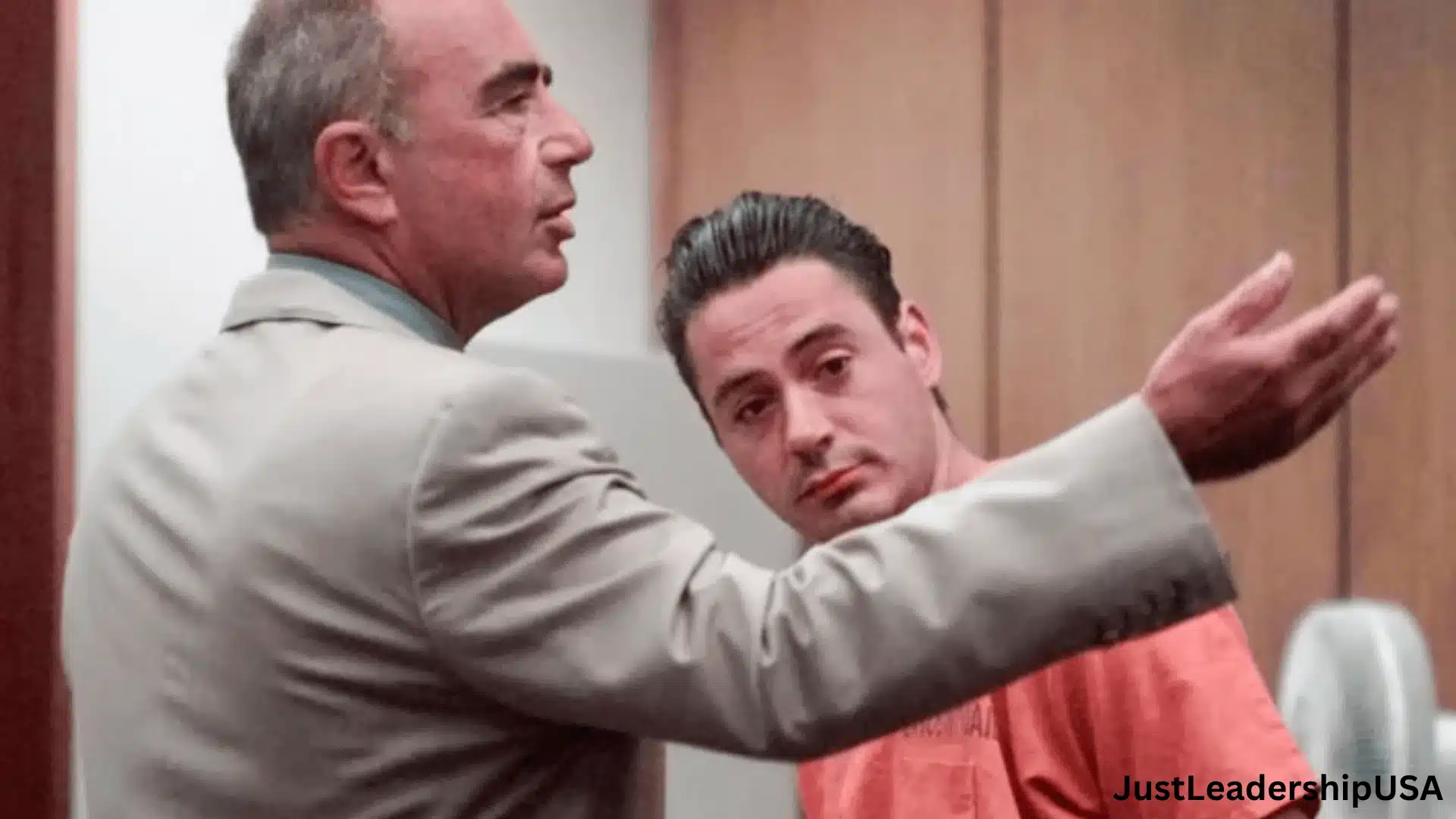
Two weeks after sentencing, Downey found himself at Delano, described by him as a violent reception center where inmates awaited permanent placement, and called it “arguably the most dangerous place I’ve ever been in my life.”
He eventually landed at California’s Corcoran State Prison, where he later recalled, “You could just feel the evil in the air. There was no opportunity there. There were only threats.”
Inside, Downey was put on kitchen duty, earning eight cents an hour either dishing out food or washing dishes. He shared a dorm-type cell with four other inmates and slept on a mattress only three to four inches thick.
On the Armchair Expert podcast, he described the experience as “the worst thing that happened to me,” comparing entering prison for the first time to “being sent to a distant planet where there is no way home until the planets align.”
These are not the words of someone who found incarceration trivial. For anyone facing drug charges today, this account is worth sitting with.
How Long Did Robert Downey Jr. Spend in Jail?
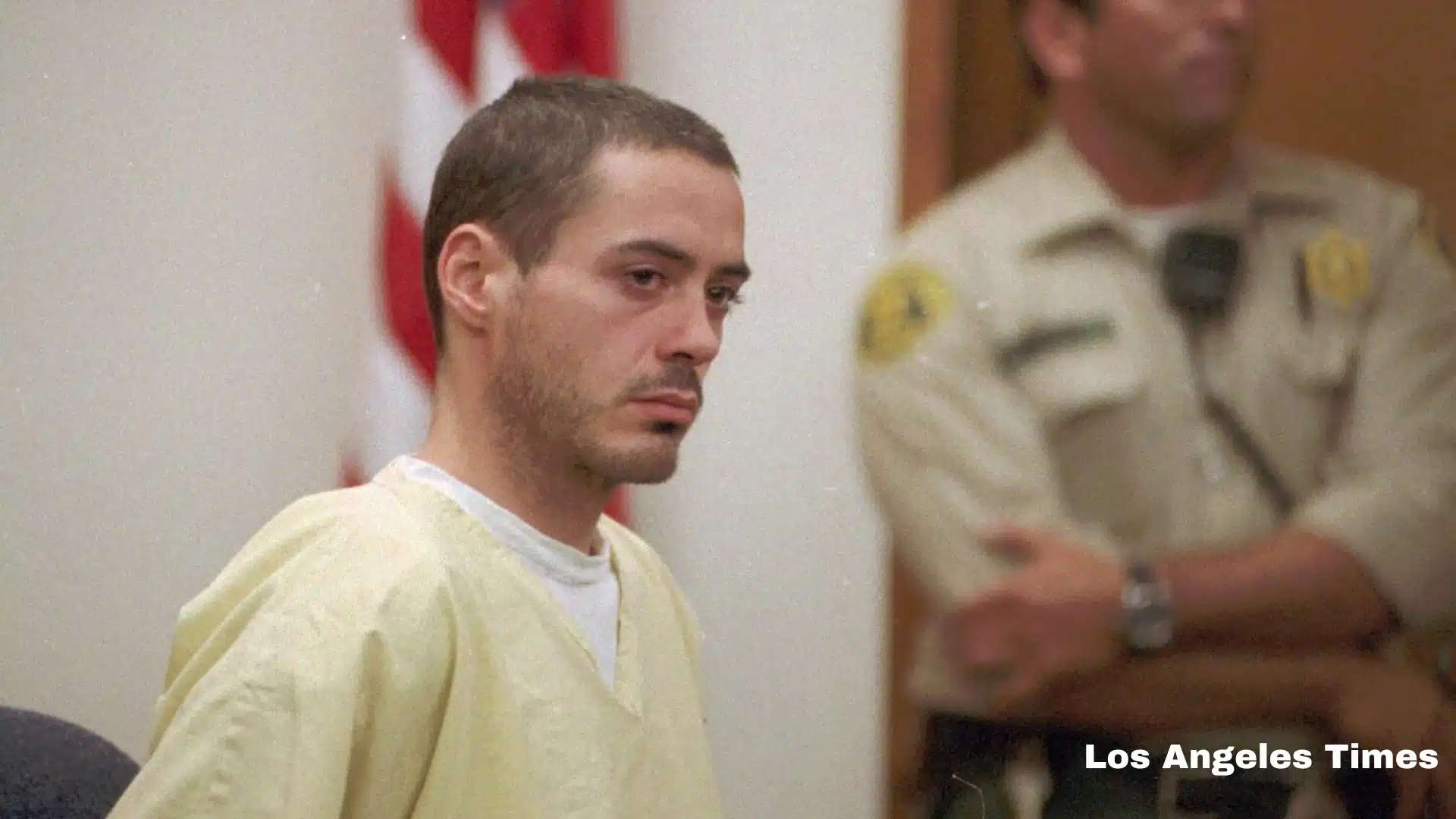
People often assume it was a brief stint. The actual timeline adds up to significantly more.
In 1997, Downey served six months in the Los Angeles County Jail after missing his court-appointed drug test.
Then in 1999, a judge sentenced him to three years in prison. He ended up serving 12 months of that sentence, which, as one legal expert noted, “is serious time.”
After spending nearly a year at Corcoran, Downey was unexpectedly released in 2000 when a judge ruled that his cumulative time in incarceration from his initial 1996 arrests qualified him for early release, on the condition of posting a $5,000 bail.
Four months after his release, Downey was arrested again on Thanksgiving weekend for alleged cocaine and Valium possession.
The Valium charge was eventually reduced to a misdemeanor, and he avoided more jail time by pleading no contest. In total, across all stints, Downey spent roughly 19 to 21 months behind bars.
What Charges Did Robert Downey Jr. Face From a Legal Standpoint?
Downey’s legal troubles began with felony drug possession after police found cocaine, heroin, and a pistol in his car during a traffic stop.
Legal expert Camron Dowlatshahi noted that in California, simple drug possession typically results in a misdemeanor, but the combination of prior convictions and repeated probation violations pushed Downey into felony territory.
In 2001, Downey was ordered into drug rehabilitation and sentenced to three years of probation under California Proposition 36, which had been enacted to direct nonviolent drug offenders toward treatment rather than prison.
This represented a meaningful shift in how California courts were handling similar cases by that point.
Here are six key legal terms from this case that anyone dealing with drug charges should understand:
- Probation Violation: When a person fails to meet court-ordered conditions such as drug testing, the judge can revoke probation and impose the original suspended sentence.
- No Contest Plea: A plea where the defendant does not admit guilt but accepts the punishment; commonly used to limit future civil liability.
- Felony Drug Possession: Possession of a controlled substance that, combined with prior convictions or weapons charges, can result in state prison time in California.
- Mandatory Drug Testing: A court-ordered condition tied to probation; missing a test is treated by most judges as an intentional violation, not an accident.
- Early Release: A judge may credit prior jail time toward a current sentence, reducing the remaining term served, as happened in Downey’s 2000 release.
- Proposition 36: A California ballot measure that redirected nonviolent drug offenders into treatment programs rather than incarceration, which Downey benefited from in 2001.
The 2015 Pardon: What It Meant Legally and What It Did Not Do
On December 24, 2015, California Governor Jerry Brown pardoned Downey for his 1996 drug conviction.
The pardon stated that Downey “has lived an honest and upright life, exhibited good moral character and conducted himself as a law-abiding citizen,” and that he “has paid his debt to society and earned a full and unconditional pardon.”
Pardons in California are mainly symbolic and do not erase a criminal record, but they can allow individuals to own firearms, serve on jury duty, or work in certain government jobs.
To be eligible, individuals must have been out of prison for at least a decade and have committed no new crimes.
The pardon restores voting rights and serves as a public proclamation that the person has remained out of trouble and demonstrated exemplary behavior, according to the governor’s office.
I want to be clear about something I explain to clients regularly: a pardon is not an expungement. His conviction still appears in the public record.
What it does is signal that the state officially recognizes his rehabilitation, and it restores certain civil rights that a felony conviction removes.
What Robert Downey Jr.’s Drug Arrests Really Teach Us
The RDJ case is, frankly, one of the more instructive celebrity legal stories I have come across in over a decade of criminal defense work. It illustrates several things about how courts actually function.
First, probation violations are never treated lightly. Judges keep detailed records of every breach. By the time Downey stood before Judge Mira in 1999, the court had exhausted its options.
The record showed six failed rehab programs and three probation violations. At that point, incarceration was the only remaining tool.
Second, resources matter enormously. Legal expert Camron Dowlatshahi explained that what set Downey apart from the average defendant was his financial ability to fund private drug treatment programs.
Most defendants do not have that option, which is part of why their cases escalate faster.
Third, Prop 36 changed outcomes for many defendants. By 2001, California courts had a legal mechanism to redirect nonviolent drug offenders into treatment. For clients facing first or second drug offenses today.
The legal system is not a straight line. It is a series of decisions, each shaped by prior conduct, judicial discretion, available resources, and timing.
Conclusion
Robert Downey Jr. did not end up in prison overnight. It took years of missed drug tests, repeated probation violations, and exhausted judicial patience before a judge had no option left but to send him away.
From county jail in 1997 to 15 months at Corcoran State Prison, his Robert Downey Jr jail journey is a real-world lesson in how quickly drug charges can escalate when court conditions go unmet.
His 2015 pardon restored his civil rights and recognized his rehabilitation, but his criminal record still stands. As a criminal defense attorney, I have seen similar patterns play out in courtrooms across Florida.
The earlier someone takes their charges seriously, the better their chances of a different outcome. If you found this breakdown helpful, drop a comment below with your questions
Frequently Asked Questions
Did Robert Downey Jr. Lose Acting Roles Because of His Jail Time?
Yes. Several studios dropped him due to insurance liability concerns. Even after his release, producers considered him too high a risk to insure for major film productions.
Was Robert Downey Jr. Allowed to Vote After His Felony Conviction?
No, not until his 2015 pardon. A felony conviction in California removes voting rights. The pardon formally restored that privilege, along with eligibility for jury service.
Did Robert Downey Jr. Ever Speak Publicly About Regretting His Crimes?
Yes. He has openly acknowledged the pain his addiction caused his family, particularly his son and first wife Deborah Falconer, who left him during his legal troubles.