

Some legal phrases sound simple until you stop and ask what they really mean. What is the supreme law of the land, and why does it matter when federal and state laws clash?
The answer starts with the U.S. Constitution and Article VI, which explains how federal law fits into the nation’s legal system. I’ll explain the meaning in simple terms, along with the Supremacy Clause, its history, and how it affects conflicts between laws.
Once you understand how these rules fit together, the phrase becomes much easier to understand and remember.
What is the Supreme Law of the Land?
The short answer most civics classes give is simple: the U.S. Constitution is the supreme law of the land. That phrase comes straight from the document itself.
Article VI, Clause 2, known as the Supremacy Clause, states that “This Constitution, and the Laws of the United States which shall be made in Pursuance thereof; and all Treaties made, or which shall be made, under the Authority of the United States, shall be the supreme Law of the Land.”
In plain terms, this means the Constitution, federal laws passed under it, and treaties the U.S. signs all outrank state laws when the two clash, a distinction closely tied to unalienable rights and enforceable law.
The full text of Article VI lays out this hierarchy, and the Senate’s Constitution overview walks through how it fits with the rest of the document.
What is the Supremacy Clause?
The Supremacy Clause sets up a simple rule: when federal law and state law disagree, federal law wins. Say a state passes a law that goes against a valid federal statute or the Constitution.
Courts must follow the federal rule, and state judges must do it, no matter what their state constitution says.
But this doesn’t hand Washington unlimited power. Federal laws and treaties count as supreme only if they fall within the powers the Constitution actually gives the federal government.
The Tenth Amendment backs this up, stating that the federal government only holds the powers the Constitution specifically gives it. States still control everything else.
History of the Supreme Law of the Land
This idea didn’t appear overnight. It took shape over decades, shaped by debates about how much power the federal government should actually have.
Here’s how the Supremacy Clause developed, from its first draft to how courts apply it today.
| Year | Event | What It Meant |
|---|---|---|
| 1777 | Continental Congress drafts Articles of Confederation | Congress approved the text, but states kept most power since the document gave the federal government almost no way to enforce laws nationally. |
| 1781 | Articles of Confederation ratified | The Articles took full effect after Maryland’s approval, but the weak central government still couldn’t force states to follow national laws. |
| 1787 | Constitutional Convention drafts Article VI | The Framers wrote the Supremacy Clause to fix the weak federal structure the Articles left behind. |
| 1788 | U.S. Constitution ratified | The Supremacy Clause became binding law, placing federal law above conflicting state law. |
| 1803 | Marbury v. Madison decided | The Supreme Court established judicial review, granting courts the authority to strike down unconstitutional laws. |
| 1819 | McCulloch v. Maryland decided | The Court confirmed that states can’t tax or block valid federal actions carried out under this clause. |
| 1954 | Brown v. Board of Education decided | The Supreme Court struck down state segregation laws as unconstitutional, and the Supremacy Clause meant states had to comply with the ruling. |
This timeline shows something important. The Supremacy Clause wasn’t written once and left static.
Courts have continued to test and define it case by case, and that process remains ongoing today. The National Archives’ record of the Articles of Confederation shows just how limited that first federal government really was.
Hierarchy of Laws in the USA
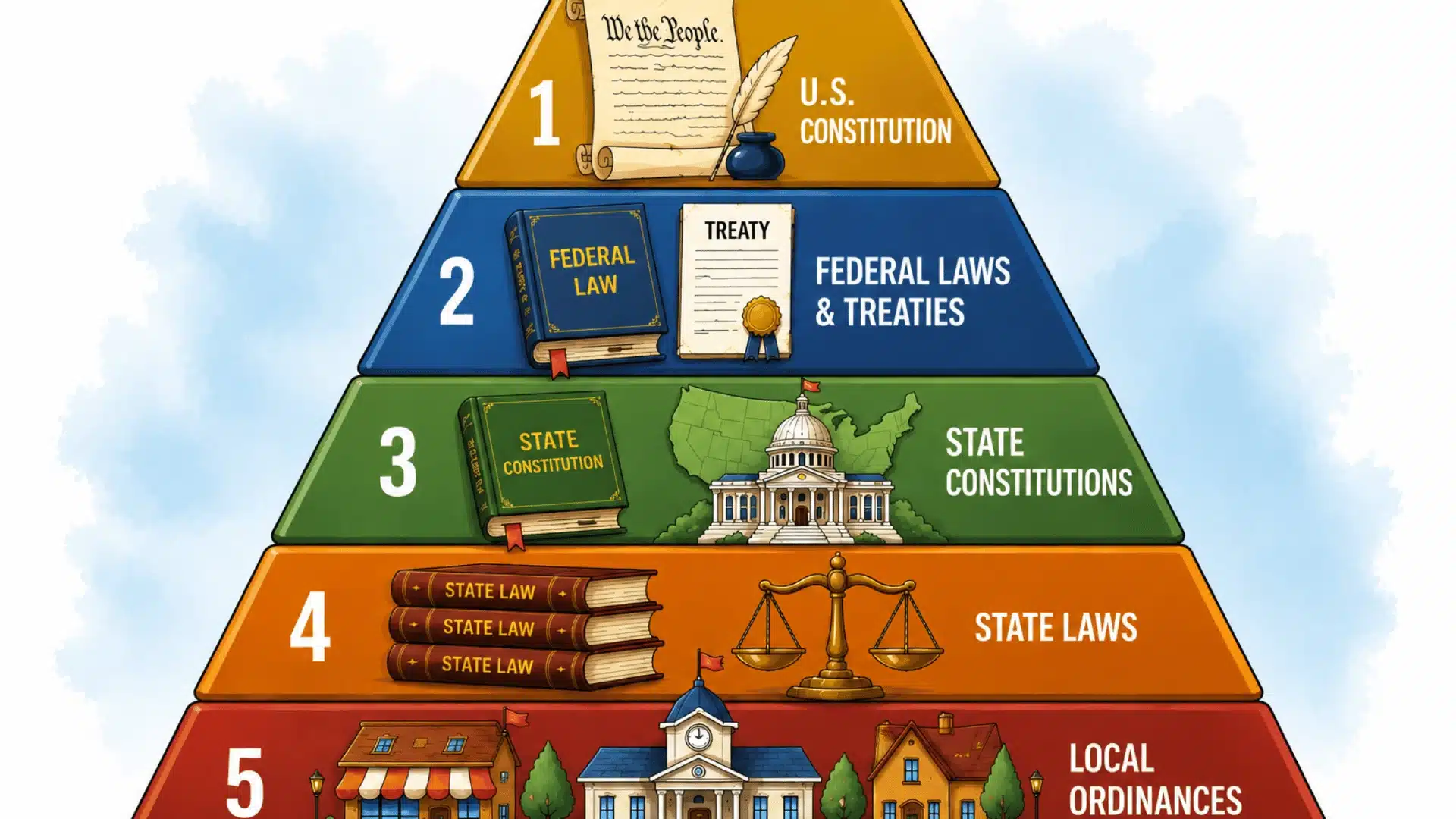
Not all laws carry equal weight in the US. When two laws conflict, this order decides which one wins.
- The U.S. Constitution: It sits at the very top of the hierarchy, and nothing below it can legally override what it says, no matter how the law is written.
- Federal laws and treaties: They rank next in line, but only when Congress or treaty-makers acted within the authority the Constitution actually gives them.
- State constitutions: They come after federal law, and must yield whenever they directly conflict with the U.S. Constitution or a valid federal law already in place.
- State laws: They rank below state constitutions, and can’t contradict federal law or clash with their own state’s constitution in any way.
- Local ordinances: They sit at the bottom of the list, following whatever state and federal law already requires, with no authority to override either.
Once you see the order laid out clearly, it’s easy to spot why certain laws get struck down in court.
What Does the Supreme Law of the Land Include?
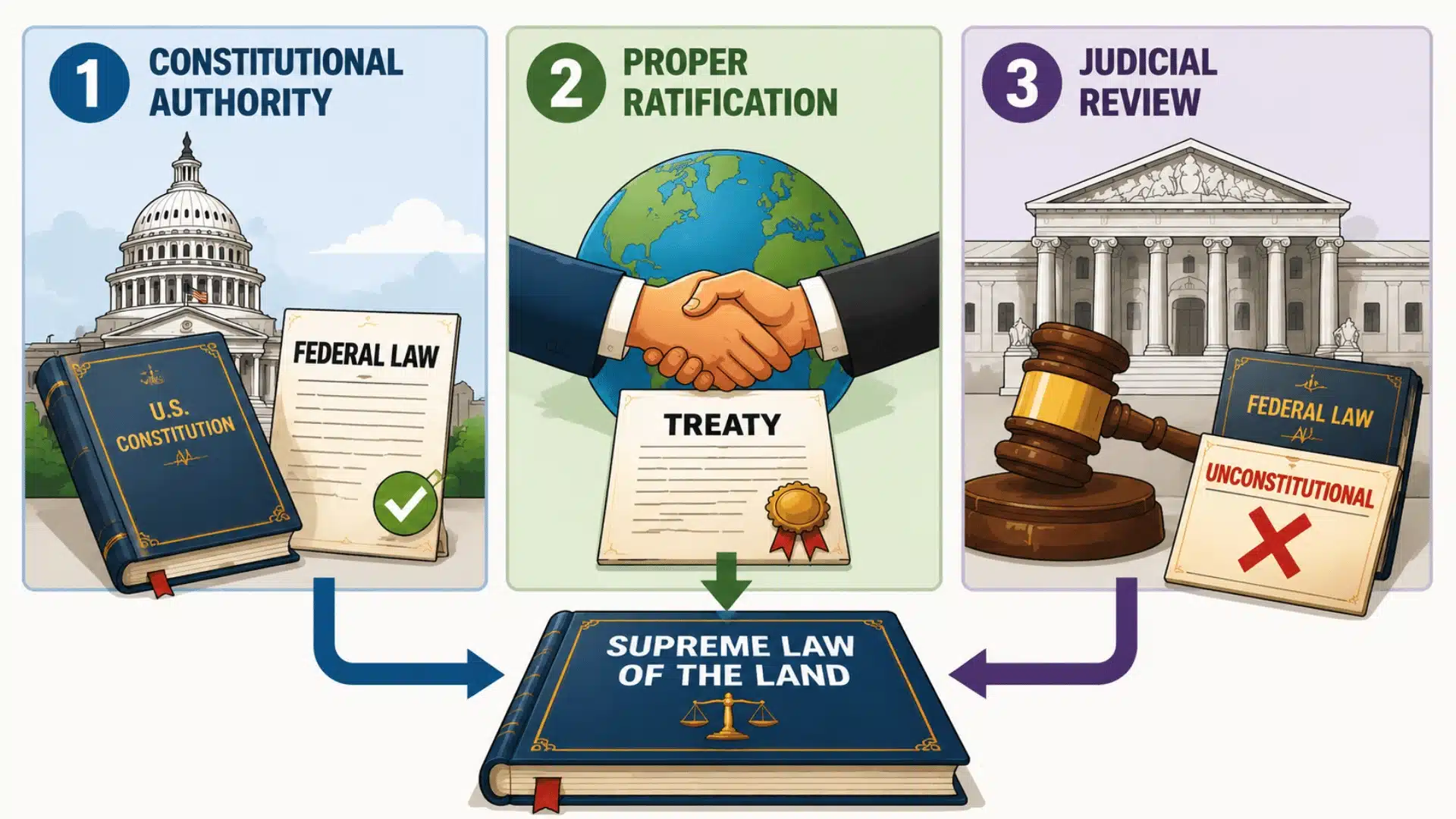
Federal law only earns supreme status under certain conditions. Here’s what actually needs to be true for a federal law or treaty to qualify.
- Constitutional authority: Congress must use powers the Constitution actually gives it. Overstepping that authority strips a law of its supreme status.
- Proper ratification: Treaties only count when negotiated and approved through the process the Constitution lays out.
- Judicial review: Courts decide whether a law was made properly, and they can strike down laws that weren’t.
These three points work together. Miss any one of them, and a law loses its claim to being supreme, no matter how official it looks on paper.
What the Supreme Law of the Land Is Not
A common misunderstanding is that this clause gives the federal government unlimited power over states.
That’s not true. The Constitution sits above federal laws and treaties, and even federal power must stay within constitutional limits.
This clause also doesn’t wipe out state law across the board. Only the specific parts that directly conflict with valid federal law get overruled.
Everything else in state law that doesn’t clash with federal law stays exactly as it is, fully intact and enforceable.
Why the Supreme Law of The Land Matters
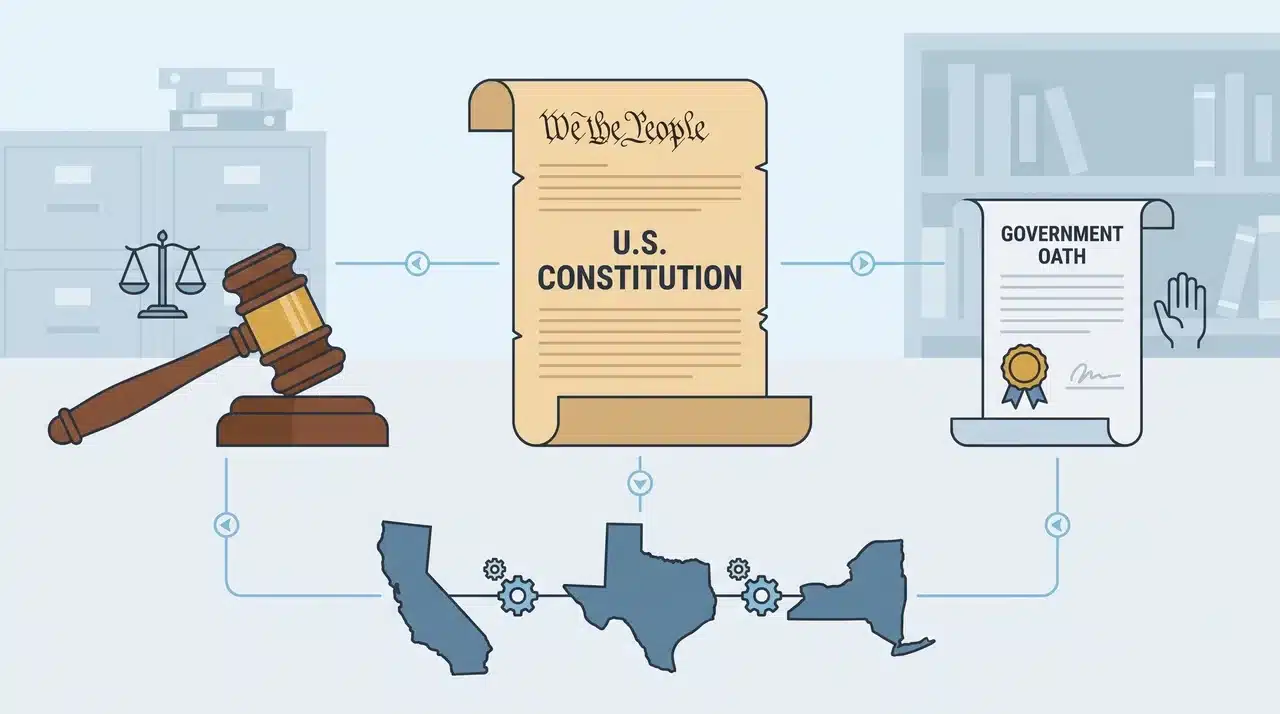
This clause does real work behind the scenes. It shapes how judges, officials, and states operate every day.
Here’s what it actually requires in practice.
- Judges follow it first: State judges must apply this clause even when a state law says something different.
- Officials swear to it: Every state and federal official takes an oath to support the Constitution, tied directly to this rule.
- States stay consistent: Without it, you’d have 50 different legal systems pulling in different directions on the same issues.
These pieces work together to keep the law predictable across state lines. That’s the real value here. States still govern their own affairs, but this clause keeps the system from pulling apart.
Final Thoughts
Understanding what the supreme law of the land is starts with one simple answer: the U.S. Constitution. Article VI also explains the role of valid federal laws and treaties when they conflict with state law.
Knowing this principle can make many legal terms and court decisions easier to understand.
I hope this explanation helped make the topic feel less confusing and gave you a clearer picture of how federal and state laws work together.
What part of the supreme law of the land did you find most useful or surprising? Share your thoughts in the comments below!
Frequently Asked Questions
Is the Supreme Law of the Land Question Part of the Citizenship Test?
Yes. USCIS lists it as question two in the naturalization civics test, and it’s one of the required questions every applicant studies. The accepted answer is simply “the Constitution,” making it one of the most searched civics terms among prospective citizens today.
Can a State Ignore a Federal Law It Disagrees With?
No. Once a federal law is valid under the Constitution, state officials and judges must follow it, even if their own state passed something different. Ignoring it would violate the Supremacy Clause and could be challenged and struck down in federal court.
Does the Supreme Law of the Land Apply to the President Too?
Yes. The President must act within the powers the Constitution grants and can’t issue orders that conflict with it. Courts can review presidential actions, and history shows the judiciary has struck down executive orders that overstepped constitutional limits.
What Happens When a Treaty Conflicts with the Constitution?
The Constitution wins. Treaties only count as supreme law when made under the authority the Constitution allows. A treaty that violates constitutional rights or exceeds federal power carries no legal force, regardless of who signed it.
Where Does the Phrase “Law of the Land” Originally Come From?
The phrase traces back to the Magna Carta of 1215, written in Latin as “lex terrae.” American founders borrowed the concept centuries later, adapting it into Article VI when drafting the Constitution in 1787.