
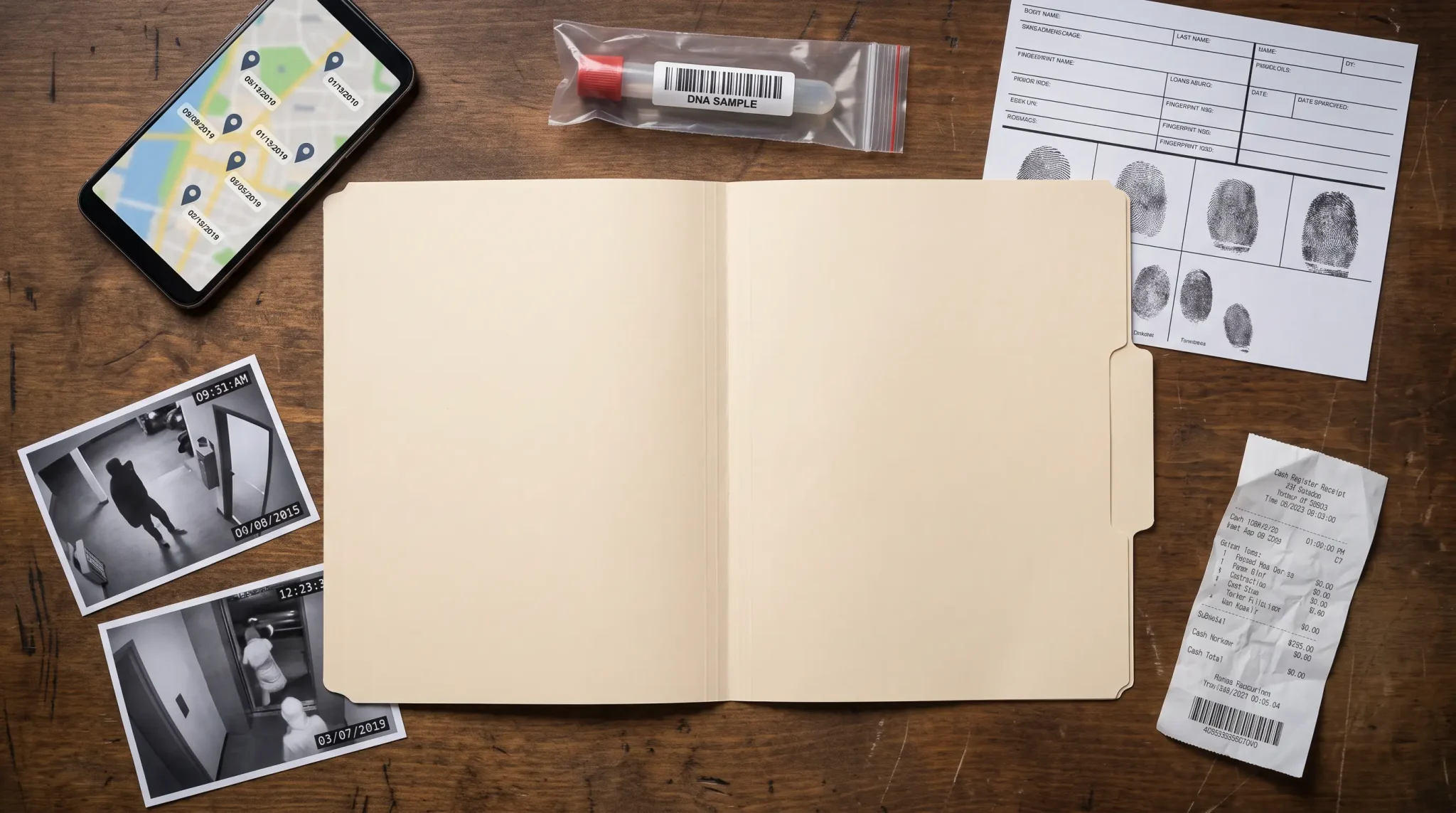
Exculpatory evidence can completely shift a criminal case. I have seen how one overlooked detail can challenge an accusation that initially appeared convincing.
Legal terms like this often sound harder than they are. I think of it simply as information that may help the person accused.
Among the different types of evidence used in a criminal case, a video, message, test result, or witness statement can reveal another side of the story
I know helpful evidence does not automatically make charges disappear. Courts still examine its source, timing, reliability, and importance to the case.
Disclaimer: This content is for general information only and does not provide legal advice. Laws and court procedures vary, so speak with a qualified lawyer about your situation.
What Is Exculpatory Evidence?
Exculpatory evidence is information that favors someone accused of a crime. It may show that the person was not involved, weaken an important part of the prosecution’s case, challenge a witness, or support a lower sentence.
The proof does not have to establish complete innocence by itself. Information that creates reasonable doubt or reduces the accused person’s level of blame may also qualify.
In criminal cases, prosecutors must disclose favorable evidence when it is material to guilt or punishment.
Common Examples of Exculpatory Evidence
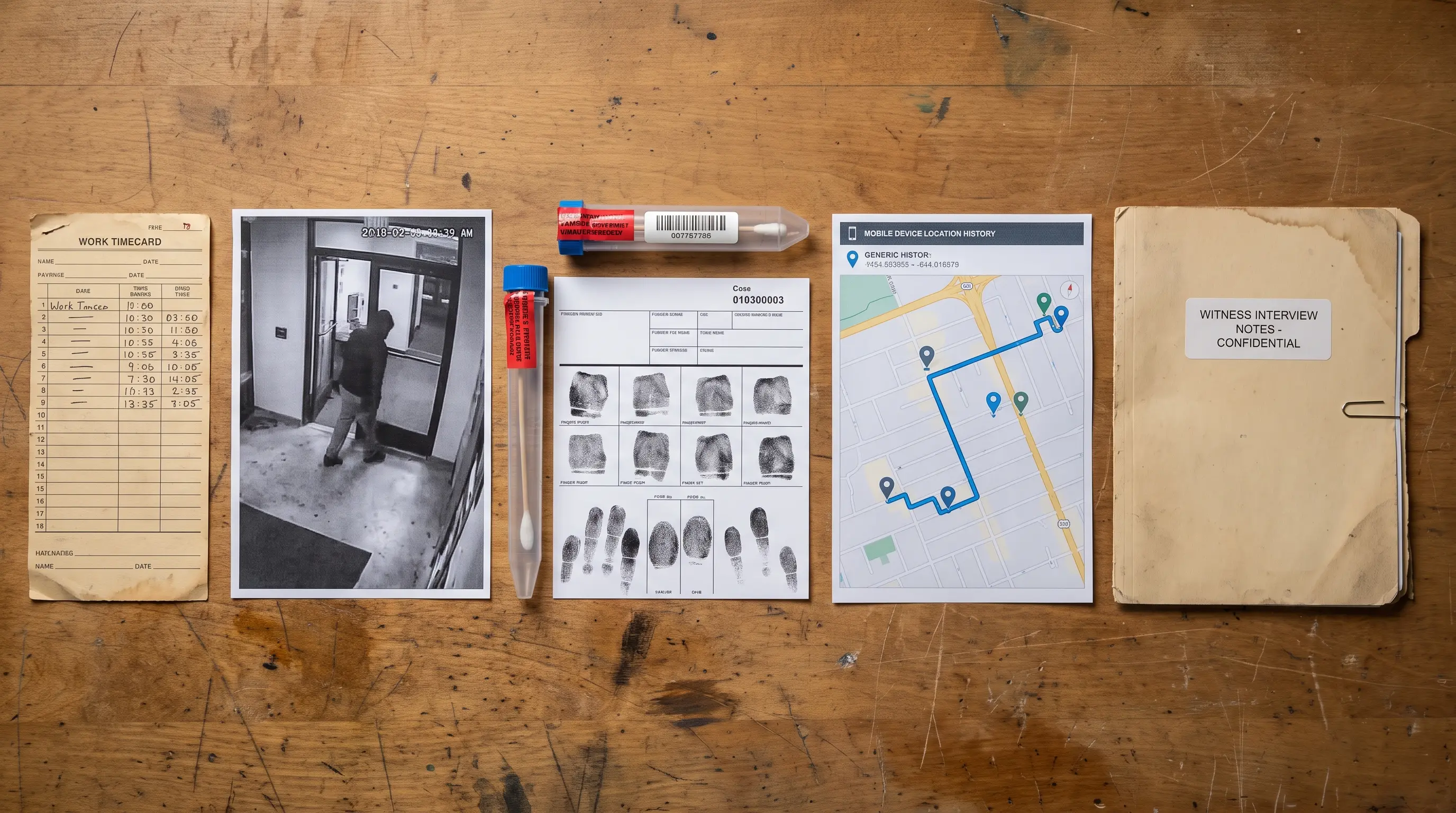
Helpful information can come from scientific testing, digital records, physical objects, or people who witnessed the event. Each source may challenge the accusation differently.
| Type of evidence | Example | How it may help |
|---|---|---|
| Alibi records | Work log or store receipt | Shows the accused may have been somewhere else |
| Video footage | Home or business security recording | Challenges the reported identity, location, or timeline |
| DNA testing | DNA belongs to another person | Weakens the connection between the accused and the crime |
| Fingerprints | Prints do not match the accused | Raises questions about who handled an important object |
| Phone records | Location history, calls, or messages | Supports an alibi or challenges the claimed timeline |
| Witness statement | A witness identifies another person | Creates doubt about who committed the alleged act |
Even a small detail can become important when it supports other facts. Several pieces of favorable proof may create stronger doubt when considered together.
What Is the Brady Rule?
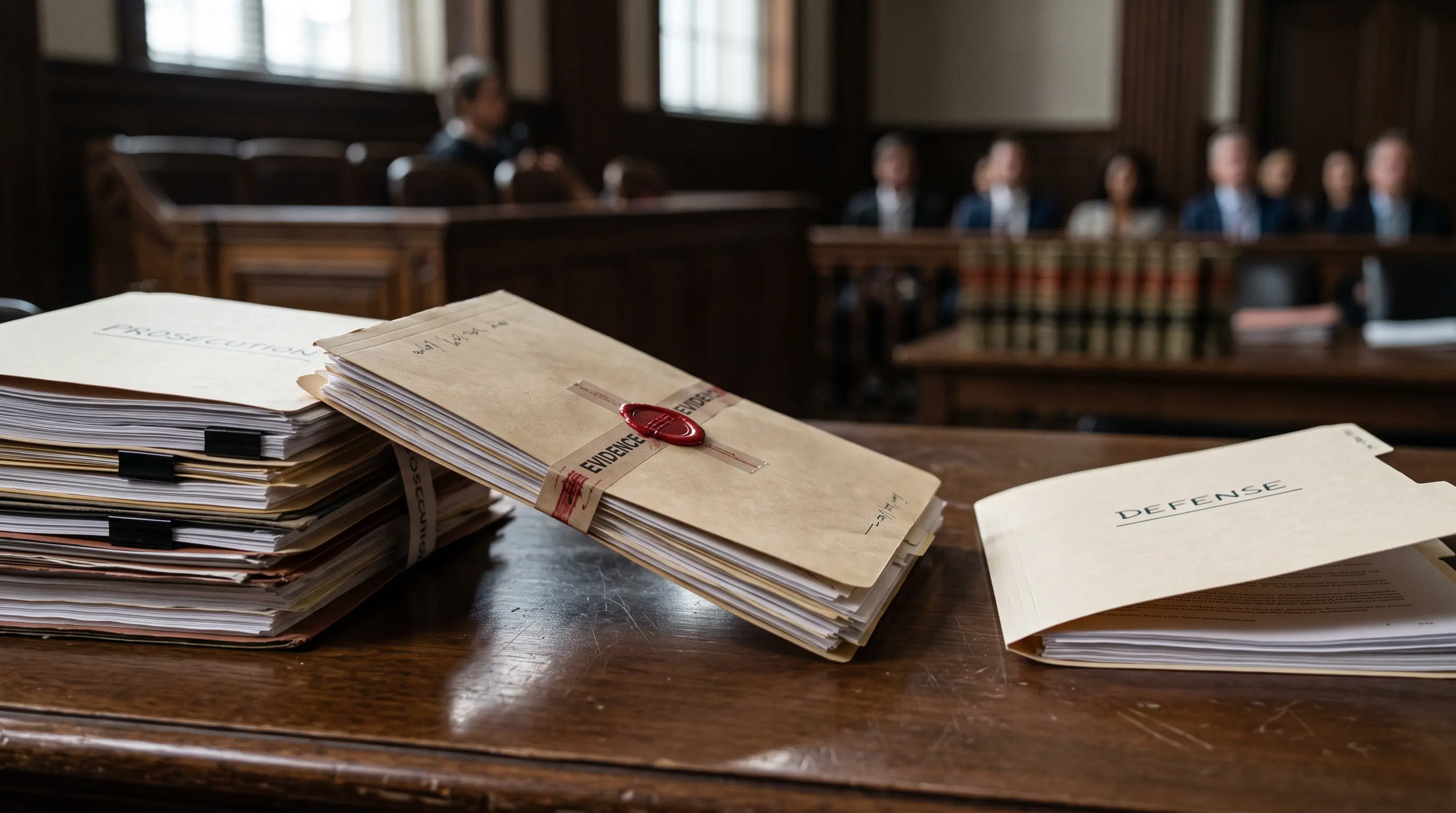
The Brady rule comes from the 1963 U.S. Supreme Court case Brady v. Maryland. It protects a defendant’s constitutional right to a fair criminal process.
The Court ruled that prosecutors violate due process when they suppress material evidence favorable to the accused. The rule applies to both guilt and punishment.
Brady generally applies to criminal prosecutions. It does not create the same constitutional disclosure duty in an ordinary civil lawsuit.
What Makes Evidence Material?
Evidence is material when there is a reasonable probability that timely disclosure could have changed the result or weakened confidence in it. It does not need to guarantee an acquittal.
Courts ask whether the missing information weakens confidence in the verdict or sentence. They may consider several hidden items together instead of judging each separately.
Three Parts of a Brady Violation
A defendant generally must establish three connected parts before a court will find a Brady violation. Simply showing that some evidence was not disclosed may not be enough.
- The evidence favored the accused: The missing information must help the defense in some meaningful way. It may support innocence, weaken the prosecution’s claim, challenge a witness’s credibility, or justify a lower sentence.
- The government suppressed it: Prosecutors or members of the prosecution team failed to disclose the evidence. Suppression can happen deliberately or by mistake, including when police possess information that prosecutors never reviewed.
- The failure caused prejudice: The withheld evidence must be material to the case. The defendant must show a reasonable probability that timely disclosure could have affected the verdict, sentence, or defense strategy.
The prosecutor’s intent is not the deciding issue. An accidental failure can still violate the defendant’s rights when the missing information was material, and its absence made the proceedings unfair.
Exculpatory vs. Inculpatory Evidence
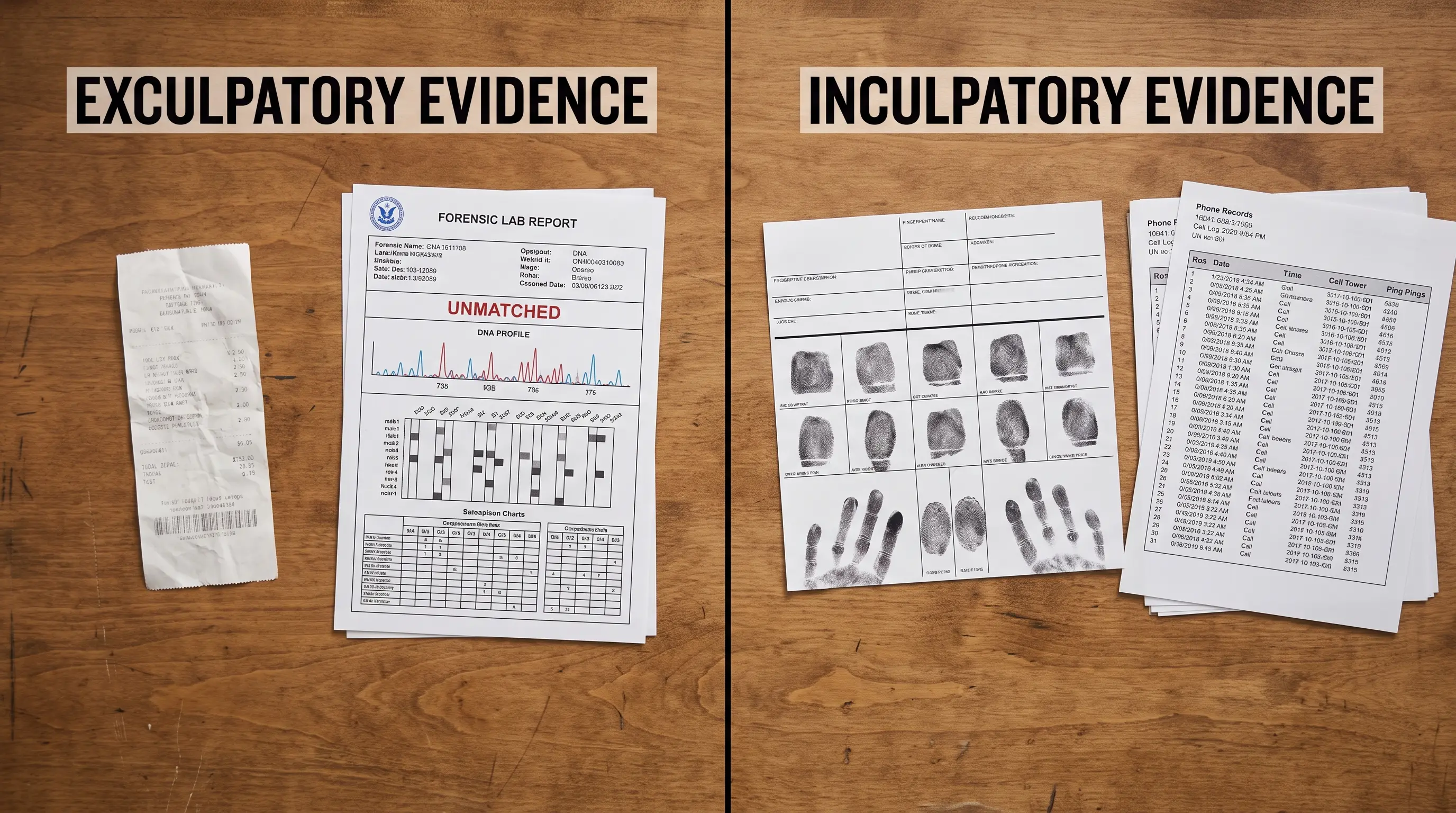
Exculpatory and inculpatory evidence serve opposite purposes in a criminal case. One helps the accused, while the other supports the prosecution’s claim.
| Point of Difference | Exculpatory Evidence | Inculpatory Evidence |
|---|---|---|
| Basic meaning | Information that favors the accused | Information that points toward guilt |
| Main purpose | Weakens the prosecution’s case | Strengthens the prosecution’s case |
| Effect on the case | May create reasonable doubt | May connect the accused to the crime |
| Common examples | Alibi records, unmatched DNA, or security footage | Matching DNA, fingerprints, messages, or eyewitness accounts |
| Effect on punishment | May support a lighter charge or sentence | May support a more serious charge or sentence |
| Disclosure rule | Prosecutors must share material favorable evidence | Usually presented by prosecutors to prove the charges |
The same item may contain both types of evidence. A video could place the accused at the scene but show someone else committing the alleged crime.
How Is Exculpatory Evidence Disclosed and Used?
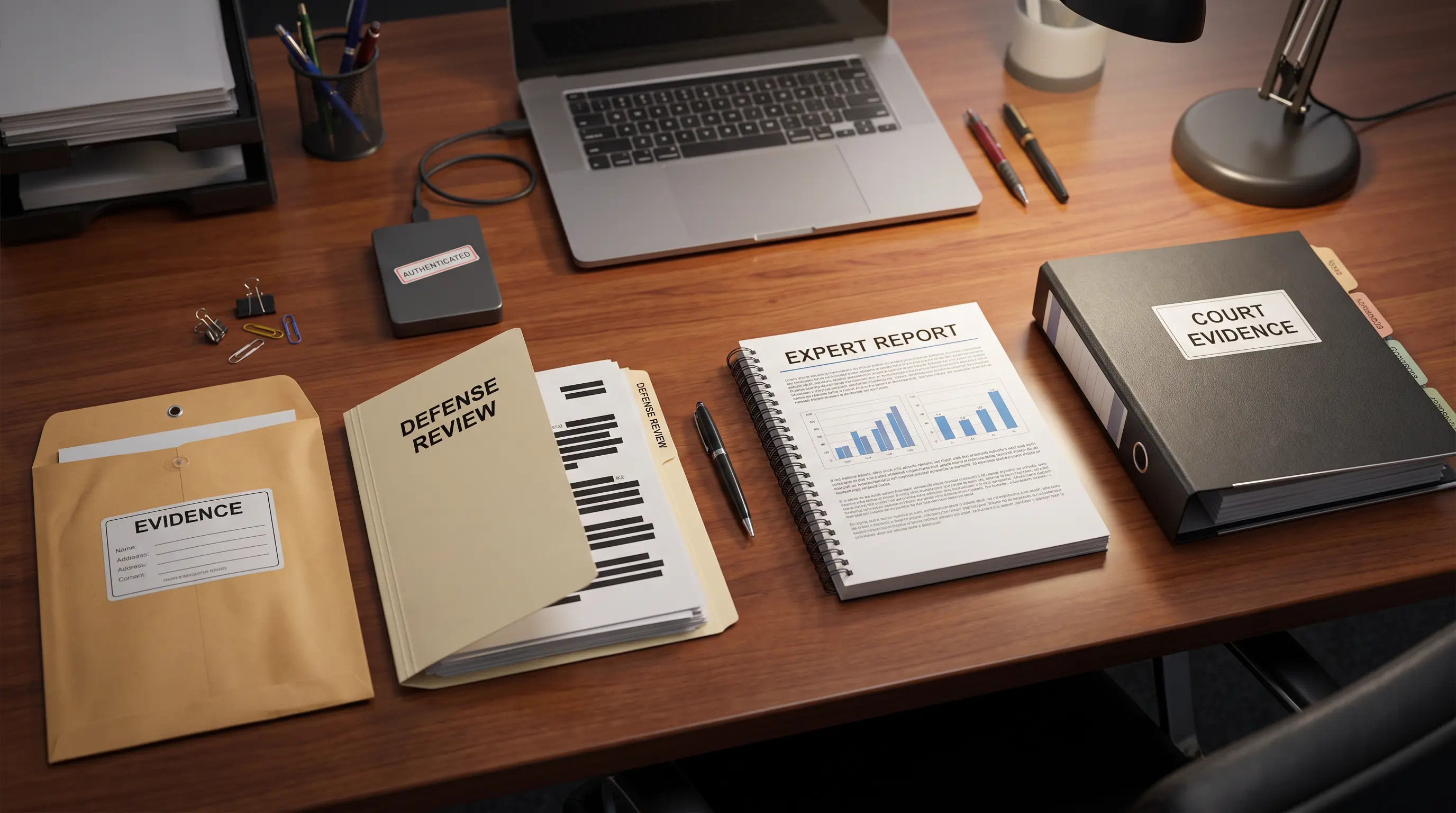
Exculpatory evidence must be shared properly and meet courtroom rules before it can help the defense.
Who Must Disclose It?
Prosecutors must disclose material evidence favorable to the accused, even without a specific defense request. This duty may cover information held by the prosecution team.
That team may include police officers, investigators, crime laboratories, and government experts closely involved in the case.
Defense lawyers can also gather separate proof. They may interview witnesses, request records, inspect locations, test evidence, and hire independent experts.
When Must It Be Disclosed?
There is no single disclosure deadline for every criminal case. Timing depends on constitutional rules, state law, local practice, and court orders.
Disclosure must generally happen early enough for the defense to use the material effectively. Lawyers may need time to investigate it and adjust their strategy.
A late disclosure is not automatically a Brady violation. Courts examine whether the delay prevented the defense from using the information properly.
Can It Be Used in Court?
Helpful information is not automatically admissible. Courts may consider its relevance, authenticity, hearsay rules, collection method, and connection to usable evidence.
For example, an unsupported rumor about another suspect may be rejected. A verified recording with a confirmed source and date carries greater legal value.
What Happens When Exculpatory Evidence Is Hidden?
The court’s response depends on when the evidence appears and how much harm the failure caused. Not every disclosure problem produces the same result.
Before Trial
A judge may order the prosecution to provide the missing information. The court may also delay the trial so the defense can examine it.
This extra time may allow lawyers to find witnesses, review records, or hire an expert. Early discovery can prevent greater unfairness later.
During Trial
The defense may request more preparation time after learning about hidden evidence. Lawyers may also ask to question a witness again.
Depending on the harm, the judge might exclude certain testimony or evidence. A mistrial may be considered when the problem cannot be corrected fairly.
After Conviction
A defendant may raise the disclosure failure on appeal or through a post-conviction claim. However, proving that information was withheld is only one part.
The defendant usually must show that the missing proof was material. A court may grant relief when proper disclosure could reasonably have changed the outcome.
Possible Court Responses
Depending on the circumstances, a court may:
- Order the prosecution to disclose the missing evidence immediately.
- Give the defense more time to review and investigate the evidence.
- Allow the defense to question certain witnesses again.
- Exclude affected evidence or testimony from the case.
- Grant a new trial when the violation affected the outcome.
- Change the defendant’s sentence when the evidence affects punishment.
- Reverse a conviction when the hidden evidence caused serious prejudice.
- Dismiss the charges in rare and especially serious cases.
Dismissal is not the automatic response to hidden evidence. Courts usually select a remedy based on timing, prejudice, and the seriousness of the violation.
How Can the Defense Find and Protect Exculpatory Evidence?
Favorable proof can disappear quickly, especially when it comes from cameras, phones, businesses, or online accounts. Early action may help preserve it.
- Request Evidence in Writing: Written requests identify missing evidence. They also record what the defense requested.
- Preserve Digital Records Quickly: Videos and phone data may disappear. Written preservation requests ask the holder not to delete them.
- Interview Witnesses Early: Memories fade over time. Early interviews may reveal helpful details.
- Compare Every Version: Reports and recordings may conflict. These differences can expose mistakes.
- Use Independent Experts: Experts can review scientific evidence. They may find testing errors or explain important limits.
- Raise the Issue in Court: The defense can file a motion concerning missing evidence. A judge may order disclosure or provide more time.
Together, these steps can protect valuable evidence before it disappears and give the defense more time to use it effectively.
Wrapping Up
Exculpatory evidence helps protect people from unfair convictions and excessive punishment. It can reveal mistakes, support innocence, or challenge a key witness.
The Brady rule requires prosecutors to share material favorable information. That duty covers evidence connected to guilt, witness credibility, and possible punishment.
Still, helpful proof does not guarantee that charges will disappear. Courts consider its source, reliability, timing, admissibility, and effect on the entire case.
If you or someone close faces criminal charges, speak with a defense lawyer promptly. Early help may protect valuable records before they disappear.
Frequently Asked Questions
What Qualifies as Exculpatory Evidence?
Any reliable information that supports innocence, weakens the prosecution’s story, challenges a witness, or may reduce punishment can qualify. Its legal importance depends on relevance, admissibility, and materiality in court.
Can Exculpatory Evidence get Charges Dismissed?
Yes, but dismissal is not automatic. A judge may order disclosure, delay proceedings, exclude certain proof, grant a new trial, change the sentence, or dismiss charges in especially serious cases.
Must Prosecutors Disclose Favorable Evidence Immediately?
Federal constitutional law requires disclosure in time for effective use, but exact deadlines can vary. Court orders, federal rules, local practice, and state laws may require earlier production of evidence.
Can Defendants Find Exculpatory Evidence Themselves?
Yes. Defense lawyers can investigate, interview witnesses, request records, hire experts, test physical items, and issue subpoenas. Prosecutors still must disclose material favorable evidence known to the prosecution team, too.





