

Most drivers have heard the term, but very few actually know what really goes on during a roadside stop. Things can shift fast in that moment, and what feels like a normal interaction can suddenly carry serious weight. Knowing what a field sobriety test is before you are ever asked to take one can change how you handle the situation. This blog breaks down how these tests work, what officers look for, your rights at the time, and what can happen depending on your response. One detail often missed: drivers do not officially pass or fail these tests. Officers are trained to watch for specific signs in your behavior. Those signs are then used to decide the next step. That matters because the outcome depends on how those observations are interpreted, not just what you actually do. What is a Field Sobriety Test? A field sobriety test is a set of physical and mental tasks done on the roadside to check if a driver may be impaired by alcohol or drugs. These tests do not take place at a police station; they are usually conducted right after a traffic stop, when officers use them to observe signs before deciding whether to make an arrest or request a chemical test. It helps to understand where these tests fit in the legal process, since an officer only needs reasonable suspicion to pull you over, which is a lower standard, and field sobriety tests are then used to build probable cause, the higher threshold required for an arrest. Understanding the difference between being detained vs arrested can help you recognize which stage of this process you are in. These tests are not designed as a neutral measure of sobriety, but rather as a way to collect observations that may support an arrest decision. […]
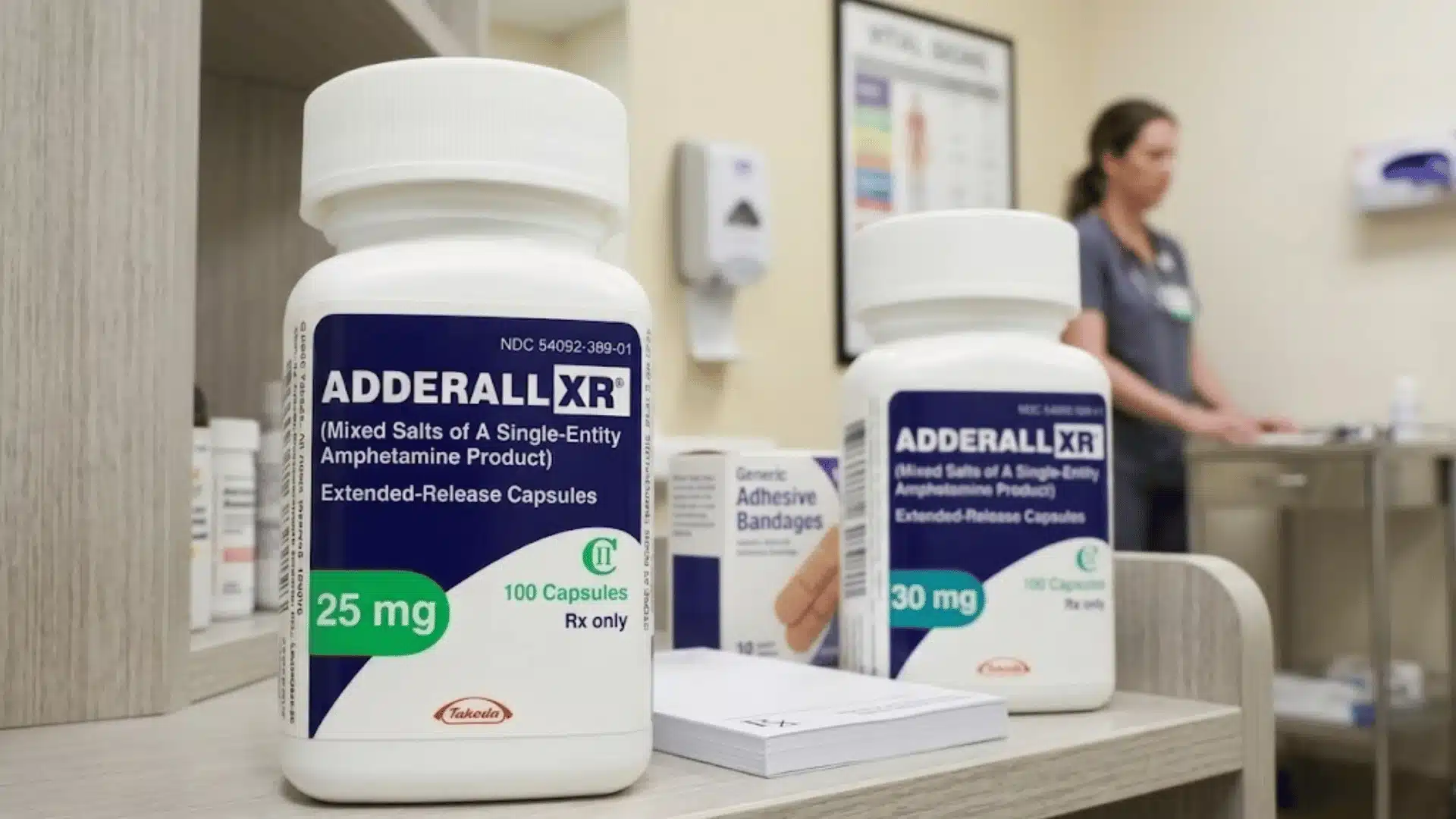
Every year, people end up facing criminal charges over a small orange pill they never imagined could land them in serious legal trouble. The question of whether Adderall is illegal does not have a simple yes or no answer, and that gap between what people assume and what the law actually says is exactly where charges happen. It is a legitimate, widely prescribed medication for millions of people, and at the same time, one of the most tightly regulated controlled substances in the country. Whether what you are holding is legal depends on details most people have never considered. The circumstances that lead to an Adderall-related charge rarely look like what most people picture when they hear the phrase “drug arrest.” A college student shares a pill with a roommate before finals. Someone carries their medication in a weekly pill organizer rather than in the pharmacy bottle. A prescription runs out, and a few leftover pills stay in the medicine cabinet. None of these situations feels criminal. But depending on your state and what an officer finds, they can be treated as one under both state and federal law. Understanding exactly where those legal lines are drawn,and what charges can follow when they are crossed,is the focus of this blog. Legal Disclaimer: This article is for general informational purposes only and does not constitute legal advice. Laws vary by state and are subject to change. If you are facing criminal charges related to Adderall or any controlled substance, consult a licensed criminal defense attorney in your jurisdiction before taking any action. Why is Adderall a Controlled Substance? The Drug Enforcement Administration (DEA) classifies Adderall as a Schedule II controlled substance under the federal Controlled Substances Act. Schedule II is not a middle-ground category. It is the same tier as cocaine, […]

Most people do not expect a simple bar robbery to expose something much bigger, but that is exactly how the Lindsay Shiver trial came into the spotlight. Back in July 2023, police in the Bahamas were checking phones during a routine case, and they found a message that changed everything overnight. That message led straight to Lindsay Shiver, a former beauty queen and mother of three, whose life looked stable but was already falling apart. As the Lindsay Shiver update continues, more details about her marriage, alleged affair, and custody fight have started coming out in court. I will walk you through the Lindsay Shiver trial, including key updates, what really happened, and how the case reached this point. But before we get into the legal side, it helps to first understand who Lindsay Shiver really is and how this situation began. Who is Lindsay Shiver, & What is She Charged with? Lindsay Shiver, a 38-year-old woman from Alabama, is now at the center of a high-profile criminal case. In early 2023, her marriage to Robert Shiver began to break down, leading to a contested divorce, a custody dispute, and rising personal conflict. What started as a private family issue quickly escalated into a criminal investigation that drew national attention. Lindsay Shiver, along with Terrance Bethel and Faron Newbold Jr., is charged with conspiracy to commit murder under Bahamian law, pursuant to Section 89(1) of the Penal Code (Chapter 84). Prosecutors allege she planned to have Robert Shiver killed, pointing to sources found during an unrelated police investigation. All three defendants have pleaded not guilty, and the Lindsay Shiver trial formally began in Nassau, Bahamas, in March 2026. What Happened in the Bahamas: The Murder-for-Hire Plot Things did not suddenly blow up in the Bahamas, and the real tension had […]

You missed a court date, and now what? Before you assume it was just a harmless oversight, you need to understand that in the eyes of the law, missing a scheduled court appearance after being released on bail is a serious criminal offense. What is bail jumping? It is not simply forgetting a date on the calendar. It is a distinct legal violation that can stack new charges on top of the ones you are already fighting, result in immediate arrest, and seriously damage your case going forward. As a criminal defense attorney with years of courtroom experience, I have seen how quickly a missed court date can spiral into a far more complicated legal situation. This blog post breaks it all down clearly. Bail Jumping Meaning: The Core Legal Definition Bail jumping is a criminal offense that occurs when an individual who has been released on bail intentionally fails to comply with the terms and conditions of their release or fails to appear in court as required. In plain terms, it means you were let out of custody, promised to show up, and did not. If a defendant fails to appear in court or violates the agreed conditions of release, the defendant is said to have jumped bail. In some cases, only violating release conditions without missing court entirely can also be referred to as “violating a bond.” What makes bail jumping distinct from a simple no-show is the legal weight it carries. Bail jumping can be charged as a separate crime in both state and federal courts. As a result, a defendant who fails to appear in court will continue to face their original charge, may forfeit bond, and may face a separate bail jumping charge. That means you are not trading one problem for another. You are […]

Most people have heard the name Megan’s Law, but far fewer understand exactly what it does, who it applies to, and how it actually functions in the legal system. As a criminal defense attorney with years of courtroom experience, I have seen firsthand how this law affects defendants, families, and communities in ways that go well beyond a simple internet search. Understanding what Megan’s Law is goes beyond knowing it has something to do with sex offenders. It is a federal and state framework with real registration requirements, public notification rules, and serious criminal consequences for non-compliance. This guide gives you a clear, authoritative, and practical breakdown of everything you need to know. What is Megan’s Law? Megan’s Law requires people convicted of certain sex offenses to register with police and allows the public to see where they live, work, and go to school. At the federal level, it was enacted in 1996 as an amendment to the Jacob Wetterling Crimes Against Children and Sexually Violent Offender Registration Act of 1994. According to the Legal Information Institute at Cornell Law School, the law requires the release of relevant information to protect the public from sexually violent offenders. The distinction between registration and public notification is critical here. Registration means an offender must report their information to law enforcement. Public notification means that information is then made accessible to the general public, including through online registries, and Megan’s Law mandates both. Why Do They Call It Megan’s Law? No discussion of Megan’s Law is complete without understanding the tragedy that created it. In July 1994, 7-year-old Megan Nicole Kanka was raped and murdered in Hamilton Township, New Jersey, by her neighbor Jesse Timmendequas, a man who had two prior convictions for sex crimes against young children. Megan’s family had no idea […]

Two people sit in a car, talking about a plan to rob a bank, thinking it is just a random talk and nothing serious has happened yet. Under U.S. law, that moment can already count as criminal conspiracy, even if no money is taken and no real action follows after that point. That is what makes people confused about what a conspiracy is in law, because it focuses more on agreement and intent than the actual crime itself. I will be telling you about how criminal conspiracy works, what courts look for, and how these charges are handled in real cases. You will also understand how simple actions like calls or meetings can change everything legally and put someone at risk without them realizing it. But before moving ahead, take a closer look at how planning alone can cross into criminal territory and why the law treats it so seriously. When Does Planning Cross into Criminal Territory? Most people think a crime starts when something actually happens. In reality, the law steps in much earlier than that. Under U.S. law, the moment two or more people agree to commit a crime and take even one small step toward it, it becomes a criminal conspiracy. That step is called an overt act. It does not need to be illegal on its own. Renting a car, buying tools, or even checking out a location can count. The key point is intent plus action. In my experience handling felony cases in Florida, people are genuinely surprised by this. They come in believing that because nothing actually happened, they cannot be in real legal trouble. But prosecutors do not need a completed crime. Another big factor is shared responsibility. Once you are part of a conspiracy, you can be held responsible for what others […]

Before he suited up as Iron Man, Robert Downey Jr. walked into a California courtroom wearing an Orange County jail jumpsuit. His legal story is one of the most documented in Hollywood history, yet most people still do not know the full legal picture. As a criminal defense attorney, I find his case genuinely instructive. It shows how drug possession charges escalate, how probation violations trigger imprisonment, and what a governor’s pardon actually means under California law. This piece breaks down the complete Robert Downey Jr jail timeline, the specific charges he faced, the time he served, and what his 2015 pardon did and did not accomplish legally. Why Did Robert Downey Jr Go to Jail? In June 1996, Downey was arrested for possession of heroin, cocaine, crack cocaine, and an unloaded .357 Magnum handgun while speeding down Sunset Boulevard. A month later, while under the influence, he entered a neighbor’s home through an unlocked front door and fell asleep on their child’s bed. The family declined to press trespassing charges, but the 911 call made by the neighbor later became known online as the “Goldilocks incident.“ In September 1996, he pleaded no contest. Two months later, following a period in court-ordered rehab, he was sentenced to six months of live-in rehabilitation, three years’ probation, and compulsory drug testing. From a criminal law standpoint, this is a fairly standard outcome for a first-time felony drug possession case in California, where courts lean toward structured rehabilitation before defaulting to incarceration. The unloaded firearm added a weapons charge, though it did not result in additional prison time at that stage The 1997 Probation Violation That Sent Him to County Jail A year after his initial arrest, Downey skipped a court-ordered drug test and spent nearly four months in the Los Angeles County […]