
Sticker shock should not be the first thing standing between someone and legal help.
Yet that is exactly what happens when people hear about retainers, hourly rates, court fees, and attorney bills without knowing what those numbers actually mean.
The cost can feel unpredictable, especially when one case seems affordable and another seems impossible to manage.
That confusion leads many people to delay calling a lawyer, even when the situation may require professional guidance.
Legal pricing depends on several moving parts, and the billing method can change how the cost feels from the very beginning. Before assuming legal help is out of reach, it helps to understand how attorneys usually structure their fees.
How Much Does a Lawyer Cost in the US?
Hourly rates for lawyers in the US typically range from $150 to $600+ per hour, with a national average around $250–$350. Small-town attorneys tend to charge less. Big-city lawyers handling complex cases often charge more.
Simple legal work gets billed differently. A basic will or an uncontested divorce is often billed on a flat fee rather than an hourly rate.
That fee can land anywhere from $500 to $3,000, depending on the state and the attorney. Personal injury cases work on a different model entirely.
Most injury lawyers take a contingency fee, usually 25 to 40 percent of whatever the case recovers. If the case does not win, the client owes nothing for the lawyer’s time.
That single detail is often what makes an auto accident settlement feel less scary, money-wise, than a divorce or a business dispute.
Average Lawyer Costs by Case Type
Lawyer costs vary widely by case type because some services are simple and predictable, while others require court filings, negotiations, or trial preparation.
| Legal Service | Typical Pricing Model | Average Cost | Notes |
|---|---|---|---|
| Simple Will | Flat Fee | $250–$1,000 | Lower with online or DIY services; higher for complex estates or multiple documents. |
| Uncontested Divorce | Flat Fee | $1,000–$4,000 | Cost varies by state, property division, and whether children are involved. |
| Contested Divorce | Hourly or Retainer | $5,000–$20,000+ | Trials, custody disputes, or complex assets can raise the total cost. |
| DUI Defense | Flat Fee or Hourly | $2,000–$10,000 | First-time misdemeanor cases often fall on the lower end. |
| Criminal Defense | Flat Fee or Hourly | $1,500–$25,000+ | Price depends on charge severity and whether the case goes to trial. |
| Personal Injury Claim | Contingency Fee | 25%–40% of recovery | Most cases require no upfront attorney fee. |
| Car Accident Claim | Contingency Fee | 25%–40% of recovery | No attorney fee if there is no recovery, though case expenses may still apply. |
| Business Contract Review | Flat Fee or Hourly | $300–$1,500 | Simple reviews are usually billed as a flat fee. |
| Small Business Dispute | Hourly | $150–$450 per hour | Costs can rise quickly if the dispute turns into litigation. |
| Immigration Help | Flat Fee or Hourly | $1,000–$7,500 | Fees vary by visa type, paperwork, and case complexity. |
| Bankruptcy Filing | Flat Fee | $1,000–$3,500 | Chapter 7 is usually cheaper than Chapter 13. |
| Child Custody Case | Hourly or Retainer | $5,000–$25,000+ | Highly variable; mediation may help reduce costs. |
Common Ways Lawyers Charge for Their Time
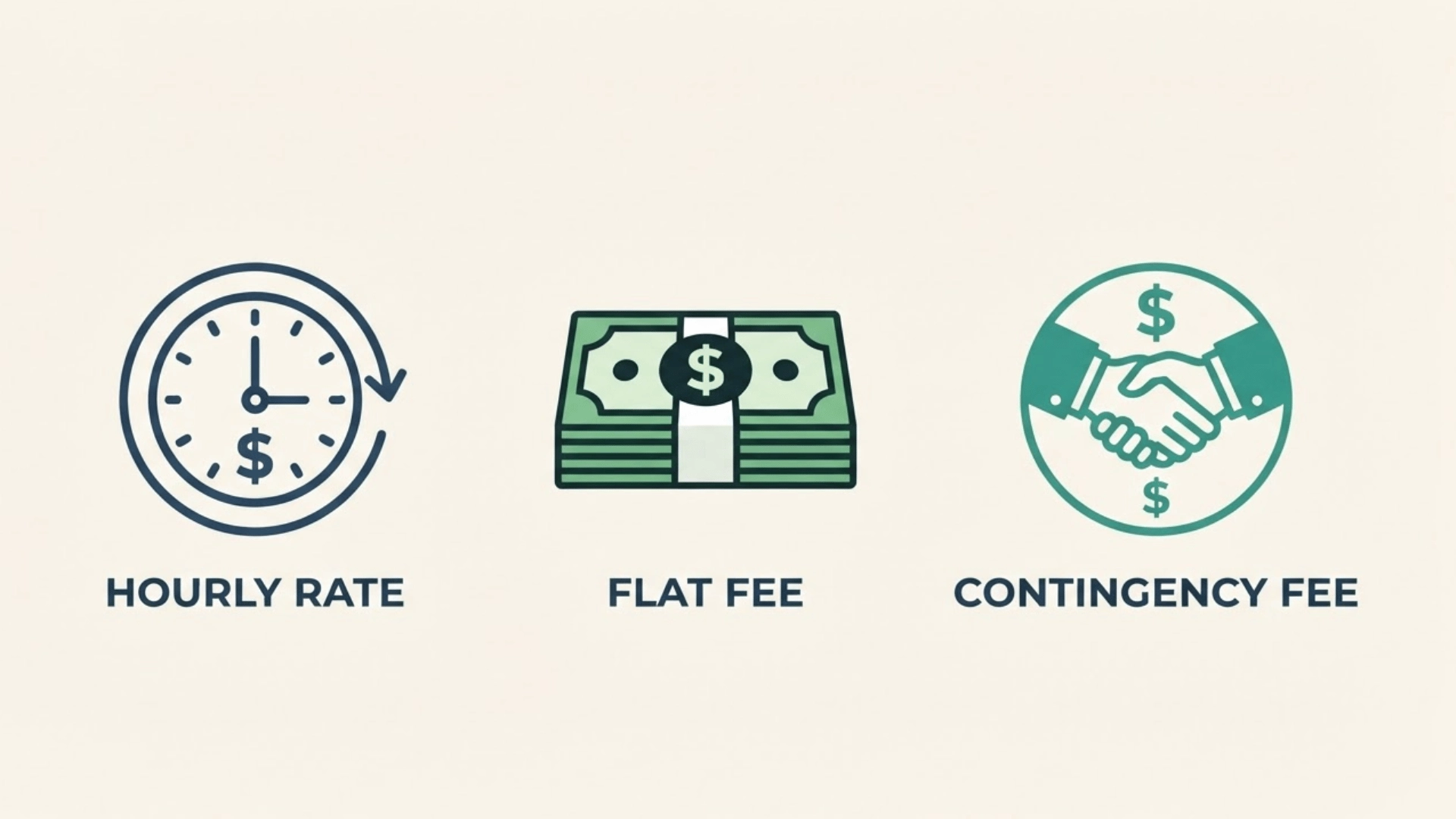
Legal fees usually depend on the type of case, the amount of work involved, and how the lawyer prefers to bill.
1. Hourly Rate
An hourly rate means the lawyer charges for the actual time spent working on the case. Time may be tracked in small billing increments, sometimes as little as six minutes.
This structure is common for divorce cases, criminal defense, business disputes, and complex legal matters where the total workload is hard to predict from the start.
2. Flat Fee
A flat fee is one set price for a specific legal service, regardless of how much time the lawyer spends on it.
This works best for predictable tasks such as simple wills, basic contracts, uncontested divorces, or routine filings. Clients often prefer this model because the total cost is clearer upfront.
3. Contingency Fee
A contingency fee means the lawyer gets paid only if the case results in a settlement or award. Instead of charging upfront, the lawyer takes a percentage of the final recovery.
This model is common in personal injury cases and some employment claims. If the case is lost, the client usually does not owe attorney fees.
4. Retainer
A retainer is an upfront payment that the lawyer holds and bills against as work is completed. The lawyer deducts hourly charges from that balance, and the client may need to add more when it runs low.
This setup is common for ongoing matters, business legal help, or cases that may require repeated work.
What Factors Affect Lawyer Fees?
Several moving parts shape legal fees, but most price differences come from case type, lawyer background, location, complexity, court involvement, and timing pressure.
- Type of Legal Case: Routine legal work, such as a simple will or uncontested filing, usually costs less than criminal defense, divorce, business disputes, injury claims, or lawsuits involving serious financial risk.
- Lawyer’s Experience and Reputation: A newer attorney may charge less, while a well-known lawyer with years of courtroom or negotiation experience may charge more because of skill, demand, and proven results.
- Location and Cost of Living: Lawyers in large cities usually charge higher rates than lawyers in smaller towns because office rent, staff costs, competition, and local demand all affect pricing.
- Case Complexity: A straightforward case with clear facts usually costs less than one involving multiple parties, expert witnesses, heavy paperwork, disputed evidence, or long negotiations before settlement.
- Court Appearances and Trial Requirements: Cases that require hearings, filings, witness preparation, or trial time usually cost more because the lawyer must spend extra hours preparing and appearing in court.
Real Cost Examples from Real Cases
Numbers only say so much about how much a lawyer costs until real cases get lined up side by side.
| Case type | Typical cost |
|---|---|
| Simple will | $300 to $1,200 flat fee |
| Uncontested divorce | $1,000 to $3,000 flat fee |
| DUI defense | $2,000 to $10,000, often a flat fee |
| Personal injury claim | No upfront cost, 25 to 40 percent contingency |
| Small business dispute | $150 to $400 per hour |
The gap between a flat-fee divorce and a contingency-based personal injury settlement surprises many people. One case asks for money before anything happens. The other asks for nothing until there is money to split.
What People Say About Lawyer Costs on Reddit?
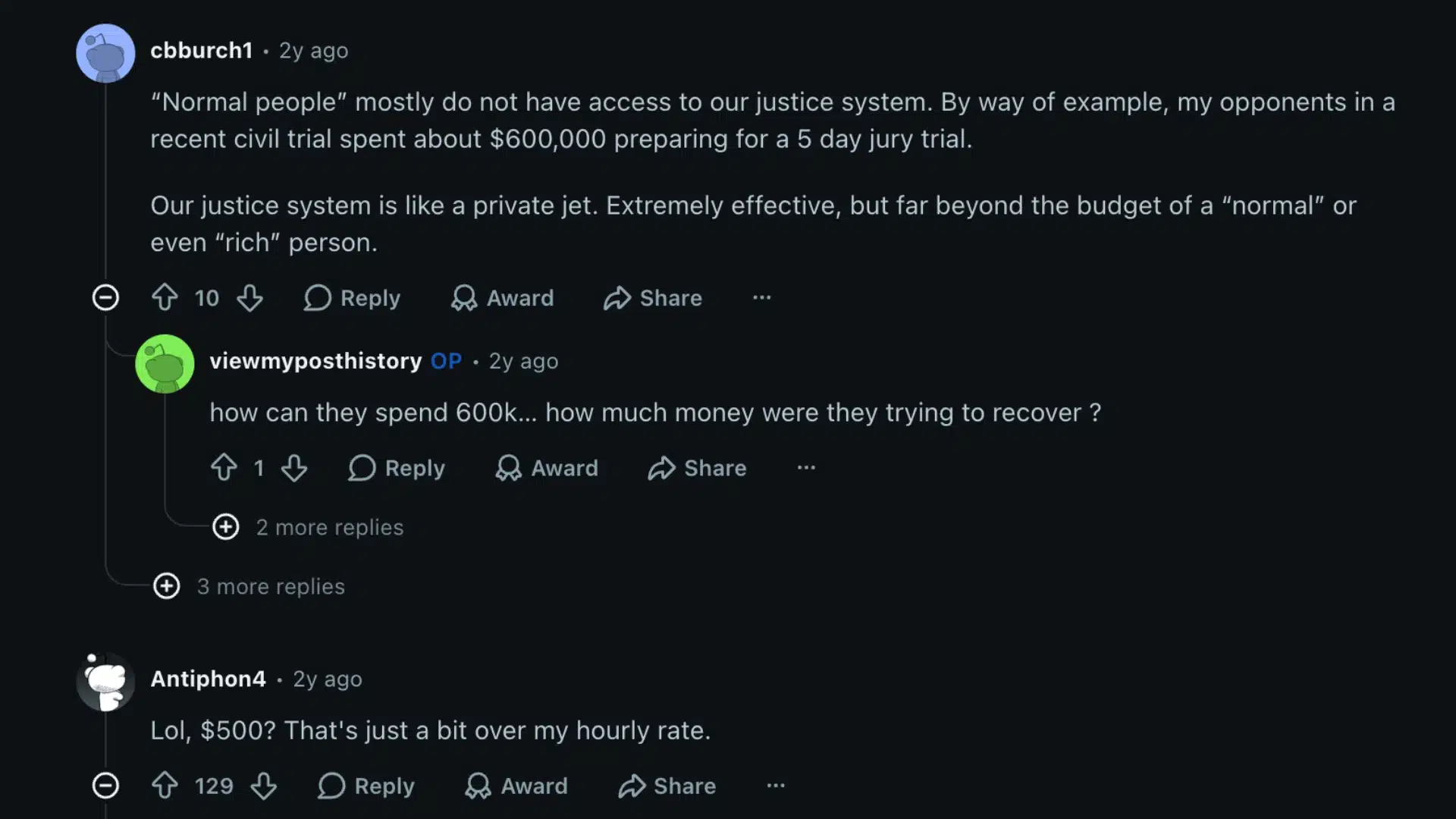
Reddit discussions about lawyer costs often start with the same shock: someone hears that a one-day trial could cost more than $500 and wonders how regular people can afford it.
The replies are blunt. Many lawyers say $500 may be closer to one hourly rate than the full cost of trial, because preparation, documents, witnesses, research, and court time all add up before anyone stands in front of a judge.
The bigger theme is access. Some people borrow money, pay over time, use insurance when applicable, or seek contingency arrangements in which the lawyer is paid from a settlement.
Free or public-interest help may be available, but it is limited.
The discussion makes one point clear: for many ordinary people, the real problem is not one large bill, but a system that becomes expensive long before trial day.
How Do People Afford a Lawyer when Money is Tight?
People who cannot afford the full attorney fee upfront still have several practical options, especially for injury, family, housing, and benefits-related legal problems today.
- Free consultations: Many personal injury and family law attorneys offer a free initial consultation to review the facts, explain possible next steps, and confirm whether the case is worth pursuing.
- Contingency fee cases: Accident and injury cases may qualify for contingency billing, which means the lawyer is paid from the settlement or award only if the case succeeds.
- Legal aid organizations: Legal Services Corporation-funded groups provide free help for people who meet income limits, usually in family, housing, public benefits, and consumer law matters.
- Payment plans: Some attorneys allow clients to split a flat fee into monthly payments, making the total cost easier to manage instead of paying everything upfront.
- Limited-scope representation: A lawyer may handle only one part of the case, such as reviewing documents or preparing forms, so the client avoids paying for full representation.
USA.gov also lists free and low-cost legal clinics by state, making it a useful starting point when a full-price attorney is not realistic.
When a Lawyer Costs Nothing Upfront?

Contingency-fee cases make it easier to start legal help because the client does not pay attorney fees upfront. Instead of charging by the hour, the lawyer is paid from the settlement or court award if money is recovered.
This setup is common in car accident cases, slip-and-fall claims, workplace injuries, and many other personal injury matters.
It also gives the lawyer a clear reason to push for a fair result, because the fee usually depends on the final recovery.
For people worried about legal bills, this can remove the biggest barrier to calling for help. There may still be case costs or rules in the agreement, so clients should read the terms carefully.
But in most injury cases, hiring a lawyer does not mean paying a large bill on day one.
Clients should still expect to pay for filing fees, medical records, or expert witnesses; in many cases, these are separate from attorney fees.
Conclusion
So, how much does a lawyer cost? The answer depends on what kind of help you need, how complex the case is, and how the attorney charges.
A simple will may cost a few hundred dollars, while a contested divorce or criminal case can reach thousands.
Personal injury claims are different because many lawyers work on a contingency basis, meaning no attorney fee is due unless money is recovered.
The smartest step is to ask about consultation fees, billing structure, retainers, case costs, and payment options before signing anything.
Legal help may feel expensive, but guessing can cost more than asking or comparing options first.
If you have hired a lawyer before, share your experience in the comments so others can understand what real legal costs look like and avoid surprise legal bills.
Frequently Asked Questions
How Can I Get an Accurate Estimate of My Lawyer’s Fees?
Ask for a written fee agreement and phased budget during the initial consultation. Many attorneys will outline expected costs for key stages (e.g., discovery, settlement negotiations, trial).
Can a Lawyer’s Fee Be Negotiated?
Yes, fees are often negotiable, especially for flat-fee work or long-term retainer arrangements. It never hurts to ask about a reduced rate, a payment plan, or a fee cap before signing anything.
What Additional Expenses Should I Expect Beyond Attorney Fees?
Court filing fees, expert witnesses, investigators, mediation, and document costs. In contingency cases, you may still be responsible for these even if the lawyer’s fee is only paid upon recovery.