

Searches for “Martha Stewart prison” or “Martha Stewart jail” usually come from a place of curiosity that goes far beyond news headlines.
People want to know what really happened during that period, especially how a globally recognized figure adjusted to life in a federal prison. There is a strong interest in understanding the reality behind the situation rather than just the legal outcome.
Questions often focus on her daily routine, the type of work she did, how she interacted with other inmates, and what kind of mental and emotional challenges she faced during that time.
Here, I will bring all of that together in one place. I will cover the legal case that led to her sentence, what daily life looked like inside the facility, the responsibilities she handled, and the reflections she shared after release.
I will also explain how this phase influenced her public image and long-term career.
Why Did Martha Stewart Go to Prison?
Martha Stewart’s legal case in 2004 became one of the most talked-about corporate scandals involving a public figure.
The issue started with a stock sale involving ImClone Systems, a biotech company. Investigators questioned whether the sale was based on insider information.
While many expected an insider trading conviction, the final charges were different. According to the U.S. Department of Justice official case announcement, she was found guilty of:
- Obstruction of justice
- Making false statements to investigators
- Conspiracy related to misleading authorities
The key issue was not just the trade itself but the attempt to cover up details during the investigation. This distinction played a major role in the court’s final decision.
Cases like the Casey Anthony trial show how public interest in high-profile legal cases goes far beyond the courtroom verdict.
Martha Stewart Prison Sentence Breakdown
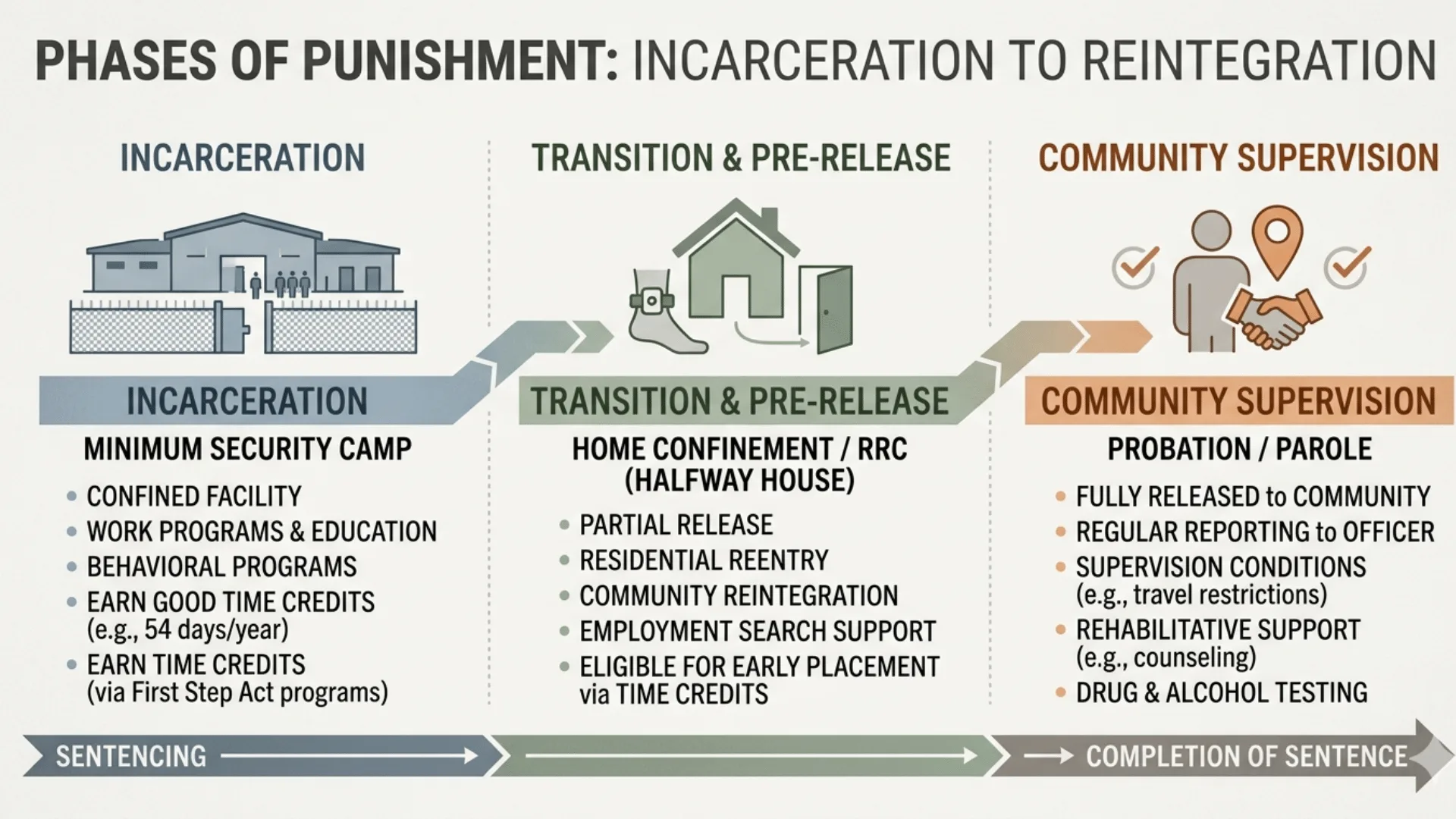
Martha Stewart received a sentence that included several phases. She served 5 months in federal prison, followed by 5 months of home confinement where her movement was restricted and monitored.
After that, she was placed on supervised probation for 2 years, requiring regular check-ins and compliance with the terms of her probation.
In addition to these restrictions, she also faced financial penalties and temporary limitations on her involvement in certain business activities.
According to the Federal Bureau of Prisons, supervised release and probation conditions are strictly enforced and vary based on the nature of the offense.
This sentence made her one of the most high-profile business figures to serve time in jail in the United States.
Where Did Martha Stewart Serve Her Sentence?

Martha Stewart served her sentence at Federal Prison Camp Alderson in West Virginia.
This facility is a minimum-security federal prison camp that often houses non-violent offenders. However, that does not mean it is easy or comfortable.
What This Facility is Like
The facility did not have high walls or armed guard towers, which often creates the impression of a more relaxed environment. However, strict supervision remained in place at all times, and inmates were constantly monitored to ensure that rules were followed.
Instead of private cells, the housing was arranged in dormitory-style units where multiple inmates shared the same area, leaving very little room for privacy or personal space.
Movement within the campus was carefully regulated, meaning inmates could only go to specific areas at assigned times and were not free to move around independently.
There was also a strong emphasis on routine and discipline, with each day structured around fixed schedules for meals, work, and rest.
Even though it is considered one of the less severe prison environments, it still removes personal freedom completely and requires full adjustment to a controlled way of living.
What Was Life Like for Martha Stewart in Jail?
Life inside followed a strict structure. There was no flexibility, no personal control over time, and no special treatment despite her public status.
1. Structured Daily Routine
Each day followed a fixed schedule. Inmates woke up early and had to follow the assigned time blocks for each activity.
A typical day included:
- Early morning wake-up call
- Scheduled breakfast with other inmates
- Assigned work duties
- Limited recreational time
- Evening check-ins and lights-out rules
Missing schedules or breaking rules could lead to penalties, so discipline was essential.
2. Assigned Work Responsibilities
Every inmate, including Martha Stewart, had to perform assigned jobs within the prison system.
Reported duties included:
- Cleaning common areas
- Working in food service or kitchen operations
- General maintenance tasks
These roles were not optional. Work assignments were part of the correctional structure and helped maintain daily operations inside the facility.
What stands out here is that her celebrity status did not change her responsibilities. She followed the same system as others.
3. Living Conditions and Environment
Life inside the camp was simple and controlled.
Key aspects included:
- Shared dormitory-style rooms with other inmates
- Basic bedding and storage space
- Limited personal belongings allowed
- No access to luxury or personal comforts
Privacy was minimal. Every aspect of daily life was monitored or regulated. Even communication with family or friends had restrictions:
- Limited phone access
- Monitored conversations
- Scheduled visiting hours
4. Social Life and Interaction
Prison life also involved interacting with other inmates from different backgrounds. Martha Stewart reportedly:
- Maintained respectful relationships
- Observed different personal stories and experiences
- Adapted to a completely different social environment
This part of the experience is often overlooked. Being surrounded by unfamiliar people in a confined setting can be mentally challenging.
5. Emotional and Mental Adjustment
One of the biggest challenges in prison is not physical but mental. For someone used to control, independence, and influence, the shift can be significant.
During her time in jail, Martha Stewart had to:
- Adjust to the lack of privacy
- Accept strict authority and rules
- Deal with isolation from normal life
- Reflect on personal decisions and consequences
This phase is often described as humbling and grounding.
Did Martha Stewart Talk About Her Prison Experience?
Yes, her perspective added real depth to how the public understands her time in jail.
Martha Stewart described the experience as difficult yet eye-opening, in which the structured environment pushed her to adjust mentally and emotionally.
She often highlighted how the routine, lack of control, and strict rules made each day mentally demanding, requiring patience and discipline to get through.
Rather than portraying it only as a negative phase, she acknowledged that it forced her to slow down and reflect on her decisions, priorities, and the path that led her there.
She also shared that one of the most impactful parts of her time in prison was observing the resilience of other inmates.
Being surrounded by people from very different backgrounds gave her a broader understanding of life situations she had never personally encountered before.
This exposure helped her gain a deeper awareness of the justice system and how it affects individuals differently. The Bureau of Justice Statistics provides a broader context on how incarceration affects individuals from all walks of life across the United States.
How Prison Changed Martha Stewart’s Image
Before prison, Martha Stewart represented a carefully curated lifestyle, polished branding, and high standards. After prison, her image evolved.
More Human and Relatable
The experience added a strong layer of realism to her personality, something that was not as visible before. Martha Stewart had long been associated with perfection, precision, and a carefully maintained public image.
However, her time in prison shifted that perception. People began to see her not just as a brand or a business figure, but as someone who made mistakes, faced legal consequences, and moved forward without avoiding accountability.
This change made her more relatable to a wider audience. Instead of appearing distant or untouchable, she came across as more grounded and human.
Many people connected with the idea that even someone highly successful can face setbacks and still rebuild. That shift in perception helped reshape how the public viewed her, turning her story into one of resilience rather than just controversy.
Stronger Public Comeback
Instead of stepping away from the spotlight, Martha Stewart focused on rebuilding her presence with a clear and steady approach. Her return was not rushed.
It happened step by step, with careful decisions that helped restore both trust and relevance. She made a noticeable return to television, appearing in shows that brought her back into familiar territory while also reaching new audiences.
Alongside that, she relaunched and strengthened her business ventures, ensuring her brand continued to grow despite the setback. This included expanding product lines, partnerships, and media appearances that kept her consistently visible.
Another key move was stepping into unexpected collaborations. Working with personalities outside her traditional space revealed a more flexible, modern side of her image.
These choices helped reshape public perception, allowing her to reconnect with audiences in a way that felt more natural and less rigid than before.
Cultural Shift in Perception
Over time, there was a clear shift in how people viewed Martha Stewart, and it went beyond just her business or legal history. Her public image became less formal and more approachable, reflecting a personality willing to evolve.
One of the biggest symbols of this change was her partnership with Snoop Dogg. What initially seemed like an unexpected pairing quickly became widely accepted and even appreciated by audiences.
This collaboration highlighted a more relaxed, open, and adaptable side of her personality. It showed that she was comfortable stepping outside her traditional image and embracing new dynamics without losing her identity.
Their on-screen chemistry, humor, and natural interaction helped reshape how people connected with her. Instead of being seen only as a lifestyle authority, she became someone who could blend experience with modern culture, making her presence feel more current and engaging.
Conclusion
Martha Stewart’s prison experience remains one of the most talked-about moments in her life, not just because of the legal case, but because of what followed.
It showed how a public figure handled accountability, adapted to a completely different environment, and returned with a stronger sense of direction. Her time in prison did not erase her legacy; instead, it reshaped how people connected with her.
From strict routines inside a federal facility to rebuilding her brand step by step, the journey reflects resilience and long-term thinking. The shift in her public image proves that setbacks can change perception in unexpected ways.
For anyone curious about real stories behind well-known personalities, this one offers more than surface-level insight.
Want more detailed stories like this? Keep reading and stay connected for deeper breakdowns that go beyond headlines.
Frequently Asked Questions
How Long Was Martha Stewart in Prison?
She served 5 months in a federal prison camp, followed by home confinement.
Was Her Experience Easy Because It Was Minimum Security?
Not exactly. While conditions were less harsh than in high-security prisons, the environment was still strict, controlled, and mentally challenging.
Did Prison Damage Her Career Permanently?
No. Her career recovered, and in some ways, her public image became more relatable and widely accepted.