A person slips in a grocery store, gets injured, and claims the store failed to keep the floor safe, so a legal case begins with one side making a claim and the other preparing a response.
In the middle of this process, the idea of plaintiff vs defendant becomes important because it defines who starts the case and who answers it.
These roles may sound simple at first, but they shape how the case moves, what each side must do, what papers get filed, and how the court reviews the facts.
In this blog, you will understand what each role means, how both sides function in a legal case, what responsibilities they carry, who usually has to prove the claim, and how these roles can differ in civil and criminal matters.
What is a Plaintiff?
A plaintiff is the person or party who starts a legal case by filing a complaint in court. This complaint explains what happened, how the plaintiff suffered harm or loss, and why legal action is being taken.
The harm may involve physical injuries, financial losses, property damage, or other legal disputes. Along with explaining the issue, the plaintiff also asks the court for a remedy.
This remedy could include financial compensation, recovery of damages, or a court order requiring someone to take or stop a specific action.
In most civil cases, the plaintiff usually carries the burden of proof. This means the plaintiff must provide enough evidence to support the claims made in court.
Documents, witness statements, medical records, and other forms of proof are often used to strengthen the case and convince the court that the claim is valid.
What is a Defendant?
A defendant is the person or party against whom a legal case is filed. After the plaintiff submits the complaint, the defendant receives official notice of the case and is given a certain amount of time to respond.
This response is usually called an answer, which is a formal document filed in court.
In the answer, the defendant may admit some claims, deny others, or respond by stating that there is not enough information to accept the allegations.
The defendant can also present defenses to challenge the claims made by the plaintiff. These defenses may argue that the facts are incorrect, the evidence is weak, or the law does not support the case.
Along with responding to the complaint, the defendant may also provide documents, witness statements, or other evidence to support their side as the legal process moves forward.
Main Differences Between Plaintiff and Defendant
The difference between these two roles comes down to who starts the case, who responds, and what each side is trying to achieve in court.
Aspect Plaintiff Defendant Role The party that brings the legal case The party that responds to the legal case Starts or responds Starts the case by filing a complaint Responds to the case after receiving notice Main goal Seeks remedy, compensation, or legal relief Defends against the claim and avoids liability Main document Files a formal complaint in court Submits an answer to respond to the complaint Burden of proof Usually has the duty to prove the claims Challenges the claims and evidence presented Example Alex in the Alex vs ABC Stores case ABC Stores in Alex vs ABC Stores case Responsibilities of Each Party in a Civil Case
In a civil case, both sides have defined duties that move the case forward through a predictable series of stages.
Plaintiff
The plaintiff must first file the case and serve the complaint on the defendant so they are properly informed.
After that, the plaintiff must prove the claim by presenting facts, documents, and other evidence in support of their case.
Defendant
The defendant must respond to the complaint within a set time. This includes defending against the claims, raising any legal defenses, and sharing their own evidence.
Both parties are expected to meet court deadlines and follow procedures carefully. A key part of this process is discovery.
A major part of this process is discovery, the stage where both sides exchange information and evidence before trial.
If you want a broader overview of how civil litigation works from filing through resolution, that context can help you follow any case more clearly.
Standard of Proof in Civil vs Criminal Cases
The standard of proof is one of the most important differences between civil and criminal cases, and it directly affects what each party must show in court.
In civil cases, the plaintiff must prove their case by a preponderance of the evidence. This means their version of events must be more likely than not true, often described as more than 50% likely.
It is a lower bar than what criminal courts require. In criminal cases, the government must prove the defendant’s guilt beyond a reasonable doubt.
This is a much higher standard, designed to protect individuals from wrongful conviction. A juror who has a reasonable doubt about guilt is required to vote not guilty.
This distinction matters in practice. A defendant found not guilty in a criminal trial can still be sued in civil court for the same conduct and lose there, because the civil standard is lower.
The O.J. Simpson case is a well-known example of this.
How These Roles Work in Criminal Cases
In criminal cases, the roles work a bit differently from civil cases. Instead of a private person starting the case, the government brings the case to court.
This is usually done by a public prosecutor who acts on behalf of the state. The case is filed because a law is believed to have been broken, not just because someone suffered a personal loss.
The person accused of the crime is called the defendant. This individual must respond to the charges and has the right to defend themselves in court.
Unlike civil cases, the burden of proof in criminal cases rests entirely on the prosecution. The defendant is presumed innocent until proven guilty, and that guilt must be established beyond a reasonable doubt.
If you were recently questioned or detained by law enforcement, understanding the difference between being detained and arrested is an important first step.
Can Roles Change During a Case?
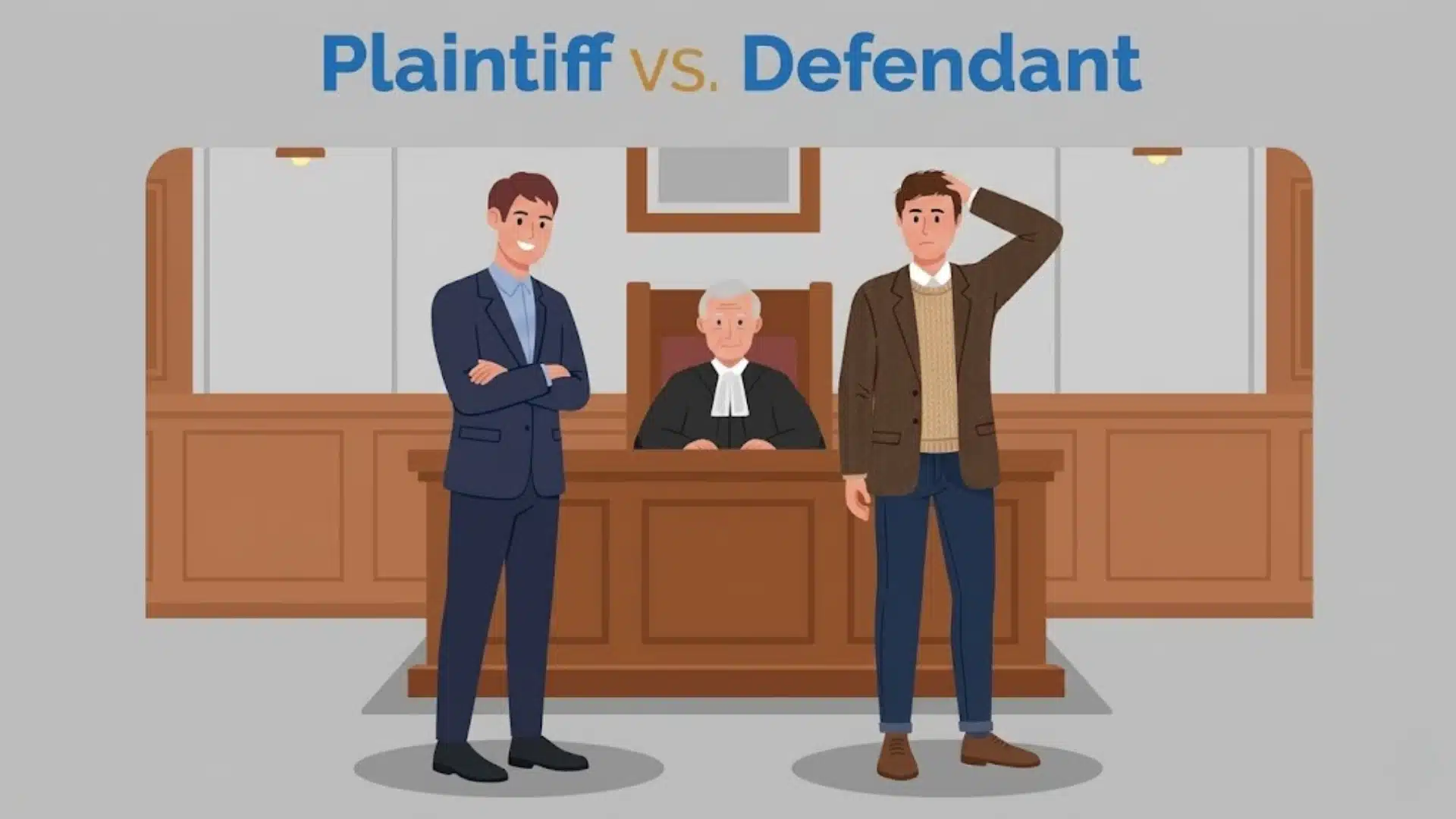
Yes, roles can change or expand during a case, depending on how the situation develops. One common example is a counterclaim.
Here, the defendant files a claim back against the original plaintiff, which means the defendant also takes on the role of a plaintiff for that specific claim.
There can also be more than one plaintiff or defendant in a case.
Multiple plaintiffs may join together if they faced similar harm, while multiple defendants may be included if more than one party is believed to be responsible.
In a personal injury case, for example, a person injured in a car accident may sue the driver, the vehicle owner, and even a company if it was a work-related situation.
This shows how roles can grow and involve more parties as the case moves forward.
Conclusion
Legal cases can feel confusing at first, but the basic idea becomes clear once you understand how each side works.
One side brings the issue to court, while the other answers and defends against it. These roles shape how the case moves, what each party must do, and how decisions are made.
In the middle of all this, the idea of plaintiff vs defendant helps you see who is making the claim and who is responding to it.
From filing papers to sharing evidence, both sides have clear responsibilities that guide the process. Knowing this makes it easier to follow any case, whether it is civil or criminal.
Have you ever wondered how these roles might affect a real case you have seen or heard about? Drop your thoughts in the comments below.
Frequently Asked Questions
Is a Plaintiff Always an Individual Person?
No, a plaintiff is not always an individual. It can also be a business, organization, or even a government body that files a case against another party.
Can a Defendant Ignore a Legal Complaint?
No, ignoring a complaint can lead to a default judgment. This means the court may decide the case in favor of the plaintiff without hearing the defendant’s side.
Do Both Parties Need a Lawyer in Every Case?
Not always. Both the plaintiff and defendant can represent themselves, but legal cases can be complex, so many choose to have a lawyer for proper guidance.