
August 22, 2026

Movies and TV shows love a defendant who goes free on an insanity plea, but that picture rarely matches what happens in a real courtroom. Judges do not treat a mental health diagnosis as proof of anything on its own, and a documented history of illness does not erase criminal responsibility by itself. The definition of insanity that courts actually apply is a narrow legal test tied to one specific moment: what the defendant understood when the crime happened. That single detail explains why the defense is rare, why it is hard to win, and what a court can still do next. What is the Definition of Insanity? The legal definition of insanity means a defendant had such a severe mental disease or defect that they could not understand their actions or recognize that those actions were wrong. The court applies this test only to the exact moment the crime occurred. A diagnosed mental illness alone is not enough. The American Psychiatric Association’s own position on the insanity defense treats it as a legal judgment, not a clinical one, grounded in whether the defendant’s mental state was substantially impaired at the time of the offense. Someone may have serious symptoms and still understand what they are doing. The real question is whether the condition prevented clear understanding when the offense happened. Courts also require evidence beyond the defendant’s statement. A judge may order a psychiatric evaluation, and a forensic psychiatrist or psychologist can explain the person’s mental condition to the court. In many cases, the defense must prove insanity. The prosecution does not always have to prove that the defendant was sane from the beginning. What are the Legal Tests for Insanity? US courts have used several insanity tests, although the following three are among the most commonly discussed standards. 1. The […]
You’ve probably heard people use “will” and “trust” like they mean the same thing. Maybe a friend mentioned setting one
A shouting match outside a bar. A neighbor calling the police because a party will not quiet down. Both scenes
You did not do anything wrong. Neither did your spouse. So why does ending a marriage still feel this complicated?
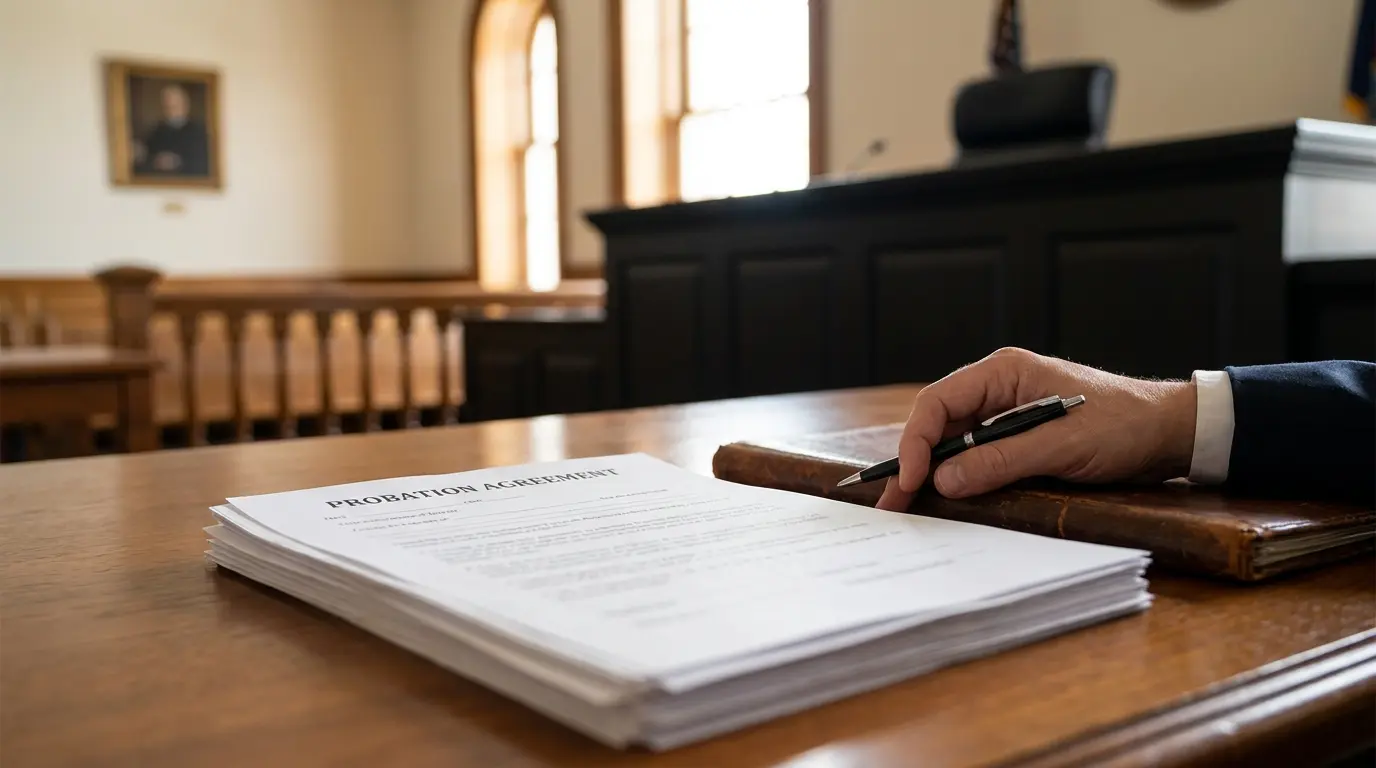
Probation comes up more often than people expect, and it rarely means the same thing twice. It can follow a court decision, show up during a trial period at work, or appear after a rough semester at school. Each version carries its own rules, but the core idea stays the same: you get a supervised chance to improve instead of a harsher outcome. As a paralegal who has spent over a decade helping people make sense of court paperwork, I still see the same confusion come up again and again. People often assume it only applies to criminal cases. Here is what it actually means, the types you may run into, and what a judge weighs before granting one. What Does Probation Mean? Probation is a supervised trial period that lets someone avoid a harsher outcome by meeting specific conditions over time. It shows up in courtrooms, workplaces, and schools, and the exact rules shift depending on where it applies. In criminal law, it means staying out of jail or prison while following court-ordered terms. At work, it means proving you are the right fit for a role, or correcting a specific performance issue before a deadline. In school, it means raising your grades back above a required threshold before time runs out. None of this is the same as getting off easy. Every version comes with real, enforceable conditions, and missing them can bring back the exact consequence you were trying to avoid. What Does Being on Probation Mean? Being on probation means a specific finding already happened. Someone determined you were responsible for something, whether that is a crime, a workplace issue, or a drop in grades. But you were not locked up, fired, or expelled. You are being supervised instead of removed, which is the actual trade […]