

Few legal terms carry as much history and confusion as sodomy. Its meaning changes across states, eras, and the legal context where you encounter it.
What governments once used to police private life between consenting adults now carries a much narrower meaning in modern American law and legal practice.
To understand the term, it helps to see how religious doctrine became criminal law, and how those laws later collapsed under constitutional scrutiny and overreach challenges.
Today, the term still appears in some laws, but its scope varies widely. Always check the specific jurisdiction before relying on any dictionary definition alone.
What Does Sodomy Mean?
Sodomy is a legal and religious term for anal sex, oral sex, or acts that don’t lead to reproduction. It’s one of the few legal terms that started as a theological judgment.
The word comes from Sodom, a city in the Bible. That origin matters more than it might seem.
In practice, this is one of the most common points of confusion people run into when researching a case that uses the term.
Most legal language is designed to be neutral. This word wasn’t.
It arrived in law already carrying a moral verdict, and that shaped how governments used it for centuries.
In British and Commonwealth English, the equivalent term is buggery. It covers the same conduct and appears in the same kinds of criminal codes.
Sodomized is the verb form; it means an act of sodomy was performed on someone. In practice, you’ll almost always see it in police reports, court documents, or news coverage of sexual assault cases.
What Acts Does Sodomy Cover?
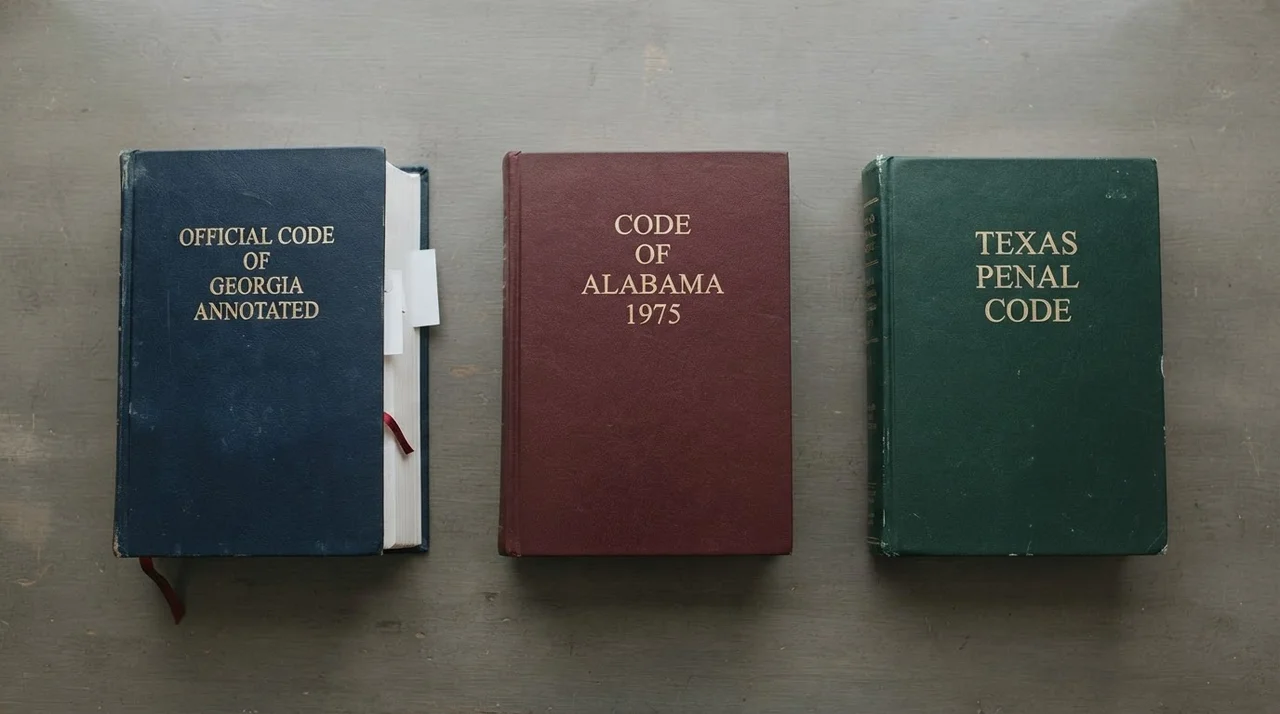
The short answer is: it depends on where you are.
Most legal definitions include anal sex and oral sex. Some also include bestiality. But not every jurisdiction includes all three, and some have defined the term around only one act.
That inconsistency isn’t a minor technical detail. It’s the most important thing to understand about this word.
A definition you find in a Georgia statute won’t match what Alabama’s code says.
What Texas classified as sodomy in 1990 isn’t what the term means in Texas law today. The word has never had a single settled meaning across the country.
That’s unusual for legal terminology. Most criminal law terms travel well across state lines. This one doesn’t.
The scope has also narrowed sharply over time. In states that still use the term in active criminal law, it almost never applies to consensual acts between adults anymore.
Today, where sodomy appears in criminal codes, it’s almost always describing a non-consensual act: forced oral or anal contact, or sexual conduct involving a minor.
The broad historical scope is largely gone. What remains is a narrow category of serious offenses that some states chose to keep under this name rather than fold into their rape or sexual assault statutes.
Whether a specific charge is prosecuted as a felony or a misdemeanor depends entirely on the state and the conduct involved.
If the jurisdiction matters to you, look at the specific statute. The generic definition won’t tell you what you actually need to know.
How Did Sodomy Laws Work and Where Do They Stand Today?

Most sodomy laws in the United States were overturned by a single Supreme Court ruling, Lawrence v. Texas (2003). What led to that ruling, and what it actually did, is worth understanding clearly.
Why Sodomy Was Criminalized?
Sodomy laws grew out of religious doctrine. The moral framework came first. Civil law followed.
The common assumption is that these laws existed to target gay men. That’s not fully accurate.
Most sodomy statutes applied to all people regardless of sex or sexual orientation. Heterosexual married couples were technically subject to them too.
Enforcement was uneven; gay men bore the overwhelming weight of prosecution, but the laws themselves were broadly written.
That distinction matters when you’re reading the legal history. The laws weren’t written narrowly. They were written to control what kinds of sex were permissible at all.
That control held up in court for decades. In 1986, the Supreme Court upheld a Georgia sodomy law in Bowers v. Hardwick, ruling that the Constitution did not protect private, consensual sodomy between adults.
That decision stood as the governing precedent until the Court reversed course seventeen years later.
How Lawrence v. Texas Changed the Law?
In 2003, the Supreme Court struck down a Texas sodomy statute in Lawrence v. Texas. The case involved two men arrested in a private home.
The ruling didn’t just invalidate one state law. It invalidated sodomy laws across the country. The constitutional basis was the 14th Amendment’s Due Process Clause.
That clause protects individual liberty from government interference, including, the Court held, decisions about consensual sexual conduct in private between adults.
The Court’s reasoning was direct: the state has no legitimate interest in criminalizing what consenting adults do in private.
That right to personal autonomy falls within the liberty the 14th Amendment protects.
It wasn’t a ruling about gay rights specifically. It was a ruling about the limits of government power over private life, and it happened to end sodomy laws as criminal tools against adults entirely.
How the Term is Used in Criminal Law Today?
Some states still have sodomy statutes on the books. After Lawrence, those provisions are unenforceable against consenting adults.
Where the term does appear in active criminal law, the context is narrow. It describes non-consensual acts: forced oral or anal contact, or conduct involving someone who cannot legally consent, including minors.
In that form, sodomy charges function similarly to rape or sexual assault charges.
Convictions frequently trigger registration requirements under sex offender laws like Megan’s Law. The word is different. The conduct prosecuted falls into the same category of serious offense.
State codes vary. Verify the specific statute before drawing conclusions about any individual jurisdiction.
Conclusion
Sodomy has meant many different things across places and legal periods.
It began as a moral judgment before becoming a broad legal category, then narrowed into the specific offense the term describes today.
Laws once used to police private choices between consenting adults now target only forced acts or conduct involving someone who cannot legally consent.
The word remains familiar, but its modern legal meaning differs greatly from its historical use.
Because these statutes vary by state and carry serious penalties, do not rely on a general definition if this situation applies to you.
Consult a criminal defense attorney familiar with the statutes in your jurisdiction before making any decisions.
Frequently Asked Questions
Why Was Sodomy a Crime Historically?
Sodomy laws originated in Judeo-Christian religious prohibitions and were later codified into civil law. They criminalized non-procreative sexual acts and applied in principle to both same-sex and opposite-sex couples, though enforcement fell disproportionately on gay men. These laws persisted in some U.S. states until the Supreme Court struck them down in 2003.
Is Sodomy Still Illegal in The United States?
Consensual sodomy between adults in private is no longer criminally punishable anywhere in the United States following the Supreme Court’s ruling in Lawrence v. Texas (2003). Some states retain the term in their codes, but those provisions are unenforceable for consensual adult conduct. The term survives in certain statutes covering non-consensual acts.
What Does “First-Degree Sodomy” Mean in Criminal Law?
First-degree sodomy is a charge used in some states for non-consensual oral or anal sexual acts committed by force or against a person who cannot consent, including minors. It functions similarly to first-degree rape and carries comparable penalties. It does not apply to consensual conduct between adults.
What Is the Difference Between Sodomy and Sexual Assault in Modern Law?
The terms often overlap in modern criminal codes. Sodomy describes the specific acts involved, such as oral or anal contact, while sexual assault is broader, covering any unwanted sexual contact. Several states have replaced “sodomy” in their statutes entirely, classifying these acts under unified sexual assault or rape provisions.