When someone says something false about me, I first think about where it happened and how it was shared. The format can change the case.
I learned that spoken and written claims are not treated exactly alike under the law. A dinner comment and a text message may create outcomes.
I also look at what proof exists because the details matter when deciding if a claim crosses the line into a legal issue or not.
This guide explains the difference between slander and libel through real situations you might face and shows why written words can carry more legal weight.
What Is Libel?
Libel is a false statement that’s written, printed, recorded, or posted somewhere it can be found again later.
It doesn’t have to be a full article or a printed page. A single text, email, or social media post counts, as long as it exists in a form someone can save or share.
That permanence is what makes libel different from a spoken lie. Once something is written down, it stops being a passing comment. It becomes evidence.
Common examples include a false claim in a newspaper, a defamatory blog post, or a fabricated review meant to damage someone’s business.
Courts tend to treat libel as more serious than slander for this exact reason. A written statement can spread further, last longer, and cause damage that’s easier to trace back to its source.
What Is Slander?
Slander is a false statement that’s spoken out loud, with nothing written or recorded to back it up.
It covers casual talk, a false claim made during a speech, or even a gesture meant to imply something untrue. The moment the words are said, that’s the whole life of the statement.
That’s what makes slander harder to pin down. Once it’s said, there’s no copy to point back to.
Common examples include spreading a false rumor at a gathering or falsely accusing someone of a crime in conversation.
Because nothing gets recorded, proving slander usually means showing real harm happened. A lost job, a canceled deal, something concrete tied directly to what was said.
Slander vs Libel: What Structurally Separates Them
Format determines whether a statement is considered slander or libel. The seriousness of the accusation does not decide which category it falls under.
The main question is simple: did the statement leave a record behind? That lasting evidence is what separates spoken claims from written ones.
Spoken words that disappear after being said are generally treated as slander. Written, printed, or recorded statements that can be reviewed later are libel.
This includes voicemails, videos, and livestream recordings. Once spoken words are captured, they become permanent and can move into libel territory.
Where a Text Message, Email, or Social Post Falls
Texts, emails, and social media posts are considered libel because they exist in written form once sent. The statement becomes a record that can be reviewed later.
It does not matter if the message was private, public, or temporary. If the statement was captured in writing, it is treated as libel.
Similarities and Differences between Libel and Slander
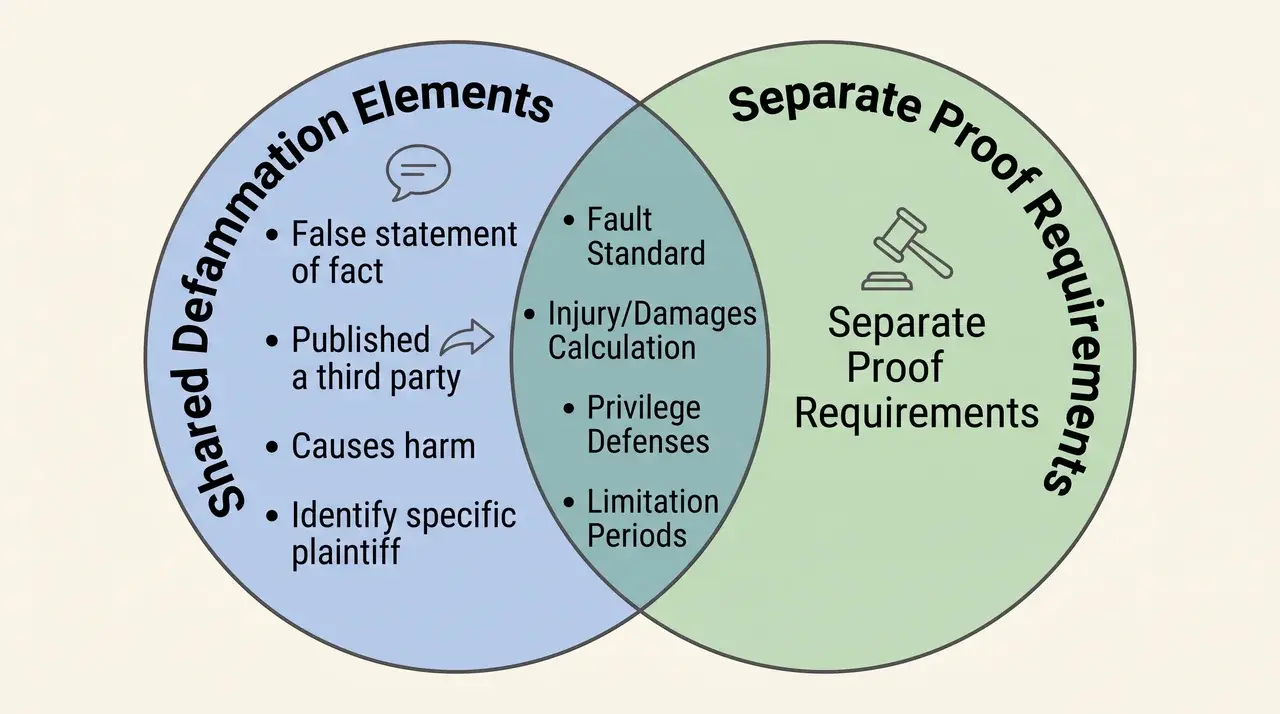
Slander and libel share the same legal foundation, even though they play out differently once you’re building a case. Here’s how they stack up beyond just format.
Similarities:
| Factor | Slander & Libel |
|---|---|
| Legal category | Both are forms of defamation |
| Core requirement | Both require a false statement presented as fact |
| Harm element | Both must damage the person’s reputation |
| Claim type | Both are usually handled as civil lawsuits |
| Special rule | Both can qualify for defamation per se in serious cases |
Differences:
| Factor | Slander | Libel |
|---|---|---|
| Proof required | Usually must show specific financial or reputational harm | Damage is often presumed |
| Perceived severity | Often seen as the harder claim to win | Often seen as the more serious claim |
| How harm gets documented | Depends on witnesses or after-the-fact evidence | The statement itself often serves as evidence |
What connects the two is the legal claim underneath them. What separates them, beyond format, is how much work you have to do to prove you were hurt.
Why the Burden of Proof Differs
Libel has a reputation for being the more serious claim. That reputation isn’t about the words themselves. It’s about what each side has to prove.
Written or recorded statements leave a record. Because of that, courts often presume compensatory and punitive damages happened, without the person suing having to prove it directly.
Slander works differently. Since spoken words leave nothing behind, the person claiming harm usually has to show real financial or reputational loss. A lost job, a canceled contract, something concrete.
That’s why slander cases can be harder to win. Proving a false statement was said is one thing. Proving it cost you something is another.
There’s an exception that trips a lot of people up. Under a rule called defamation per se, certain accusations are treated as automatically damaging, no matter how they were communicated.
Falsely claiming someone committed a crime is one example. Falsely claiming they have a contagious disease is another.
In those cases, spoken accusations can succeed without separate proof of harm. This is the real reason some slander claims move forward even though slander is usually the tougher case to build.
When Each Applies in a Real Situation
Most slander and libel cases are handled through civil lawsuits. The affected person usually seeks damages instead of involving police or prosecutors.
Some jurisdictions still have criminal defamation laws, but those cases are uncommon. Most disputes are resolved through civil court claims instead.
The format of the statement often decides how the claim is treated. A false rumor spoken at a party is generally considered slander.
If that same rumor is posted online, it becomes libel. The claim stays the same, but the format changes the legal category.
Conclusion
I used to think slander and libel meant the same thing, but the difference matters because one is spoken while the other is recorded.
When dealing with a false claim, pay attention to how it was shared. A saved message, post, or written statement can remain as evidence long after it was made, while spoken claims can be harder to prove.
That detail can affect what evidence is available, how strong a case may be, and whether online statements are treated differently from spoken ones.
If a false statement causes real damage, getting advice early from consulting a defamation attorney can help you understand what options your situation may support.
Frequently Asked Questions
What Is the Difference Between Slander and Libel?
Slander is spoken defamation, while libel is defamation in written, printed, or recorded form. Both involve false statements that harm someone’s reputation, but the main difference is the format. Written claims often leave evidence that can be saved and reviewed later.
Is Slander a Criminal Case?
Almost always, no. Slander is usually a civil matter where the affected person files a lawsuit for damages. Some places have criminal defamation laws, but they are rarely used compared to civil claims.
Is a Text Message Libel or Slander?
A text message is considered libel because it exists in written form and can be saved, shared, and used as evidence. Emails, social media posts, and other written messages are generally treated the same way.
Is Slander Harder to Prove than Libel?
Usually, yes. Slander can be harder to prove because spoken words often leave no record. Libel may be easier to support because the written statement can be preserved and reviewed as evidence.