
Seeing the word “disposition” on a court record can feel unsettling, especially when the document does not explain what happened next.
It may appear after an arrest, a summons, a background check, or a closed case, and the meaning depends on how the court resolved the matter.
I have seen many people get stuck on this term because it sounds technical, but the real concern is practical: what does this case status mean for your record, your options, and your future?
That answer can change depending on whether the case ended in a conviction, dismissal, acquittal, guilty plea, or another result.
Below, I will break down what disposition means, how it works in criminal and court cases, what happens at a disposition hearing, and why the final record can matter long after the case ends.
Disposition Meaning in Law
In law, disposition refers to the official resolution or outcome of a legal matter.
Courts use the term to record how a case was ultimately handled, whether through a conviction, acquittal, dismissal, settlement, judgment, or another legal result.
A disposition becomes part of the official court record and helps determine the final status of a case.
Because of this, it can affect background checks, employment screenings, professional licensing, and other legal proceedings.
While the specific outcome varies by case type, a disposition simply reflects the court’s final action or decision.
What Does Disposition Mean in a Court Case?
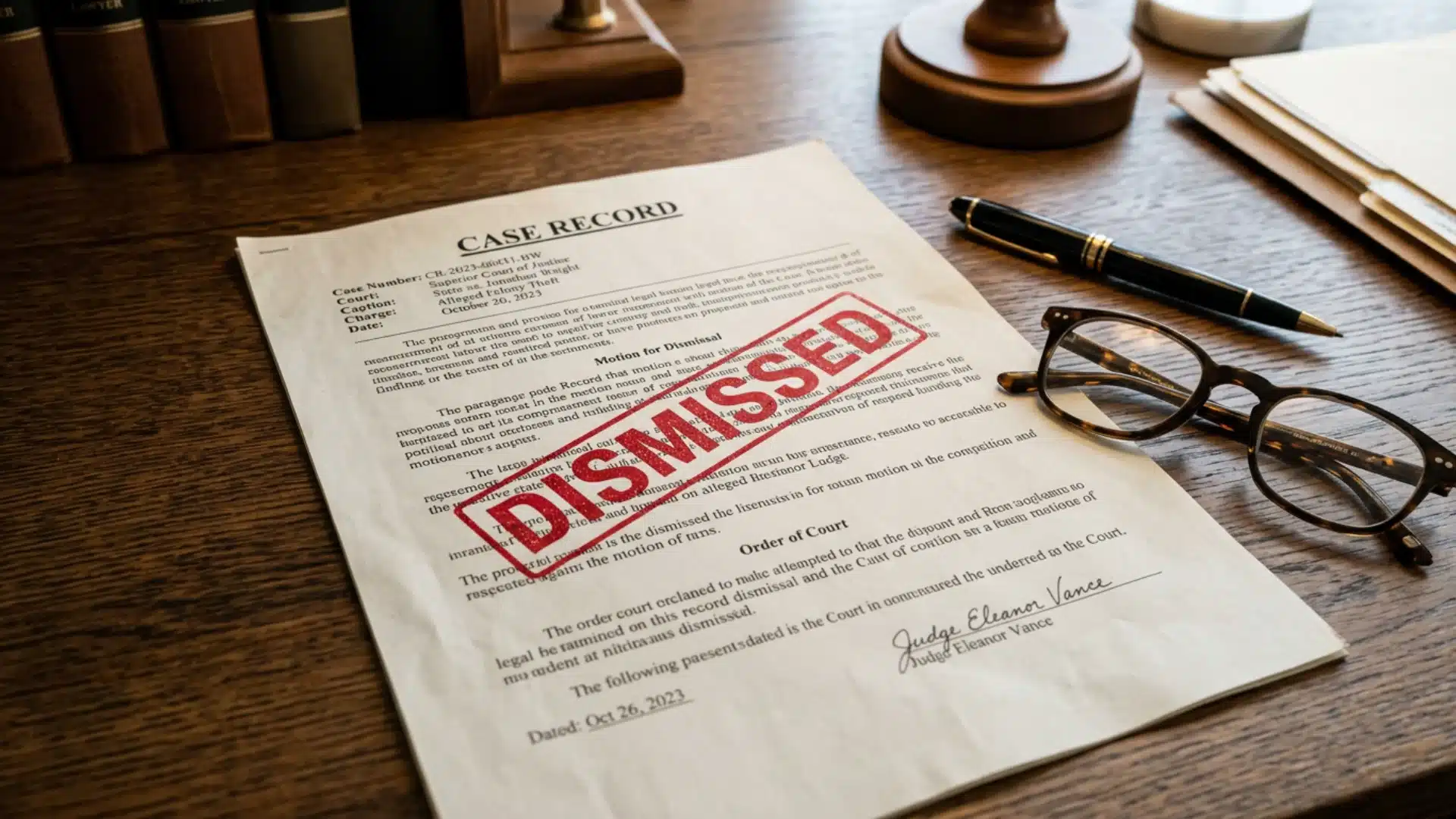
Disposition in a court case means the official result entered by the court after the matter is resolved. It answers how the case ended.
- In criminal cases, the disposition may say convicted, acquitted, dismissed, or pending if no final decision has been entered.
- In civil cases, it may show judgment, settlement, or dismissal. Disposition is different from sentencing.
The disposition is the case result, while a sentence is the punishment ordered after a conviction or guilty plea.
If a charge is dismissed or the defendant is found not guilty, the case still has a disposition, but there is no sentence. The disposition becomes part of the official court record.
Types of Disposition and What They Mean
Different disposition types show the exact court result, including whether a case ended with guilt, dismissal, no decision, or restricted public access. Each type carries different legal and practical consequences.
| Disposition type | What it means | Does a conviction appear on record? |
|---|---|---|
| Convicted | Defendant pled guilty or was found guilty at trial | Yes |
| Acquitted | Found not guilty; the same charges generally cannot be refiled | No |
| Dismissed | The court or the prosecutor ended the case (insufficient evidence, procedural error, etc.) | No |
| No charges filed / charges dropped | The prosecutor declined to pursue the case before trial | No |
| Deferred adjudication | Plea entered, but conviction delayed pending completion of court conditions | No (if conditions met and charge dismissed) |
| Vacated | The court withdrew a guilty plea or verdict | No (treated as if conviction did not occur) |
| Sealed | Record restricted from public view; some agencies retain access | Depends on underlying disposition |
| Suspended sentence | Sentencing delayed pending successful completion of probation or treatment | Treated as pending until reduced or dismissed |
What Does Disposition Mean in a Criminal Case?
In a criminal case, disposition means the court’s official record of how the charge was resolved. It does not always mean a conviction.
A case disposition may show that the defendant was convicted after a guilty plea or trial verdict. It may also show an acquittal, which means the defendant was found not guilty.
Some charges are dismissed by the judge or prosecutor because the evidence is insufficient, a legal rule was not followed, or the case cannot proceed.
A disposition can also involve deferred adjudication, where the defendant must complete court-ordered conditions before the charge is dismissed. If a conviction is later withdrawn, the record may show a vacated conviction. Each result affects records differently.
How Disposition Affects Your Background Check

A case disposition helps background check readers see whether a charge ended in conviction, dismissal, pending status, or another legal result on official records clearly.
- Arrest without conviction: May still appear on some background checks, depending on the record and reporting rules.
- Conviction: Can have a stronger effect because it shows the person was found guilty or pleaded guilty.
- Pending disposition: Means the case is still open, and the court has not entered a final result.
- Sealing or expungement: May limit public access to certain records after a dismissal, acquittal, or other eligible outcome.
What is a Disposition Hearing?
A disposition hearing is a court proceeding held after a plea has been accepted or guilt has been established. It is not a trial because the court is no longer deciding guilt. The hearing focuses on the result the judge should enter.
- Review the charges, plea, verdict, and case record.
- Hear statements from the prosecutor and defense attorney.
- Consider sentencing recommendations and facts about the defendant.
- Review a presentence investigation report, if the court ordered one.
The judge then issues the final disposition, which becomes part of the official court record. Sometimes sentencing happens at the same hearing. In more complex cases, the judge may schedule a separate sentencing date.
It also helps to understand the difference between being detained and arrested, since that distinction affects which rights apply before a case ever reaches a disposition hearing.
When to Talk to a Lawyer About Your Case Disposition

If you are trying to understand a disposition on your record, preparing for a hearing, or dealing with the effects of an old case, speak with an attorney before taking action.
Legal advice is especially important if:
- You have an arrest with no conviction that still appears on background checks.
- You received deferred adjudication and want to know whether it will be dismissed or treated like a conviction.
- You have a disposition hearing coming up and are unsure what to present.
- You want to know whether your case qualifies for record sealing or expungement under your state’s laws.
The beginning of a case matters, too. Understanding probable cause, how arrests work, and what a secured bond means can help you protect your rights early.
Disposition is how the case ends. Getting the best possible outcome often depends on having the right legal guidance from the start.
Conclusion
Understanding the meaning of disposition law helps you read court records with more confidence.
A disposition shows the official result of a case, whether the charge ended in conviction, dismissal, acquittal, deferred adjudication, judgment, or another recorded outcome.
It also helps separate the case result from sentencing, which only applies after certain guilty outcomes.
This detail matters because court records can affect background checks, licensing, housing, and future legal decisions.
If a case is still pending, dismissed, sealed, or unclear, the next step should be practical: get the exact court record and review it with a state-licensed attorney.
If this blog post helped, drop a comment with the legal term you want explained next, and check the full court record before making any decision.
Frequently Asked Questions
What Does Case Disposed Mean on a Court Record?
Case disposed means the court has reached a final decision and the case is officially closed. It does not explain the outcome by itself. The actual disposition may be listed separately as convicted, dismissed, acquitted, or another result.
Can a Dismissed Case Still Appear on a Background Check?
Yes. A dismissed case is not a conviction, but it may still appear on some background checks if the record has not been sealed.
Does a Disposition Hearing Mean You Will Be Sentenced?
Not always. A disposition hearing is where the judge decides what happens after a plea or verdict. Sometimes that means sentencing happens right away. Other times, the judge may order probation, treatment, counseling, or another outcome.