
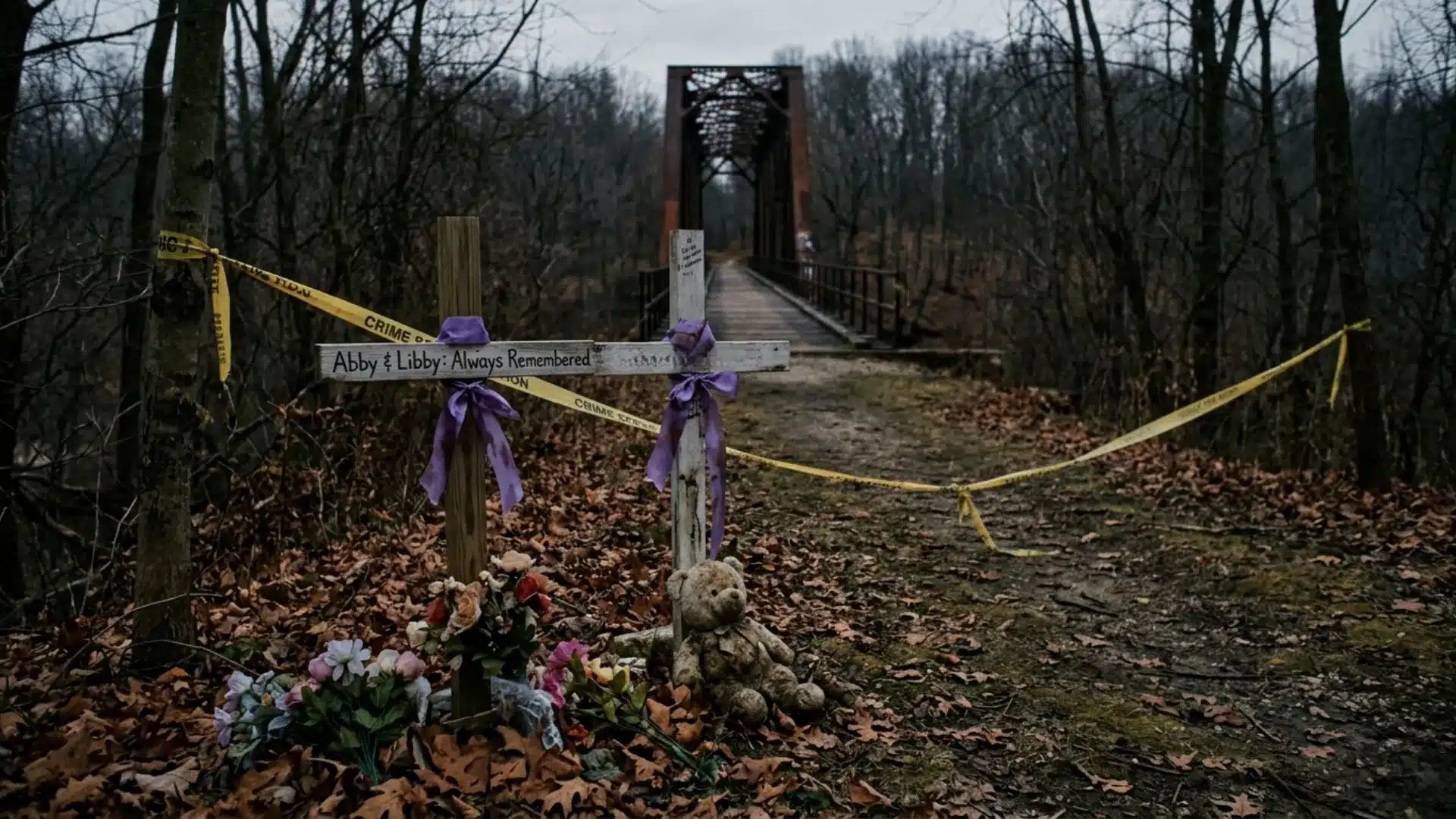
Most murder cases go cold because there is nothing to work with, no witnesses, no footage, no leads. The Delphi case was different, and in some ways, that made it harder to bear.
Investigators knew what the suspect looked like. The public knew what his voice sounded like. And for five and a half years, he walked free anyway.
Few true crime cases have gripped the American public the way Delphi did, not because it was unsolvable, but because it felt like it should have been solved sooner. The evidence was there. The answer was close. What finally broke the case wasn’t new evidence.
If you’ve searched for crime scene photos, wondered what the video actually showed, or want to understand what finally broke the case, this is the clearest breakdown available, built entirely from official sources.
What Happened on February 13, 2017
On the afternoon of February 13, 2017, two young girls from Delphi, Indiana, Abigail Williams, 13, and Liberty German, set out to hike the Monon High Bridge Trail, a popular local trail running through Carroll County.
They were dropped off near the Mears Road trailhead around 1:00 PM. They were never seen alive again.
When the girls weren’t picked up that afternoon, family members reported them missing. Volunteer searchers discovered both girls’ bodies the following morning, Valentine’s Day, February 14, in a wooded area near Deer Creek, not far from the trail.
Carroll County Coroner Brian Harmon confirmed both deaths were homicides.
What set this case apart from every other in Carroll County history: before she was killed, Liberty German had used her phone to secretly record the man who followed them onto the bridge.
Carroll County Prosecutor Nicholas McLeland later described it as “arguably the biggest piece of evidence that we had.”
That footage would drive one of the most intense cold-case investigations in American history.
Delphi Murders Crime Scene Photos
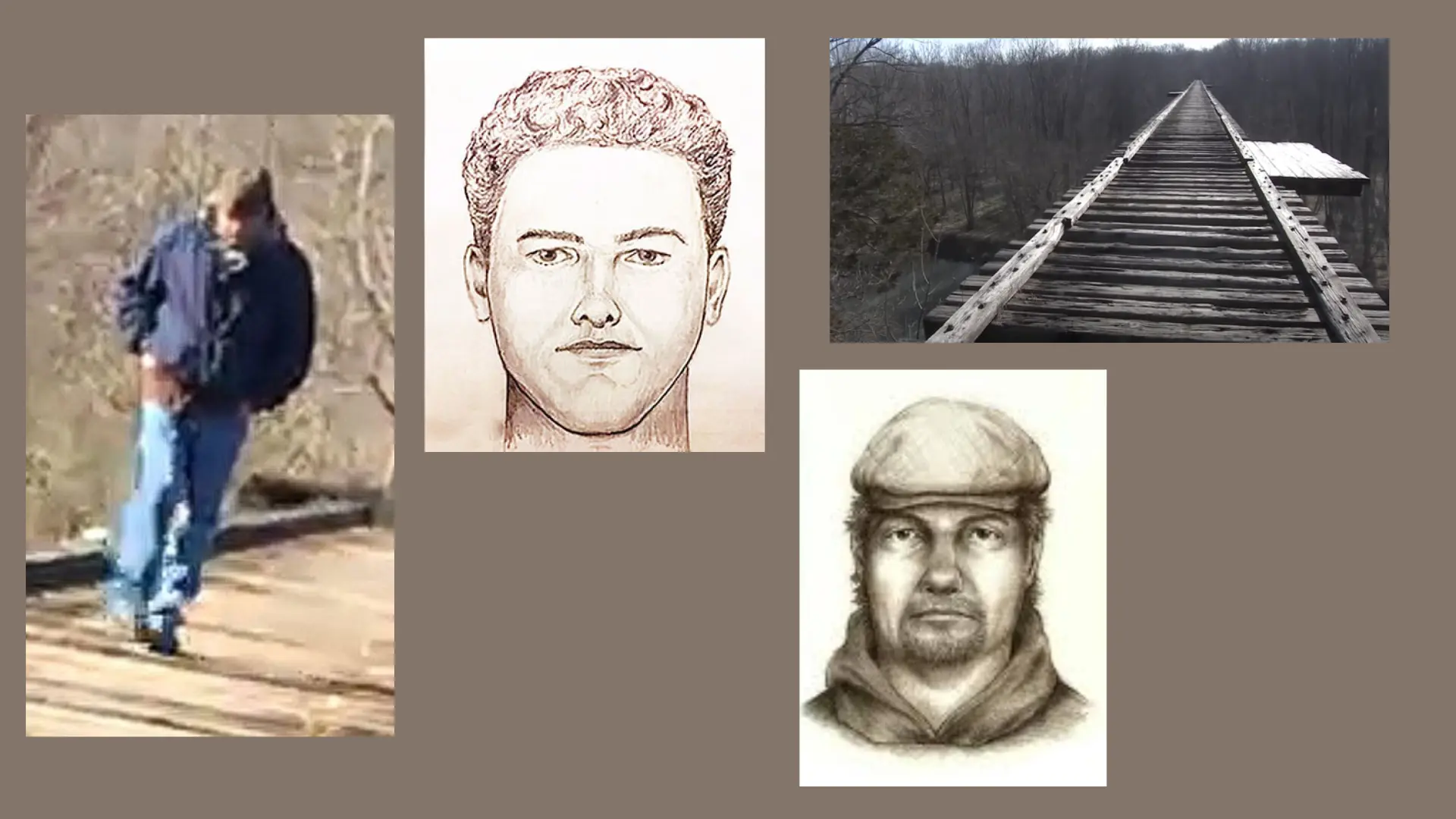
What exists publicly are four officially released items from the FBI and law enforcement, displayed below. These are the only authentic visual pieces of evidence ever released in connection with this case.
For guidance on how law enforcement manages evidence in high-profile cases, the National Institute of Justice publishes detailed standards on forensic evidence handling and cold-case protocols. While it is a government resource, the Justice Research and Statistics Association offers parallel public-facing research on criminal investigation best practices.
Key Evidence Found at Delphi Murders Crime Scene
The following details are based exclusively on official law enforcement releases, Indiana State Police press statements, trial testimony from the October–November 2024 proceedings, and verified courtroom reporting.
1. Liberty German’s Cell Phone
Contained a 43-second video recording and an audio clip of the suspect. The phone was found hidden under Abby’s body at the scene, alongside one of Libby’s shoes, inside a purple Harry Potter Gryffindor case.
It had been concealed under clothing. Prosecutor McLeland described the recording as the case’s single most consequential piece of evidence.
2. An Unspent .40 Caliber Cartridge
Found between the girls’ bodies. Former Indiana State Police Firearm Examiner Melissa Oberg testified that the round matched Richard Allen’s Sig Sauer pistol through the “quality and quantity of marks” on the cartridge.
The defense challenged this evidence, questioning why more photographs weren’t taken of the cartridge before it was removed from the scene and suggesting the bullet may have originated from a law enforcement officer’s weapon.
3. DNA Evidence Linked to a Ligature
This is a point the original reporting on this case frequently gets wrong, and it matters. Forensic DNA analyst Stacy Bozinovski testified at trial that most swabs recovered from the crime scene contained blood belonging to Abby, Libby, or a mixture of both.
Critically, no DNA from Richard Allen was recovered from the crime scene. Some unidentified male DNA was found under the girls’ fingernails and from external genital swabs, but analysts testified it was insufficient to produce a match.
A single hair found in Abby’s right hand was matched not to Allen, but to Kelsi German, Libby’s older sister, who had driven the girls to the trail that afternoon.
4. Deliberate Staging of The Bodies
At trial, prosecutors revealed the full picture of the staging. Abby was found clothed in Libby’s sweatshirt and jeans, the jeans unfastened and too large for her, her own clothing recovered from Deer Creek nearby.
Libby was found completely nude. Tree branches and large sticks were arranged on and around the girls’ bodies in what one ISP crime scene investigator testified was likely “an attempt at concealment.”
A large branch was noted over Libby’s upper body. The defense attempted to use the placement of those sticks as evidence of a ritualistic motive, connecting it to the Odinism theory (addressed below).
6. Eyewitness Testimony
Two witnesses who were on the trail that day testified at trial. Railly Voorhies, who was 16 at the time and friends with both girls on Snapchat, said she passed a man near the Freedom Bridge who “did not seem to be a happy person” and did not wave back.
Sarah Carbaugh testified that as she drove away from the trail area that afternoon, she passed a man who appeared “muddy, bloody, and unfriendly,” whom she later identified as the man in the bridge video.
The “Bridge Guy” Video: What the Trial Finally Revealed
The 43-second recording captured on Liberty German’s phone showed a white, middle-aged male wearing blue jeans, a blue-gray jacket, and a dark hat walking on the bridge behind the girls.
The full video was played in court for the first time during the November 2024 trial. In it, Libby’s voice is heard telling Abby: “There’s no path. The trail ends here, so we have to go down here.”
The complete audio phrase previously released to the public only as “down the hill” was heard in full in the courtroom: “Guys, down the hill.”
A State Police Master Trooper who had reviewed more than 700 of Allen’s prison phone calls testified that “the voice of the ‘Bridge Guy’ is the voice of Richard Allen.”
This partial footage served as the basis for two separate FBI composite sketches. The full video was never made public prior to the trial for several reasons.
The Arrest, Trial, and Conviction
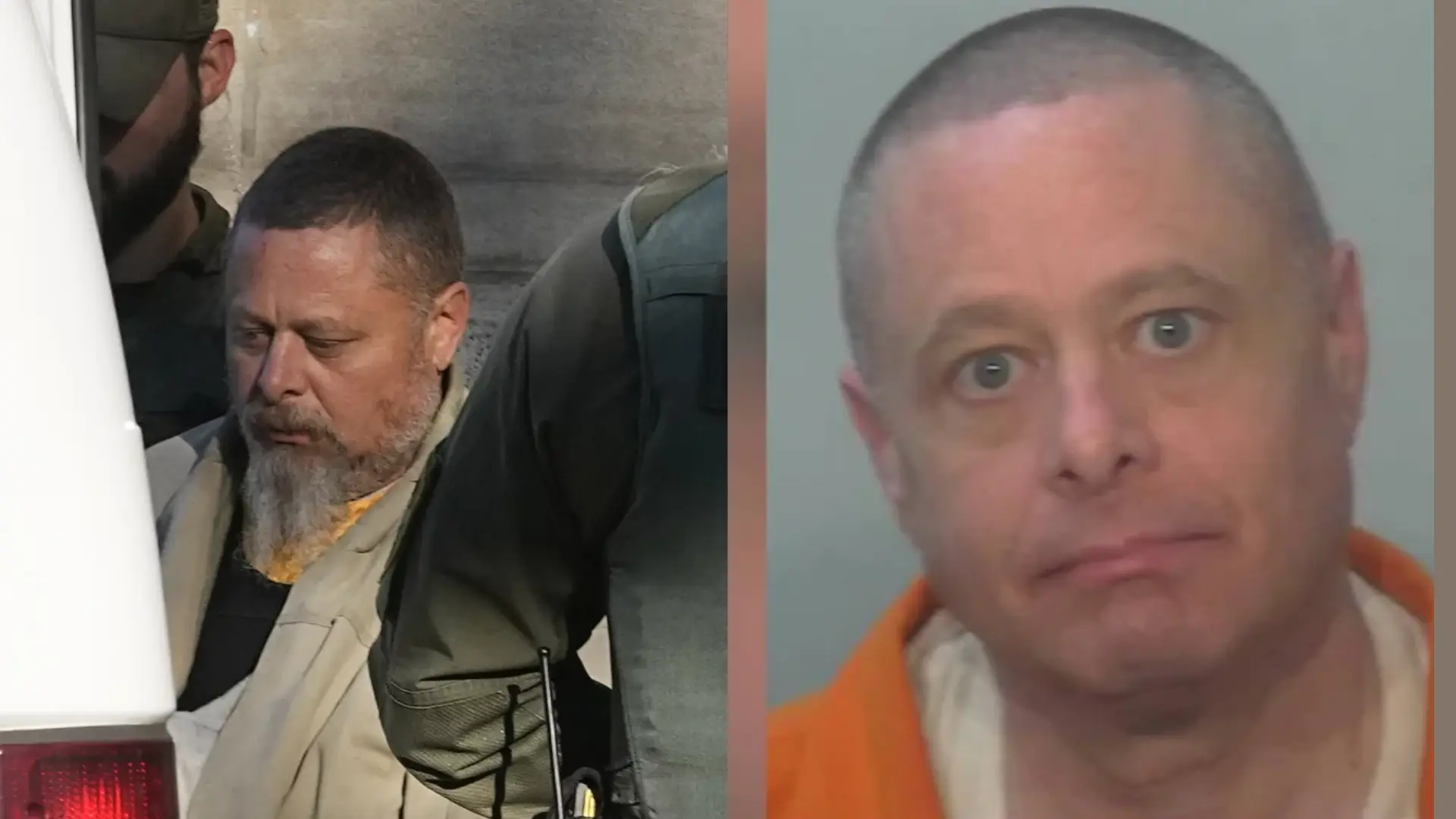
Richard Matthew Allen, a pharmacist at the CVS in Delphi who had lived in the community for years, was arrested by Indiana State Police on October 26, 2022, five and a half years after the murders.
He had been interviewed earlier in the investigation but was not initially a primary suspect.
The triggering lead: a tip in 2022 that connected investigators to Allen, whose Sig Sauer handgun produced a ballistic match to the cartridge found at the scene.
Allen’s Prison Confessions: The Evidence That Sealed the Case
One of the most consequential and least-covered elements of the Delphi trial was the scope of Richard Allen’s confessions made while incarcerated at Westville Correctional Facility.
Prosecutors stated that Allen incriminated himself more than 60 times, including confessions made to his wife, his mother, the prison warden, the psychologist treating him, prison employees, and fellow inmates.
The confessions were made in person, over the phone, and in writing. Audio recordings of several were played for the jury.
Monica Wala, the former lead psychologist at Westville, testified that Allen initially told her he was innocent, but began confessing in April 2023, around the time he was placed back on suicide watch. She testified Allen told her directly: “I killed Abby and Libby. I’m sorry.”
He described originally planning to sexually assault the victims, but said he fled when he saw a van nearby. He stated he had cut the girls’ throats and covered their bodies with sticks.
Why Wasn’t the Full Video Released?
One of the most common questions surrounding the Delphi crime scene evidence is why law enforcement released only a short, blurry still image and a brief audio clip rather than the full video. The reasons are standard investigative practice, not evasion:
- Trial integrity: Releasing the complete video would have made it nearly impossible to seat an impartial jury. Defense attorneys could argue that potential jurors had already formed opinions based on viewing the full footage.
- Confirmation tool: Withholding portions of the video allowed investigators to use it as a verification mechanism. If a suspect provided details that hadn’t been made public, that knowledge itself becomes evidence.
- Victim dignity: Given the nature of the crime, some footage may have captured images investigators deemed too sensitive for public release, a consideration courts in Indiana and elsewhere routinely uphold.
- Protecting the investigation: Releasing too much detail can tip off a suspect about exactly what law enforcement knows, allowing them to adjust behavior or destroy evidence.
The Delphi Murders Case Timeline: From Crime Scene to Conviction
This timeline outlines the key developments in the Delphi case, from the initial disappearance to the final conviction. The case concluded with a life sentence, bringing long-awaited closure after years of investigation.
| Date | Milestone |
|---|---|
| Feb 13, 2017 | Abby Williams and Libby German dropped off at the Mears Road trailhead. Reported missing that afternoon. |
| Feb 14, 2017 | Bodies discovered near Deer Creek. Homicide confirmed. Indiana State Police and the FBI assume a joint investigation. |
| Feb 17, 2017 | FBI releases “Bridge Guy” still image and “down the hill” audio. Public tip line opened. |
| April 2019 | FBI releases updated composite sketch more closely resembling Richard Allen. |
| Oct 26, 2022 | Richard Matthew Allen, 50, was arrested and charged with two counts of murder. |
| Oct 28, 2024 | Jury returns guilty verdict. Allen was sentenced to two consecutive life terms without parole. |
The consecutive versus concurrent structure of Allen’s sentence matters to how much time he will actually serve. Consecutive sentencing in double-murder cases means each term runs back-to-back rather than simultaneously, which in Indiana effectively means Allen will serve the full 130 years with no possibility of parole reduction under current law.
Conclusion
Some cases change the way communities think about safety, trust, and the people they live beside. Delphi is one of them.
In towns across America, people read about Richard Allen and thought the same thing: he was a pharmacist, a neighbor, someone people said hello to. That discomfort doesn’t go away with a verdict.
What remains, beyond the trial and the headlines, are two girls who loved their friends, their town, and a hiking trail on a February afternoon. That’s the part worth holding onto.
Justice took eight years. It came anyway.
Found this breakdown helpful? Share it with someone following the case, or bookmark it for reference; this page will be updated as any post-conviction developments emerge.
Frequently Asked Questions
Did Richard Allen Ever Confess to The Delphi Murders?
Allen made statements to law enforcement after his arrest while held at Westville Correctional Facility. These statements were used by the prosecution at trial. Allen did not make a public confession.
Who Were Abby and Libby’s Families, and Have They Spoken Publicly?
Both families have been vocal throughout the case. Liberty German’s family, including her grandfather, Mike Patty, regularly gave statements to the press during the investigation. After the verdict, both families released statements expressing relief.
Is the Monon High Bridge Trail Open to Visitors Today?
Access has changed over the years. The bridge itself was closed for structural safety reasons unrelated to the case. The broader trail area remains sensitive for the local Delphi community.
What Happened to The Defense Attorneys Who Filed the Odinism Theory?
The original defense attorneys, Brad Rozzi and Andrew Baldwin, were removed from the case by Judge Frances Gull in 2023 following controversy over leaked sealed documents. Allen was subsequently represented by new counsel for the October 2024 trial.