

You see someone grab a purse and run, or catch a shoplifter walking out of a store with unpaid merchandise hidden under their jacket.
In that split second, most people ask the same question: Do I have the right to stop this person myself?
The answer is often yes, but only in certain situations, and the legal margin for error is much thinner than many people realize.
A citizen’s arrest can be lawful when the required conditions are met, but acting too quickly, using unnecessary force, or making the wrong assumption can leave you facing civil liability or even criminal charges instead of the person you were trying to stop.
This guide explains what a citizen’s arrest actually allows, when it may be legally justified, the steps that help you stay within the law, and the common mistakes that can quickly turn a good-faith intervention into a serious legal problem.
What is a Citizen’s Arrest?
A citizen’s arrest is when a private person, not a police officer, detains someone they believe has committed a crime.
Nearly every state allows it in some form, but the rules for when you can do it, what force you can use, and what happens afterward vary widely from state to state.
The concept dates back centuries to English common law, when there was no organized police force and ordinary people were expected to help catch lawbreakers.
Most U.S. states have since written their own citizen’s arrest statutes, though a few, like North Carolina, only recognize a “detention” and don’t legally call it an arrest at all.
It’s worth understanding the difference between a citizen’s arrest and a police detention: when a private citizen acts, they generally can’t formally charge, book, or process anyone. Their role ends when they hand the situation over to law enforcement.
When Can You Legally Make a Citizen’s Arrest?
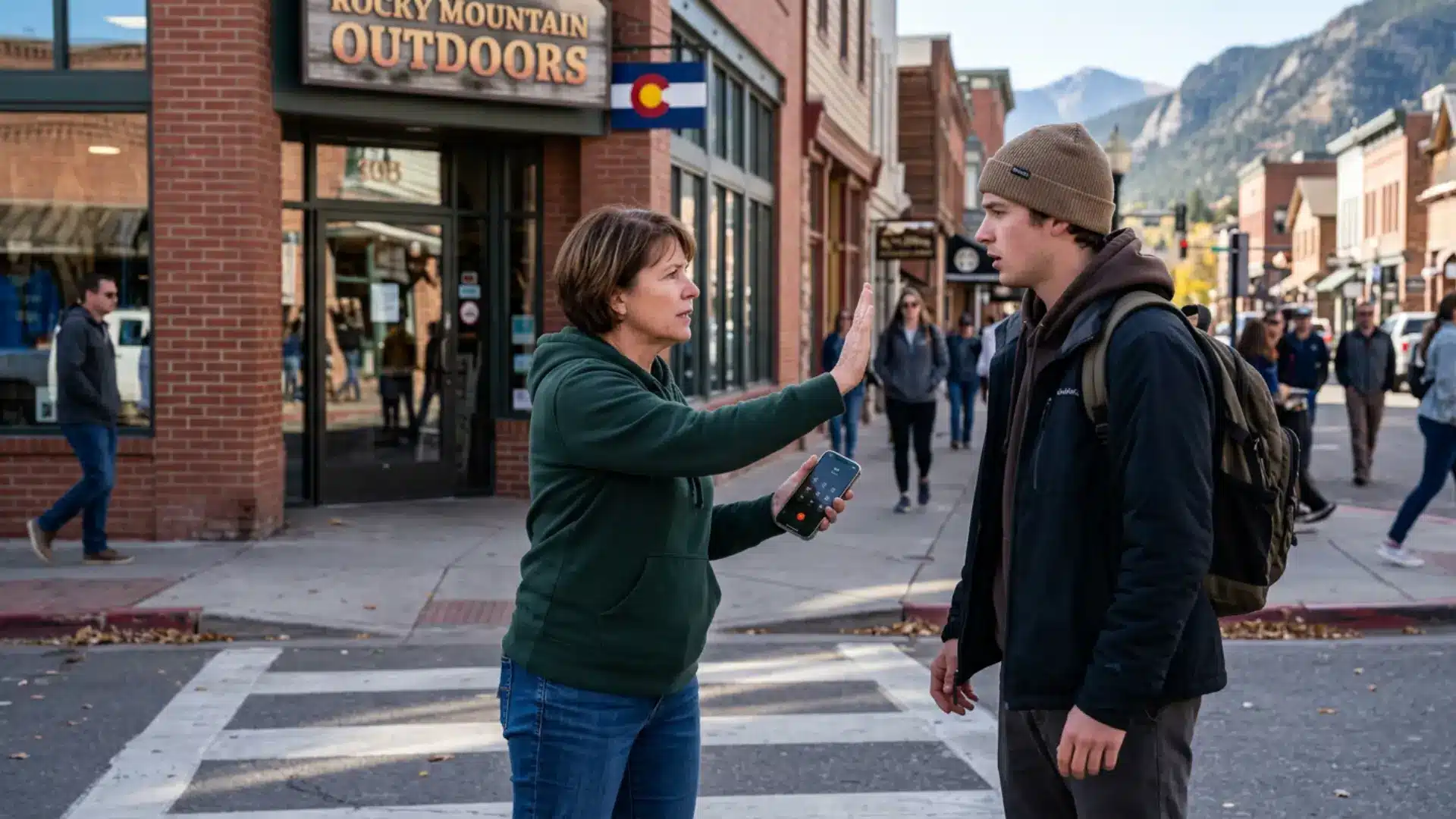
Every state sets its own threshold, but most laws hinge on two questions: what kind of crime occurred, and whether you personally witnessed it.
- Felonies: Most states allow a citizen’s arrest for a felony even if you didn’t witness it directly, as long as you have reasonable grounds to believe the person committed it. California’s statute works this way.
- Misdemeanors: Most states require the misdemeanor to happen in your direct presence, and many limit this further to offenses that count as a “breach of the peace,” like public fighting or disorderly conduct.
- Direct observation: Courts generally require a factual, observable basis for the arrest, similar to the probable cause standard police must meet. Hearing about a crime secondhand, from a neighbor or a social media post, isn’t enough.
A handful of states have narrowed these laws further in recent years. Georgia repealed its long-standing citizen’s arrest statute in 2021 after the killing of Ahmaud Arbery, replacing it with a much narrower law that mainly covers store owners and security staff detaining suspected shoplifters.
North Carolina never uses the term “arrest” for private citizens at all; its law authorizes only a temporary “detention” for specific offenses such as felonies, breaches of the peace, or crimes involving injury or theft.
Citizen’s Arrest Laws by State: Quick Reference
State laws differ enough that a rule of thumb from one state can get you in trouble in another. This table covers the general standard in a sample of states; always confirm the current statute in your own state before acting, since laws do change.
| State | General Rule | Notable Detail |
|---|---|---|
| California | Any public offense in your presence; felonies even if not witnessed, with reasonable cause | A “wobbler” (crime chargeable as either) is treated as a felony for arrest purposes |
| Texas | Felony or offense against the public peace committed in your presence | Narrower than states that allow arrest for any misdemeanor witnessed |
| Colorado | Any crime, felony or misdemeanor, committed or being committed in your presence | See the Colorado section below for a full breakdown |
| New York | Felony (if actually committed) any time; other offenses only if committed in your presence | Force must be reasonable, not deadly, under Penal Law § 35.30 |
| Georgia | Narrow statute covering mainly merchants and their employees detaining suspected shoplifters | The state’s broader citizen’s arrest law was repealed in 2021 after the killing of Ahmaud Arbery |
| North Carolina | No “arrest” by private citizens; only a “detention” for felonies, breaches of the peace, or crimes involving injury or property loss, witnessed firsthand | State law specifically avoids the word “arrest” for private citizens |
| Massachusetts | Felony required, established through case law rather than a standalone statute | No misdemeanor citizen’s arrest recognized |
| Missouri | Any felony, or a misdemeanor that is a breach of the peace or larceny | Broader than states, limited strictly to felonies |
| New Hampshire | Felony required, per state force-during-arrest statutes | No standalone citizen’s arrest statute; authority is inferred from force provisions |
| Wisconsin | Felony arrests allowed on probable cause; misdemeanor only if it’s a breach of the peace witnessed firsthand | Governed by common law, not a specific statute |
| Wyoming | Felony, theft, or property destruction required | One of the narrower state standards |
| Virginia | Felony or breach of the peace, under common law | No comprehensive statute; courts apply traditional common-law limits |
When NOT to Make a Citizen’s Arrest
Knowing when you’re legally allowed to act is only half the picture. Even where the law would permit it, there are situations where stepping in creates more risk than it resolves.
- You didn’t personally witness the crime. If your only information came from someone else, a security camera you didn’t watch live, or a rumor, you likely don’t meet the legal standard, regardless of how confident you feel.
- The offense is a low-level misdemeanor. Many states only allow a citizen’s arrest for a misdemeanor if it rises to a “breach of the peace.” Detaining someone over a minor infraction can itself expose you to a false imprisonment claim.
- Calling 911 and observing from a distance is realistic. If the suspect isn’t an immediate threat to anyone and you can safely wait and describe what you see to police, that option carries far less legal and physical risk.
- The situation could turn violent or involves a weapon. Physically confronting an armed or aggressive suspect raises the odds of a use-of-force mistake that lands on you, not just them.
- You’re not certain the person actually did it. Mistaken identity is a real risk, and most states offer little protection to someone who detained the wrong person based on a reasonable but incorrect belief.
- The facts are unclear, such as in a dispute between two people. When it’s not obvious who the aggressor is, for example in a mutual altercation, intervening physically can make you legally responsible for restraining the wrong party.
How to Make a Citizen’s Arrest
Most legal experts, including police departments that have handled citizen’s arrest cases gone wrong, recommend calling 911 and staying at a safe distance whenever that’s realistic. If you do decide to intervene after directly witnessing a crime, these steps reduce your legal exposure.
- Confirm you actually witnessed it. Make sure you saw enough to establish, on your own, that a crime occurred. A hunch or a secondhand report isn’t sufficient.
- Identify yourself clearly. State that you’re making a citizen’s arrest and that police are on the way. Never claim to be a police officer.
- Use only the force necessary to prevent escape. Blocking an exit or holding someone lightly is very different from tackling or striking them.
- Call law enforcement immediately. Don’t wait until after you’ve restrained the person.
- Don’t move the person. Keep them where they are until police arrive; transporting someone yourself increases the risk of a false imprisonment or kidnapping charge.
- Cooperate fully with police. Give a clear, honest account of exactly what you saw.
How Much Force Can You Use?
This is where most citizen’s arrests go wrong. The rule in nearly every state is the same: you may use only the force that’s reasonably necessary to detain the person and prevent their escape, nothing more.
Deadly force is almost never justified in a citizen’s arrest unless the suspect poses an immediate, serious threat to your safety or someone else’s.
Drawing a weapon on a suspect who is fleeing but not threatening anyone typically won’t meet that standard, and can turn a lawful arrest into a serious criminal charge for the person who made it.
Common Mistakes People Make in a Citizen’s Arrest

The same handful of missteps show up again and again in citizen’s arrest cases that end badly. Watch for these:
- Acting on secondhand information. Someone tells you they saw a crime, so you detain the person they pointed to. This almost never meets the legal standard, since you didn’t witness anything yourself.
- Using more force than needed. This is the single most common way a lawful arrest turns into a criminal charge against the person who made it, as the Colorado case below illustrates.
- Continuing to restrain or confront the suspect after they’re no longer a threat. Once someone is secured and no longer trying to escape, additional force is much harder to justify.
- Transporting the suspect yourself. Driving someone to a police station, or even just moving them to a different room or location, increases your exposure to a kidnapping or false imprisonment charge.
- Claiming police authority you don’t have. Saying “you’re under arrest” the way an officer would, or implying you have police powers, can result in a separate charge for impersonating an officer.
- Delaying the call to the police. Detaining someone and then taking time to sort things out on your own, rather than calling 911 immediately, undermines the “citizen’s arrest” framing and can look more like private detention.
- Assuming a misdemeanor qualifies when it doesn’t. Many people wrongly assume that any crime they witness justifies an arrest, even though their state limits misdemeanor arrests to breach-of-the-peace offenses specifically.
What Can Go Wrong: Legal Risks and Charges
A citizen’s arrest that goes outside the legal lines can expose you to real criminal charges and civil lawsuits. Common outcomes include:
| Risk | How It Typically Happens |
|---|---|
| False imprisonment | Detaining someone without meeting your state’s legal standard, or holding them longer than necessary |
| Assault or battery | Using more force than needed to detain the person; this is the single most common way citizen’s arrests turn criminal |
| Kidnapping | Moving or transporting the detained person instead of waiting for police |
| Impersonating an officer | Claiming police authority you don’t have while making the arrest |
| Civil lawsuit | The person you detained sues for wrongful arrest, even if criminal charges are never filed |
Whether an assault charge becomes a felony generally depends on the degree of injury and the force used, which is one reason attorneys advise using the absolute minimum force necessary or not intervening physically at all.
Can Military Police Arrest Civilians?
This question comes up often for people who live near military bases. The short answer is no, not in the way a civilian police officer can.
The Posse Comitatus Act of 1878 generally bars the Army, Navy, Marine Corps, Air Force, and Space Force from participating in civilian law enforcement, including making arrests, unless Congress has specifically authorized it. That law is the reason you don’t see military police patrolling civilian neighborhoods or responding to 911 calls off-base.
- On base: Military police can detain civilians who commit crimes on a military installation and typically hand them over to civilian authorities for prosecution, since the Uniform Code of Military Justice doesn’t apply to civilians.
- Off base: An MP has no special arrest power over civilians. If they personally witness a crime, they may act as a private citizen and make a citizen’s arrest under that state’s law, the same as anyone else.
- Hot pursuit: If a chase starts on base and continues into the surrounding community, MPs may in narrow circumstances continue the pursuit off-base.
Colorado’s Citizen’s Arrest Law: A Closer Look
Colorado’s citizen’s arrest statute, C.R.S. § 16-3-201, is fairly typical of the general rule described above: a private person may arrest someone when a crime has been or is being committed in their presence.
The key phrase is “in the presence.” Colorado courts have said this doesn’t require witnessing every second of the crime from start to finish, but it does require personally observing conduct that clearly points to what happened. A secondhand report from a neighbor isn’t enough.
A 2025 case out of Pueblo shows how quickly this can go wrong. Three men chased and caught a burglary suspect, restraining him with duct tape while waiting for police.
Investigators later determined that one of the men used excessive force in taking the suspect into custody and charged him with second-degree assault and felony menacing, even though the initial pursuit and detention were consistent with Colorado’s citizen’s arrest law.
Pueblo police put it plainly afterward: a citizen’s arrest is only lawful when the force used stays reasonable and the crime was witnessed firsthand.
Colorado also offers some statutory protection for people who act within these limits.
Under C.R.S. § 16-3-202, a private citizen who helps at a peace officer’s direction, or who reports a crime in good faith, is generally shielded from civil and criminal liability for reasonable actions taken. That protection doesn’t extend to excessive force or an arrest based on secondhand information.
When to Call a Lawyer?
If you’re considering intervening in a crime you’re witnessing, take a moment to decide whether calling 911 and observing from a safe distance is the better option. In many situations, that is the safest and lowest-risk choice.
If you’ve already made a citizen’s arrest and are now facing legal questions, or if you were detained and believe the arrest was unlawful, speak with a criminal defense attorney before giving a statement to investigators.
The difference between a lawful citizen’s arrest and a criminal charge often comes down to small but important details, including what you actually witnessed, whether you had legal grounds to intervene, how much force you used, and what happened after the detention.
Those facts can significantly affect both criminal and civil liability, making experienced legal guidance an important first step.
Conclusion
A citizen’s arrest can be the right call when you’ve directly witnessed a crime and calling 911 alone won’t stop it. But the legal protection only holds if you stay inside a narrow set of rules: witness it yourself, use the minimum force necessary, and hand things over to police the moment they arrive.
When in doubt, the safer move is almost always to observe, document, and let law enforcement make the arrest. The moments where people get this wrong tend to happen fast, and the legal fallout can outlast the original crime by years.
Have you ever witnessed a crime and had to decide whether to step in? Tell us what happened, or ask a question about your state’s laws, in the comments below.
Frequently Asked Questions
Can a Citizen’s Arrest Be Made for a Misdemeanor?
In most states, yes, but only if you directly witnessed it and it qualifies as a breach of the peace under your state’s law. Rules vary, so check your specific state.
What Happens if the Person You Arrested Turns out to Be Innocent?
You may still be protected if you acted on direct observation and a reasonable, good-faith belief. Acting on suspicion alone, or making an unreasonable mistake, can expose you to civil claims.
Can a Store Security Guard Make a Citizen’s Arrest?
Yes, in most states. Security guards and loss prevention staff generally have the same citizen’s arrest authority as any other private citizen, and must meet the same witnessing requirements.
Do “Stand Your Ground” or “Castle Doctrine” Laws Affect Citizen’s Arrests?
No, they’re separate legal concepts. Those laws address force used against an intruder or attacker, not the authority to detain someone you saw commit a crime elsewhere.