

Legal words can feel confusing, especially when they show up in police papers, jail records, court notes, or a warrant.
One term that often makes people pause is instant arrest, because it sounds serious and urgent at the same time.
The word “instanter” usually means something needs to happen right away, without delay. Still, the meaning can change slightly depending on where it appears and what the court order says.
In this blog, you will learn what the term means in simple words, why it may show up in criminal cases, how it can relate to warrants or charges, and what it may say about the next step in a case.
I will also clear up common confusion, like whether it means guilt, no bond, or a new charge.
What Does “Instanter” Mean in Legal Terms?
Instanter is a Latin adverb that translates directly to “immediately” or “at once.”
In legal terms, “instanter” means right away, at once, or without delay. It is an old legal word, but courts still use it in some orders, warrants, and case records.
The main idea is timing. When a judge, clerk, or court document uses this word, it usually means the action should happen quickly and not be delayed.
This could involve filing papers, bringing a person before the court, issuing an order, or taking another legal step. The word does not explain the whole case by itself. It only shows that the court wants quick action.
Before looking at arrests, it helps to understand that “instanter” is mostly about speed, not guilt, punishment, or the seriousness of a charge.
When Does a Judge Issue an Instanter Arrest Warrant?
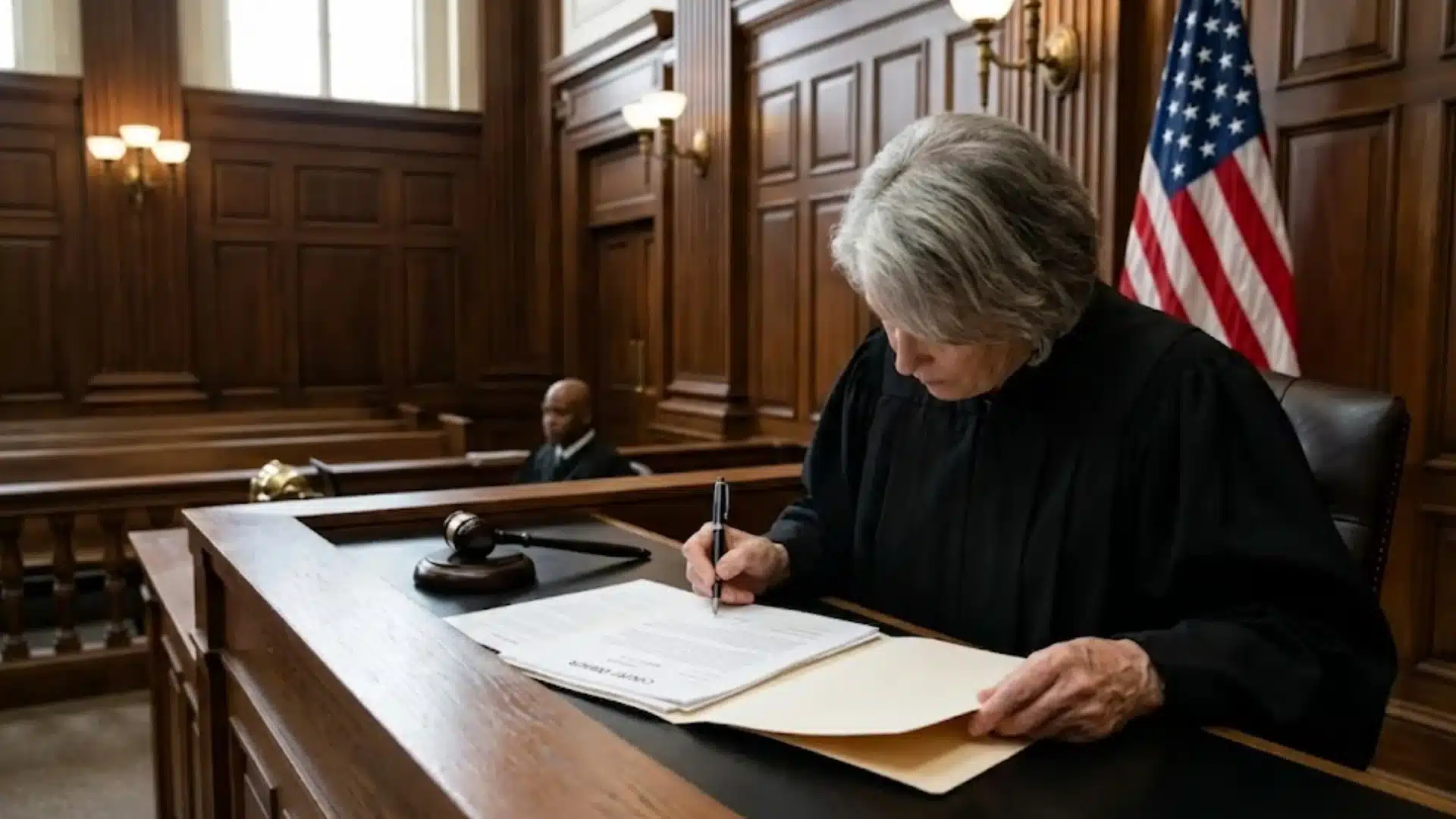
The most common trigger is a missed court date. When a defendant released on bail fails to appear, the judge can issue what is also called a bench warrant during the same hearing.
Because the defendant had already been given notice of the date and chose not to appear, the court treats this as a compliance failure, and the instanter designation signals that law enforcement should act promptly.
Other common triggers include:
- Probation violations: A positive drug test, a failed check-in, or a violation of a no-contact order can prompt a supervising officer to report the breach, and a judge may respond with an instanter warrant the same day.
- Contempt of court: If someone defies a court order during a proceeding, a judge can order them taken into custody before they leave the building. Bailiffs or marshals execute the arrest on the spot.
- Flight risk determination: Prosecutors sometimes request instanter action when they believe a defendant is likely to leave the jurisdiction. Removing the normal delay prevents that window from opening.
If you have a reason to believe a warrant has been issued in your name, the longer you wait to address it, the more likely you are to be arrested during a routine traffic stop or any other police contact.
Can an Instanter Arrest Happen without a Warrant?
Yes. The term also describes warrantless arrests in which a police officer acts immediately on probable cause. Courts and legal records use “instanter” to mean the same thing, whether the source is a judge’s order or an officer’s field decision: the arrest happens now, not later.
Common situations where warrantless instanter arrests occur include:
- Domestic violence calls: Most jurisdictions authorize an immediate arrest when officers respond and find evidence that someone has been harmed or is in immediate danger.
- Crimes witnessed by officers: An officer who witnesses a robbery, assault, or drug transaction can arrest the suspect on the spot without retreating to obtain a warrant.
- Hot pursuit: If a suspect flees a crime scene, officers can continue the pursuit and arrest them without pausing for judicial approval, even if the chase leads onto private property.
- Destruction of evidence: When officers have probable cause to believe a suspect is about to destroy evidence, immediate arrest prevents that loss.
The Fourth Amendment generally requires a warrant before an arrest, but it allows exceptions where the circumstances demand immediate action. The standard for these warrantless arrests is probable cause, which means a reasonable belief, based on specific facts at the time, that a crime was committed. A hunch alone is not enough.
Instanter Arrest vs Regular Arrest
This table shows how a regular arrest and an instanter-related arrest differ mainly in timing, court urgency, and the reason behind the action.
| Point | Regular Arrest | Instanter-Related Arrest |
|---|---|---|
| Main idea | An arrest can occur after a police investigation, a warrant, or direct police action. | An instanter-related arrest usually means the court wants action taken right away. |
| Timing | It may happen after some delay, depending on the case, warrant, or investigation. | It is treated as immediate or without delay once the order applies. |
| Court language | The record may simply say there is a warrant, charge, or arrest. | The record may use the word “instanter” to show urgency. |
| Common reason | It may be tied to a new charge, evidence, probable cause, or an active warrant. | It may be tied to a court order, a failure to appear, a bond issue, a probation issue, or a contempt matter. |
| What it means for the person | The person may be arrested and taken through the normal booking process. | The person may be picked up quickly and brought before the court or held until the court reviews the matter. |
| Important note | A regular arrest does not always mean the person is guilty. | An instanter-related arrest also does not mean guilt. It usually indicates swift court action. |
Instanter Warrant and Arrest Warrants: What is the Link?
An instanter warrant is closely tied to a regular arrest warrant, but the wording adds urgency. The term may appear on the warrant itself, in a court order, or in a docket note linked to the case.
A warrant gives police legal authority to arrest the named person. It tells officers that the court has approved the arrest based on the case record.
When the word “instanter” appears, it usually means the arrest or court action should happen right away, not after a long delay.
This can matter in cases involving failure to appear, bond problems, probation issues, or contempt. Still, local court rules can change how an instanter arrest works in real life.
Some courts may treat it as an immediate pickup, while others may follow set steps before custody or a hearing.
Is an Instanter Arrest the Same as a Custodial Arrest?
An instanter arrest is not always the same as a custodial arrest, even though the two can connect.
A custodial arrest means the person is taken into police custody. That usually means they are not free to leave and may be booked, held, or brought before a judge.
Here is the simple difference:
- Instanter: This points to timing. It means action should happen right away.
- Custodial arrest: This points to custody. It means the person is physically taken in.
- Connection: An instanter order can lead to custody if the court wants the person brought in quickly.
For example, if someone misses court, a judge may issue an instanter order. Police may then arrest that person and take them to jail. In that case, the instanter order led to a custodial arrest.
Does Instanter Mean No Bail?
No, instanter does not always mean no bail. It usually indicates prompt action, not an automatic denial of release. Bail depends on what the warrant says, what charge is involved, the judge’s decision, the person’s record, and the local court rules.
A few things can affect release:
- Warrant terms: Some warrants list a bond amount, while others require a court appearance first.
- Type of charge: More serious charges may lead to tighter release conditions.
- Case history: Missed court dates or past violations can make release harder.
- Local rules: Each court may handle instanter orders in a different way.
Some bench warrant situations can make release harder, especially when the person has missed court before. Still, the word instanter alone does not decide bail. The full court record matters more.
What to Do if You Have an Outstanding Instanter Warrant?

An instanter warrant does not expire; it remains active until the court recalls it or law enforcement executes it through an arrest.
Any police contact, even a routine traffic stop, can reveal the warrant and lead to immediate arrest.
Addressing the warrant voluntarily usually leads to better outcomes than waiting to be picked up.
An attorney may be able to ask the court to recall the warrant and arrange a scheduled appearance, especially if the missed court date was due to illness, lack of notice, incarceration elsewhere, or another valid reason.
Judges have discretion, but repeated missed appearances make relief harder to obtain.
Acting quickly can also help reduce the risk of separate bail-jumping or failure-to-appear consequences.
When an Instanter Warrant Requires Immediate Legal Help?
Some instanter situations genuinely can’t wait for a scheduled consultation.
If you learn that an instanter warrant has been issued for your arrest today, there are specific circumstances where contacting a criminal defense attorney within hours rather than days matters:
- The warrant carries a no-bond designation
- The underlying charge is a felony
- You believe you may be arrested at home, at work, or during a planned trip
- You were not given proper notice of the court date that triggered the warrant
An attorney who contacts the court before you are taken into custody has more leverage to negotiate surrender terms and bail conditions than one who gets involved after booking.
Conclusion
Seeing “instanter” in a court document should not be ignored.
The word may look like legal jargon, but it usually means the court expects immediate action and may authorize law enforcement to take someone into custody without delay.
Whether the issue involves a missed court date, a probation violation, a contempt order, or another pending matter, the safest course is to understand the warrant and respond before the situation escalates.
Acting early can help protect your rights, reduce confusion, and avoid unnecessary surprises.
Have questions about what an instanter arrest means or how these warrants work? Leave a comment below and join the discussion.
Frequently Asked Questions
Can an Instanter Warrant Be Recalled or Dismissed?
A judge can recall an instanter warrant. Usually, an attorney files a motion explaining why the person missed court or why the warrant was issued. If the reason is credible and there is no pattern of missed appearances, the judge may cancel the warrant and set a new court date.
Does an Instanter Warrant Always Mean No Bail?
Bail depends on the warrant and the judge. Some instanter warrants are no-bond, while others allow bail at the first appearance.
Can Instanter Appear on Charges Other than Missed Court Dates?
Yes. Instanter means immediate action. It can appear in criminal, family, or civil court orders whenever a judge wants something done without delay.
How Long Does an Instanter Warrant Stay Active?
An instanter warrant does not expire automatically. It stays active until a judge recalls it or law enforcement executes it, even years later.





