
ABOUT THE AUTHOR




Many people look at their green card and feel confused about which number to use, especially since there are several numbers printed on it and all of them seem important at first glance. This confusion usually shows up when filling out forms, applying for jobs, or handling official paperwork, where even a small mistake can cause delays. Knowing where to find the card number on a green card can save time and help avoid errors that are easy to make under pressure. This blog keeps things simple and clear. It explains what the number is, where it appears on the card, how it differs from other numbers, and when it is actually required in real situations. By the end, the details around this small but important number will feel easy to understand. What is the Card Number on a Green Card The card number on a green card is a unique 13-character mix of letters and numbers printed on every Permanent Resident Card issued by USCIS. It is linked to the physical card, not the person using it. If the card gets renewed or replaced, this number changes with it. This number is often called the receipt number or USCIS number in casual use, but those terms can mean different things in official records. It is easy to mix it up with the A-number, which stays the same for life. The card number does not work that way since it is tied to one specific card version. It usually starts with three letters followed by ten digits. This pattern helps USCIS track that exact document in their system. On the card, it may appear as USCIS# or Card#. Some forms may also call it the document number or I-551 receipt number, but they all point to the same detail. For […]
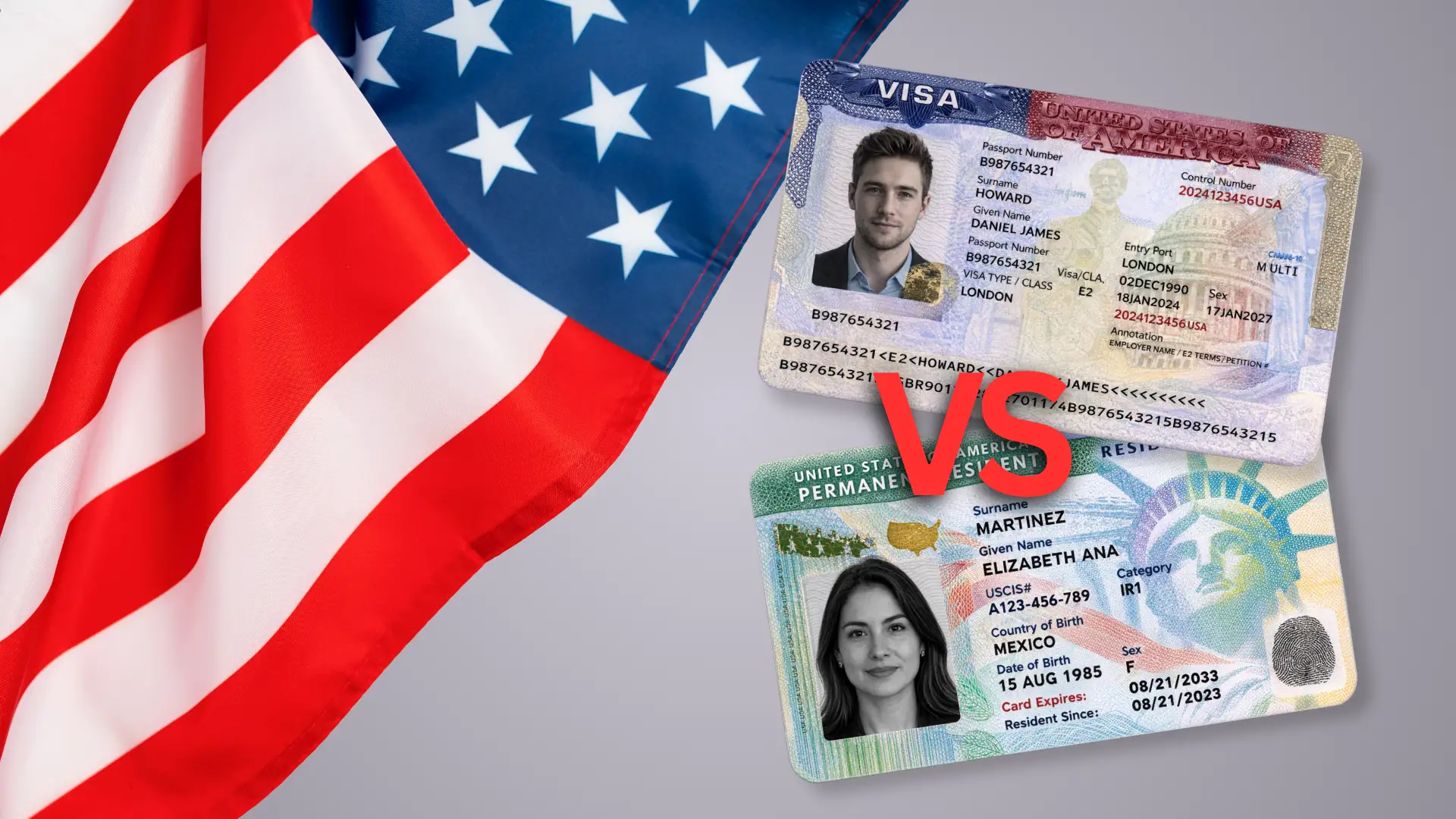
Choosing between temporarily staying in the United States and building a life there permanently ranks among the most important decisions many immigrants face today. A green card vs visa comparison often leaves people unsure which option fits their goals, family plans, and long-term future. One grants lawful permanent residency with nearly all the rights of a U.S. citizen, while the other offers only time-limited entry for a specific purpose. In this guide, you will find a clear, side-by-side breakdown of green card vs visa rules, eligibility requirements, benefits, application steps, and real-world implications. If you already have a visa or are just beginning the process, these details will help you determine which status best fits your situation. What is a Green Card? A green card, officially known as the Permanent Resident Card (Form I-551), is issued by U.S. Citizenship and Immigration Services(USCIS). It serves as legal proof of lawful permanent resident (LPR) status and grants the holder the right to live and work in the United States indefinitely, without being tied to a specific employer, purpose, or fixed end date. Having spent over years helping applicants and families through this process, I have seen firsthand how much changes once someone moves from temporary visa status to permanent residency. Beyond the legal upgrade, clients consistently describe it as a shift in long-term stability, the ability to plan years ahead rather than thinking in visa renewal cycles. The core purpose of a green card is to provide a stable legal foundation for immigrants who intend to make the United States their permanent home. As a lawful permanent resident, you can accept employment anywhere in the country, build long-term financial stability, and eventually apply for U.S. citizenship after meeting residency requirements. It is also worth noting what a green card does not grant. […]