
ABOUT THE AUTHOR




No two law firms hire the same way, and that’s exactly why the degree question trips people up. Here’s the gap most articles skip: job postings say degree preferred, not degree required. Those are two very different things. Preferred means it helps your application stand out. Required means you cannot even apply without one. Understanding that difference changes how you approach the job hunt. This blog breaks down what actually gets you hired, state by state, with or without a degree. Do You Need a Degree to Be a Paralegal? No, you don’t need a degree to be a paralegal. Only California requires legal education or certification by law. Every other state lets you use the title paralegal without one. But here’s the catch: the law isn’t the real gatekeeper; employers are. They want proof you can do the job, whether that’s a degree, a certificate, or solid hands-on experience. So the real question isn’t “does the law require a degree?” It’s “what will convince a law firm to hire you instead?” That’s what we’ll break down next. What a Paralegal Actually Does Day to Day? Paralegals do a lot of the behind-the-scenes work that keeps a legal case moving. That includes legal research, drafting documents, organizing case files, prepping materials for trial, and handling client intake. But there are hard limits. Paralegals cannot give legal advice, represent clients in court, or set legal fees. Only licensed attorneys can do those things. This matters for the degree question. The job focuses on support tasks, not tasks that require a law degree. That’s part of why formal education isn’t legally required to do it. California Paralegal Requirements and Exceptions California is the one state with real legal requirements. Under Business & Professions Code §6450, you qualify in one of three ways. […]

You need to get to work, drop your kids at school, or handle an emergency. But you’re not sure if driving is even legal for you right now. It’s a stressful spot to be in, and the online confusion doesn’t help. Whether you can get behind the wheel legally often comes down to something simple: your zip code. Some states have opened this door wide. Others haven’t budged at all. Knowing which side your state falls on changes everything about your next step. Can Undocumented Immigrants Get a Driver’s License? Right now, 19 states plus Washington, D.C. let undocumented immigrants (sometimes still called illegal immigrants, though that term is fading from legal use) apply for a driver’s license, according to the National Conference of State Legislatures. These programs usually ask for proof of identity and proof that you live in the state. You don’t need a Social Security number. In the other states, the answer is no. Undocumented immigrants cannot get a license there, no matter how long they have lived in the area. Before applying, review your state’s rules first, as they can vary significantly. What Does Federal Law Say? Federal law comes from the REAL ID Act. This law says a standard driver’s license must prove the holder is a legal resident. That rule applies to any license used for things like boarding a plane or entering a federal building. So how do states work around this? They issue a second, different kind of card. This card looks different from a REAL ID license. It isn’t REAL ID compliant, and you can’t use it for federal purposes like flying or entering secure buildings. But within that state, it still works. It lets someone drive legally, get insurance, and pass a traffic stop. Which States Allow It? Several states […]

You fill out one form, expecting one fee, and then the costs start stacking up. Filing fee. Publication notice. Certified copies. New ID. Suddenly a simple name change doesn’t feel simple at all. So how much does it cost to legally change your name? A marriage-based change in Texas looks nothing like a standalone petition in California. This blog breaks down every cost involved, so nothing catches you off guard. What’s the Average Cost to Legally Change Your Name? Most people spend between $100 and $500 total to legally change their name, depending on the state and county where they file. The court filing fee is usually the single biggest expense, often ranging from $150 to $450 on its own. On top of that, you may pay for certified copies, publication notices, or a background check. Even within the same state, costs can vary by county, since local courts set their own fee schedules. Always check with your specific county clerk for exact, current pricing. What Does the Court Filing Fee Cover? The court filing fee pays for the court to process your petition. This includes reviewing your paperwork, entering it into the court system, and scheduling your hearing date. The fee covers the court’s administrative work, not any outside services you might need later. This fee is non-refundable, even if the court denies your petition. Most courts charge the same fee whether you’re changing your first name or your last name. Other Court Costs That Can Add Up Beyond the filing fee, a few extra costs often show up along the way. Background check/fingerprints: Required in many states to confirm you have no fraudulent intent, usually $20 to $100 Publication notice: Some states require you to publish your name change in a local newspaper, often $50 to $200 Certified […]

You open your front door, and a stranger hands you an envelope with your name on it. Inside is a document full of legal words, a case number, and a date that seems to be counting down. Your stomach drops. You have just been served with a court summons, and you have no idea what it means, who sent it, or how much time you actually have to respond. That confusion is normal, and it is exactly why understanding your summons quickly matters. This blog breaks down what it is, how it works, and what to do right now. What Is a Summons? A summons is a legal notice that tells someone they are being sued. It comes from the court, but the person suing (the plaintiff) usually has it delivered with the complaint. The complaint explains what the lawsuit is about and what the plaintiff wants. The summons is different because it does not explain the case. Instead, it tells the person being sued (the defendant) to respond by a certain date. Ignoring a summons can lead to a default judgment, meaning the court may rule against you automatically. How Is a Court Summons Delivered? A summons can be delivered in a few different ways, depending on the state and the situation: Personal service: A process server, sheriff, or other authorized person hands the summons directly to the defendant. Substituted service: If the defendant cannot be found, the summons may be given to another adult at their home or workplace, followed by a mailed copy. Service by mail: Some states allow the summons to be mailed, often requiring a signed receipt. Service by publication: If the defendant cannot be located at all, the court may allow the summons to be published in a local newspaper. Who Can Legally Serve […]

Millions of people type is moonshine legal into Google every year, expecting a quick yes or no. It rarely works that way. Federal law says one thing, your state might say another, and a 2026 court ruling just muddied the water even more. Some states let you make small batches at home. Others treat it as a real crime, not just a slap on the wrist. A backyard still that’s perfectly fine in one state could get you in serious trouble a few miles away in another. Before you go anywhere near a still, it’s worth knowing exactly where those lines actually sit. Federal Moonshine Laws You Should Know in 2026 Home distilling, also known as moonshining, has been federally banned since 1868 under 26 U.S.C. § 5178 and § 5601, even for personal use. That changed in April 2026, when the Fifth Circuit struck the ban down in McNutt v. DOJ, but that ruling applies only in Texas, Louisiana, and Mississippi. The court’s reasoning turned on how far the federal taxing power can reach into private, noncommercial conduct inside someone’s own home, not on whether moonshine itself is safe. Days later, the Sixth Circuit went the other way inReam v. Treasury, keeping the ban alive in Kentucky, Michigan, Ohio, and Tennessee. With two courts split, the law now depends on where you live, and the Supreme Court will likely have the final say. As of July 2026, the plaintiff in Ream had already petitioned the Supreme Court for review, so a nationwide answer could arrive sooner than most legal fights of this kind. Why Has Moonshine Historically Been Regulated? Moonshine regulation goes back further than most people realize, and the reasons still shape today’s court battles. Here’s a quick breakdown: Reason Why It Mattered Tax evasion roots Whiskey Rebellion […]

Motorcycle riders in New York often ask: Is lane splitting legal in NY, especially after seeing videos or hearing stories from riders in other states? Traffic laws vary a lot from state to state, and lane splitting is one of the most misunderstood rules on the books. Some riders assume the rules are the same everywhere, while others rely on outdated information or advice from friends. This blog breaks down what New York law actually says, what penalties riders face, and how lane splitting can affect a case after an accident. Is Lane Splitting Legal in New York? No, lane splitting is not legal in New York. State law is clear on this. New York Vehicle and Traffic Law § 1252(c) says motorcycles get full use of a traffic lane. No other vehicle can share that lane with a motorcycle. This means riding between cars or trucks is against the law, even in heavy traffic or during a slow crawl on the highway. Some riders hear that other states allow lane splitting and assume the rules are the same everywhere. They are not; New York treats it as a traffic violation, plain and simple. Lane Splitting vs. Lane Filtering vs. Lane Sharing These terms describe different ways motorcycles move around other vehicles. Knowing the difference helps clarify what New York traffic law permits or restricts. Practice What It Means Legal in New York? Lane splitting Riding between lanes of moving traffic No Lane filtering Moving between stopped or slow vehicles, often toward a light Generally no Lane sharing Two motorcycles riding abreast in one lane Yes, up to two motorcycles What Does New York Vehicle and Traffic Law § 1252 Say The statute is made up of a few simple rules, the same way any other piece of statutory law […]

Searching for it is illegal to collect rainwater; you can usually expect a flat, nationwide ban. The real answer is more complicated. Some states limit how much you can store or require registration above a certain volume, while most of the country has no restrictions at all. Colorado and Utah stand out as the most regulated. Keep reading to see exactly where your state stands, what the limits are, and how to stay within the law. Is Rainwater Collection Illegal in Any State? No state makes rainwater collection illegal. Every U.S. state allows homeowners to collect rain in barrels or tanks. A few states, like Colorado, once had strict rules but have since loosened them. Some states still limit how much water you can store or how you can use it. Utah, for example, allows collection but caps tank size for certain uses. So the real issue is not a ban. It is knowing your state’s limits on tank size, water use, and permits before you start. What the Law Says About Who Owns Rainwater? Water law comes down to who has the right to use it first: riparian rights vs. the prior appropriation doctrine. In riparian states, mostly in the East, if you own land next to water, you have a right to use it. Rain that falls on your property is usually yours to collect. In the West, many states follow prior appropriation. The first person or farm to claim a water right keeps priority over that water, even over the person whose own roof the rain fell on. So in some western states, rain technically belongs to the water system, not just to whoever catches it. That is why a few states limit how much you can collect. Colorado is the clearest example. In Colorado, catching rain […]
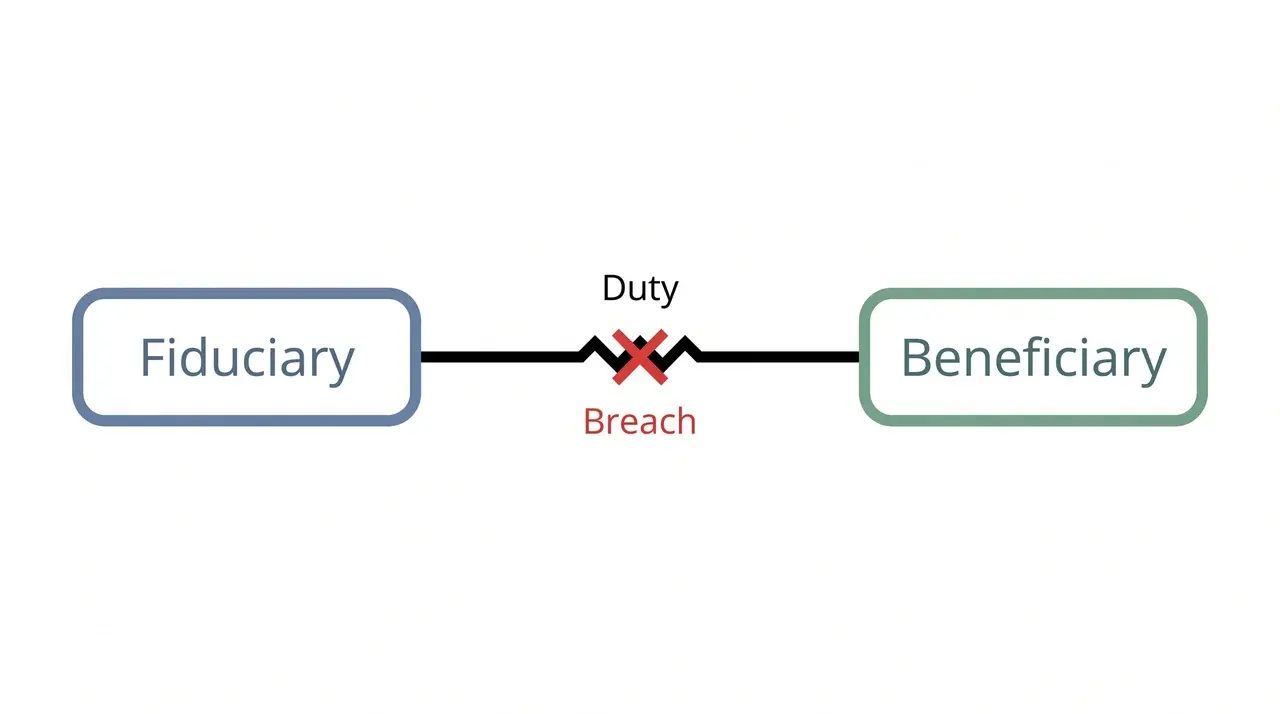
A trustee moves money without telling anyone. A director votes on a deal that quietly benefits their own company. Both can end the same way: a breach of fiduciary duty claim but not every bad decision qualifies, and not every claim holds up once it reaches a courtroom. Proving one takes more than showing someone acted badly. It takes specific elements, in a specific order, each one resting on the last. Today, I’ll tell you what actually has to be true for a claim to work. You’ll see what courts genuinely let fiduciaries get away with, and what happens once a breach is proven. What Constitutes a Breach of Fiduciary Duty A breach of fiduciary duty happens when someone in a position of trust fails to act in your best interest. This can be a trustee, a corporate director, or a financial advisor. The failure can come from something they did, or something they didn’t do. Lawyers call these two paths affirmative and omission. An affirmative breach is a direct action, like moving trust funds into a personal account. An omission is a failure to act, like a director sitting on information the board needed to make a sound decision. Here’s the part people miss: Feeling like someone let you down isn’t enough on its own. The relationship has to count as fiduciary in the eyes of the law first. If that relationship isn’t there, there’s no duty to breach. It doesn’t matter how unfair the situation felt to you. Elements of Breach of Fiduciary Duty Winning a breach of fiduciary duty claim takes more than showing something went wrong. You need to prove four separate elements, and all four have to hold up together. Miss one, and the whole claim falls apart. Here’s what each element actually requires: 1. […]

Some legal phrases sound simple until you stop and ask what they really mean. What is the supreme law of the land, and why does it matter when federal and state laws clash? The answer starts with the U.S. Constitution and Article VI, which explains how federal law fits into the nation’s legal system. I’ll explain the meaning in simple terms, along with the Supremacy Clause, its history, and how it affects conflicts between laws. Once you understand how these rules fit together, the phrase becomes much easier to understand and remember. What is the Supreme Law of the Land? The short answer most civics classes give is simple: the U.S. Constitution is the supreme law of the land. That phrase comes straight from the document itself. Article VI, Clause 2, known as the Supremacy Clause, states that “This Constitution, and the Laws of the United States which shall be made in Pursuance thereof; and all Treaties made, or which shall be made, under the Authority of the United States, shall be the supreme Law of the Land.” In plain terms, this means the Constitution, federal laws passed under it, and treaties the U.S. signs all outrank state laws when the two clash, a distinction closely tied to unalienable rights and enforceable law. The full text of Article VI lays out this hierarchy, and the Senate’s Constitution overview walks through how it fits with the rest of the document. What is the Supremacy Clause? The Supremacy Clause sets up a simple rule: when federal law and state law disagree, federal law wins. Say a state passes a law that goes against a valid federal statute or the Constitution. Courts must follow the federal rule, and state judges must do it, no matter what their state constitution says. But this doesn’t […]

Buying a property can feel exciting until a few legal words on the deed make you wonder what you are actually agreeing to. A special warranty deed is one of those terms that sounds more protective than it may be. The real question is not simply whether the seller offers a warranty. It is what period of ownership that promise covers and which title problems could still follow the property after closing. I will walk you through how that protection works, how it differs from a general warranty deed or quitclaim deed, and what you should watch for before putting your name on the paperwork. What Is a Special Warranty Deed and Why Is It Used? A special warranty deed transfers property from a seller (the grantor) to a buyer (the grantee) while limiting the seller’s promises. It generally covers title problems created during the seller’s ownership, such as unpaid liens, judgments, or disputes tied to their actions. Problems that existed before they owned the property may fall outside that protection. Sellers often use this deed when they can stand behind their own ownership period but cannot confidently guarantee the property’s earlier history. It is common in foreclosure home sales, trust transfers, estate sales, and commercial real estate transactions. For buyers, the important point is that older title risks do not disappear. The deed only limits the seller’s responsibility. Since rules and wording vary by state, buyers should review the deed language, title search, local requirements, and title insurance coverage before signing. What Does a Special Warranty Deed Cover? A special warranty deed usually covers title problems tied to the seller’s own period of ownership. That time limit matters because the seller is only standing behind the part of the property’s history connected to them; if a claim started before […]

A child in juvenile detention can’t simply leave when something feels unsafe. They depend on facility staff for protection, supervision, and access to help. Parents expect their children to be treated fairly and kept safe while in custody. Yet abuse can happen behind locked doors, sometimes involving the very people responsible for their care. When that happens, families may have questions that go beyond the person who caused the harm. Were there earlier complaints? Did supervisors know something was wrong? Could better supervision have prevented what happened? In some circumstances, victims and their families may have grounds to take legal action against the detention center or those responsible for running it. When Abuse Can Lead to a Lawsuit Against the Facility A juvenile detention center may face a civil lawsuit when abuse occurs, and there are legal grounds to hold the facility or its operators responsible. This could involve employee misconduct, inadequate supervision, or failure to protect children from known dangers. Still, an incident of abuse doesn’t automatically establish the facility’s legal liability. Consider a detention center that receives several complaints about an employee’s inappropriate behavior. The complaints aren’t investigated, and the employee continues working with children. If another child is later harmed, the facility’s handling of those earlier warnings could become an important issue in a civil case. Who operates the center also matters. Privately run facilities and government institutions may be subject to different rules, particularly regarding lawsuits and legal protections. Claims against public agencies can involve governmental immunity, special filing requirements, and other restrictions. These differences affect who can be sued and what a victim must prove. The conduct or failures of those responsible must provide a valid legal basis for a claim. What Detention Centers Must Do to Protect Children Juvenile detention centers must take reasonable […]
A nursing home resident falls while trying to reach the bathroom alone. Another develops a sore on their heel that goes unnoticed until it becomes infected. For their families, the immediate concern is getting them the care they need. But once the crisis has passed, a difficult question often comes up: could someone have prevented this? Age and illness bring genuine health risks, even in well-run facilities. A fall or infection doesn’t necessarily mean anyone was careless. Still, some injuries happen or worsen because staff miss warning signs, fail to follow care plans, or delay treatment. The difference matters when families are trying to understand whether their loved one received appropriate care. An Injury Doesn’t Always Mean Neglect Older nursing home residents may have fragile bones, limited mobility, or medical conditions that make them more vulnerable to injury. Someone with osteoporosis might suffer a fracture from a fall, while a resident with a weakened immune system could develop an infection despite receiving treatment. Even careful nursing homes can’t prevent every complication. They can take reasonable precautions based on each resident’s needs. That means assessing risks, developing appropriate care plans, and making sure staff understand what assistance is required. Consider a resident whose care plan requires help moving from bed to wheelchair. If staff repeatedly leave them to manage alone and they’re injured, that could raise concerns about neglect. The circumstances would be different if the injury occurred despite staff providing the required assistance. The distinction comes down to the care that was needed, what the facility actually provided, and whether a failure contributed to the injury. When Nursing Home Care Falls Short Many nursing home residents depend on staff for tasks most people take for granted. Getting out of bed, bathing, eating, and moving from a bed to a wheelchair […]
When a marriage ends, the money side of things rarely ends with it. Shared debt can outlast the relationship by years, partly because the people who agree to divide it and the people who collect it are not the same. A judge can decide who should pay, but lenders follow the contracts that were signed when each account was opened. Knowing how those two systems work, and where they clash, is the best way to protect yourself. The process is easier to handle when you look at it in stages: before you file, while the case is open, when the court divides the debt and after the decree is signed. The Core Problem: Two Sets of Rules Every debt in a divorce is governed by two separate agreements. One is the settlement or court order between you and your spouse. The other is the original contract between the borrowers and the lender. Most of the trouble people run into comes from treating these as one thing. What the Court Can Do A family court can assign each debt to one spouse or split it between you. It can order your ex to pay a certain card or take over a car loan. If they don’t follow through, you can go back to court and ask a judge to enforce the order. What the Court Can’t Do The court can’t rewrite your contract with a lender. If both of your names are on an account, the lender can still collect the full balance from either of you, whatever the decree says. Missed payments will show up on both credit reports. This is why a fair settlement on paper can still leave you exposed in real life, and why the steps you take before and during the case matter so much. Before […]