
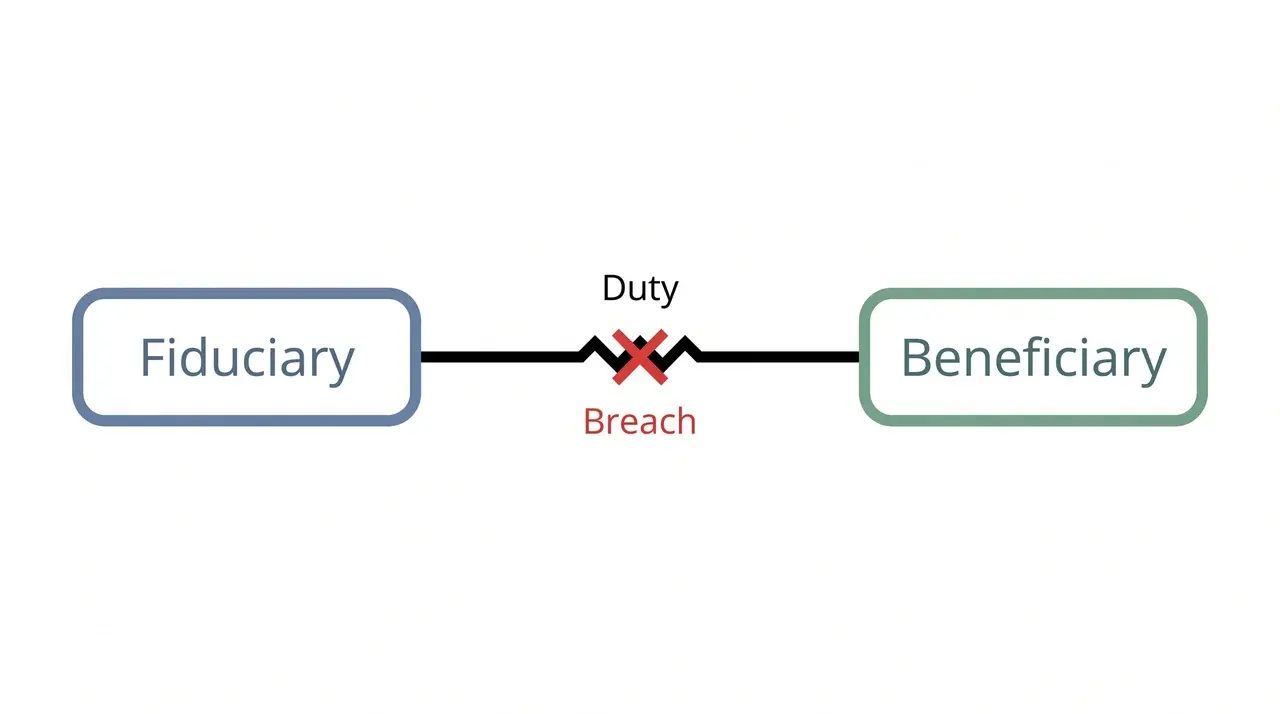
A trustee moves money without telling anyone. A director votes on a deal that quietly benefits their own company.
Both can end the same way: a breach of fiduciary duty claim but not every bad decision qualifies, and not every claim holds up once it reaches a courtroom.
Proving one takes more than showing someone acted badly. It takes specific elements, in a specific order, each one resting on the last.
Today, I’ll tell you what actually has to be true for a claim to work. You’ll see what courts genuinely let fiduciaries get away with, and what happens once a breach is proven.
What Constitutes a Breach of Fiduciary Duty
A breach of fiduciary duty happens when someone in a position of trust fails to act in your best interest.
This can be a trustee, a corporate director, or a financial advisor. The failure can come from something they did, or something they didn’t do.
Lawyers call these two paths affirmative and omission.
- An affirmative breach is a direct action, like moving trust funds into a personal account.
- An omission is a failure to act, like a director sitting on information the board needed to make a sound decision.
Here’s the part people miss: Feeling like someone let you down isn’t enough on its own. The relationship has to count as fiduciary in the eyes of the law first.
If that relationship isn’t there, there’s no duty to breach. It doesn’t matter how unfair the situation felt to you.
Elements of Breach of Fiduciary Duty

Winning a breach of fiduciary duty claim takes more than showing something went wrong. You need to prove four separate elements, and all four have to hold up together.
Miss one, and the whole claim falls apart. Here’s what each element actually requires:
1. The Duty
Before anything else, a fiduciary relationship has to exist. This means one party was legally placed in a position of trust and confidence over the other, like a trustee managing assets or an advisor handling investments on your behalf.
2. The Breach
Once duty is established, you need to show it was violated. This usually means the fiduciary failed their duty of loyalty by putting their own interests first, or failed their duty of care by handling your affairs carelessly.
3. Causation
This is where most claims quietly fall apart. Proving a fiduciary acted badly isn’t the same as proving that conduct caused your loss.
You need a direct line between what they did and the harm you suffered. If a trustee made a questionable investment but the market crash would have caused the same loss anyway, causation gets murky fast.
Courts want a clear, provable connection. Not a coincidence. Not a suspicion.
4. Damages
A breach without measurable harm won’t win in court, even when the duty and the breach are obvious. You need to show actual financial loss, or that the fiduciary gained something they shouldn’t have.
These are two different paths, and you only need one. Maybe your account lost value because of bad decisions. Or maybe the fiduciary walked away with profits that should have been yours.
Either way, the number matters. Courts need something concrete to award, not just proof that someone acted badly.
What Counts as a Breach in Practice

Breach of fiduciary duty shows up in a handful of recognizable patterns. Knowing them helps you see whether your situation actually fits.
Courts don’t treat every pattern the same way. Some get far more scrutiny than others.
Self-Dealing
This is the one courts come down on hardest. Self-dealing happens when a fiduciary uses their position for personal financial gain at your expense.
Think of a trustee selling trust property to their own company below market value. Or a director steering a contract to a business they secretly own.
Courts treat self-dealing differently because the fiduciary isn’t just careless here. They’re actively profiting from the exact relationship built to protect you. That’s why judges apply stricter scrutiny and are far less forgiving of it than other breach types.
Conflicts of Interest
A conflict of interest arises when a fiduciary’s loyalties split between you and someone else. This could be a third party, another client, or even a family member.
The fiduciary doesn’t have to profit directly for this to count. Divided loyalty on its own can be enough.
Mismanagement of Assets
This covers reckless or careless handling of funds, like failing to diversify investments or ignoring basic financial safeguards. It’s a breach of the duty of care rather than loyalty.
Failure to Disclose
A fiduciary has to share information you need to make informed decisions. Deliberately withholding material facts, like a conflict of interest or a risk to your investment, counts as a breach on its own.
What Is Not a Breach of Fiduciary Duty
Not every disappointing decision counts as a breach. Sometimes the fiduciary did nothing wrong at all. Here are the situations that come up most often as a defense:
No Fiduciary Relationship Existed
If no legally recognized fiduciary relationship existed in the first place, there’s no duty to breach. This is often the first thing a defense will argue, and it can end the case before anything else gets examined.
Business Judgment Rule
Corporate directors get real protection here. If a director made a decision in good faith, with due care, and reasonably believed it served the company’s interests, the business judgment rule shields that decision.
This holds even if the outcome turned out badly. Courts don’t want to punish directors for taking reasonable business risks that didn’t pan out. The question isn’t whether the decision worked. It’s whether the process behind it was sound.
Informed Consent
If you knew about the fiduciary’s action and agreed to it, you generally can’t later claim it was a breach. Once you consent with full knowledge of the facts, the fiduciary is protected from that specific claim.
Why It Matters: Remedies for a Proven Breach

Courts don’t apply a one-size-fits-all penalty for breach of fiduciary duty. The remedy depends on how the breach happened and how serious it was.
Compensatory damages cover the actual financial loss you suffered.
Disgorgement forces the fiduciary to give up any profit they gained from the breach, even if you didn’t lose money directly.
For more serious cases, courts can go further.
Punitive damages apply when the breach involved fraud, malice, or extreme negligence, adding a financial penalty on top of the loss itself.
Removal is another option.
This strips the fiduciary of their role entirely, cutting off their control over the assets or organization.
Most cases settle with compensatory damages or disgorgement. The harsher remedies come out for the cases involving real bad faith.
Conclusion
A breach of fiduciary duty isn’t just a feeling that someone let you down. It’s a legal conclusion built on four connected pieces: duty, breach, causation, and damages.
Miss any one of them, and even the strongest case falls apart. That’s why so many claims stall on causation and damages, not on proving someone acted badly.
Courts also protect fiduciaries who acted in good faith, even when the outcome disappointed you. Knowing that difference can save you time and money before you file anything.
If your situation still looks like a breach after reading this, don’t sit on it. Talk to an attorney and find out exactly where you stand.
Frequently Asked Questions
Should I Sue for Breach of Fiduciary Duty or Let It Go?
It depends on your evidence, especially for causation and damages. Even a clear duty and breach won’t win a case without those two elements. Weigh the strength of your proof against the cost of litigation, and talk to an attorney before deciding either way.
What Is the Standard of Proof for Breach of Fiduciary Duty?
Most breach of fiduciary duty cases are civil, not criminal. This means you need to prove your case by a preponderance of the evidence.
Can Fiduciaries Be Held Personally Liable?
Yes. Trustees, directors, and advisors can be held personally responsible for losses caused by their breach. This can include repaying damages or giving up any profits they gained from the misconduct, regardless of whether they acted through a company or on their own.
How Long Do I Have to File a Breach of Fiduciary Duty Claim?
Time limits vary by state and by the type of fiduciary relationship involved. Confirm the deadline for your specific situation with a local attorney, since waiting too long can end your claim before it starts.





