
Getting released from jail may seem as simple as paying the amount a judge sets. I used to think the same until I realized the process involves far more than having enough money.
The biggest challenge is often gaining access to your funds while you’re already in custody. Questions like can you bail yourself out of jail, can I bail myself out, and can you pay your own bail usually come up only after someone is arrested and needs answers quickly.
The answer depends on how bail is set, what payment methods the jail accepts, and whether you can complete the process without outside help.
Understanding the process can help you know what to expect and what options may be available.
Can You Bail Yourself Out of Jail?
Yes, a person who has been arrested can legally pay their own bail. The money does not have to come from a friend, family member, or bail bondsman.
When people ask, “Can I bail myself out?” they may think there is a special process for self-release. There is not.
The same bail rules apply, but the arrested person provides the payment instead of someone else. The confusion usually comes from what happens in most cases.
Friends, relatives, or bondsmen often handle the payment because the person in custody may not have access to cash, cards, or bank accounts.
So, paying your own bail is legally possible. The harder part is arranging the payment while you are still in jail and have limited access to your money or outside help.
Why It’s Harder Than It Sounds

Nothing in the law stops you from paying your own bail. The problem is what happens to your money the moment you’re arrested.
Why You Can’t Just Use the Cash You Have On You
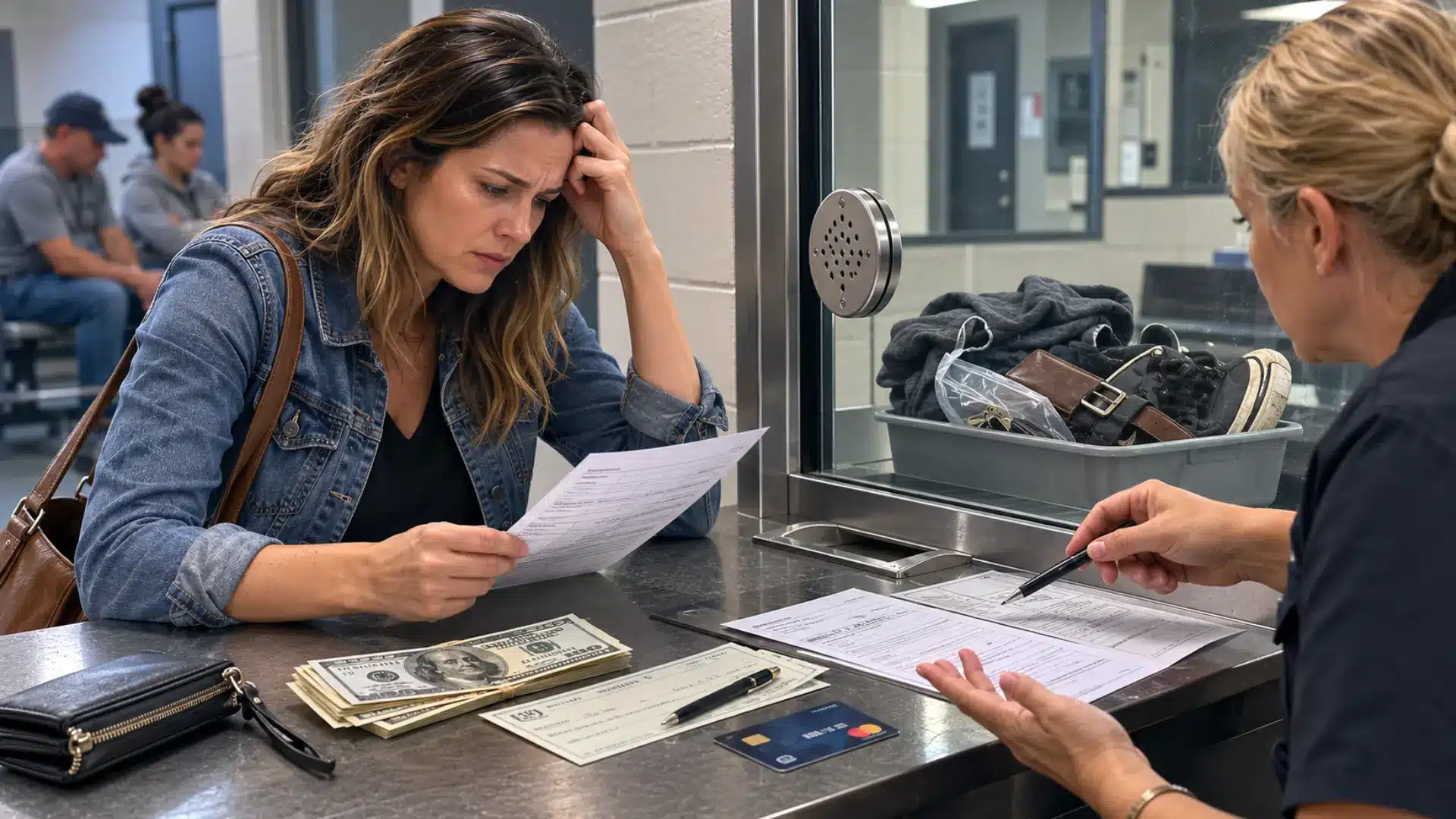
If you had cash in your pocket or in your car when you were arrested, that cash usually becomes part of your booking property. It gets logged, bagged, and stored, not handed back so you can use it.
Sometimes it’s held even longer. If the amount is unusual or connected to the arrest itself, officers can treat it as evidence rather than personal property.
That’s why showing up with a stack of bills doesn’t guarantee a fast release. The money has to move through the system before it can move toward your bail.
Why Your Bank Account Doesn’t Help Either
Having money doesn’t help if you can’t reach it. Jails don’t have ATMs, and you won’t be handed a phone to log into your bank app.
Debit and credit cards are not accepted everywhere. Many jails still require cash, cashier’s checks, or other approved payment methods, while some also allow online or card payments.
Always check the jail’s payment rules before assuming a card will work. This is why the money that gets you out almost always has to come from outside.
Someone else needs to bring the funds to the jail in a form the jail will actually accept.
How the Self-Pay Process Actually Works
Bail isn’t something you pay the moment you’re arrested. It’s set afterward, once a judge or the jail assigns an amount based on the charge.
Here’s how the process actually moves, once bail exists to pay:
- Booking happens first: You’re processed, photographed, and your property, including cash, is logged and held.
- Bail gets set: A judge or a bail schedule assigns a dollar amount based on the charge and your history.
- Payment goes to the court or jail: This step is the direct answer to the question, can you pay your own bail? Yes, by paying the required amount using a payment method accepted by the jail or court.
- The case moves forward: You’re released, and the case continues on the court’s schedule.
- Cash bail may be refunded: If you appear at all required court dates, the money is generally refunded after the case ends, minus any applicable fees. Bail bond fees are generally nonrefundable.
Once you see this order, it’s clear why paying at the moment of arrest was never actually an option.
Can You Be Released Without Paying Bail?
Yes, not every arrest requires you to pay bail before leaving jail. In some cases, a judge may release you on your own recognizance (OR), which means you promise to return for all court dates without paying money upfront.
Some courts may also use an unsecured bond, where you do not pay unless you fail to appear in court.
Others may grant pretrial release with conditions such as regular check-ins or travel limits. The decision depends on factors like the charge, your criminal history, and the risk of missing future court appearances.
When Self-Pay Works and When It Doesn’t
Whether self-payment works depends less on legal permission and more on how quickly acceptable funds can reach the jail.
| Option | How It Works | Main Limitation |
|---|---|---|
| Self-payment | You use your own money to pay the full bail amount directly to the jail. | The funds must be accessible and available in a form of payment the jail accepts. |
| Help from family or friends | Someone outside custody delivers or submits the payment on your behalf. | You need a trusted person who can access the funds and complete the payment. |
| Bail bondsman | A bondsman pays the required bond in exchange for a fee, usually based on the bail amount. | The fee is generally nonrefundable, even after the case ends. |
| Property bond | Property may be offered as collateral instead of cash in some locations. | Rules, approval requirements, and availability vary by court and jurisdiction. |
The best choice is usually the option that can be completed correctly and quickly, not simply the one you are legally allowed to use.
What to Check Before Choosing a Bail Payment Option

Before deciding how to pay bail, confirm the amount, accepted payment methods, and any release conditions attached to the bond.
Jail policies can differ by county, so a method accepted in one location may not work in another. Ask whether the facility accepts cash, cashier’s checks, credit cards, property bonds, or payments through an approved service.
It also helps to find out whether processing fees apply. Ask how long the release usually takes after payment is made, since processing can still take several hours even after bail is posted.
If you cannot access your own funds from custody, contact a trusted person who can arrange payment.
A bondsman may be useful when the full amount is unavailable, but the nonrefundable fee should be considered carefully.
Getting these details first can prevent delays, failed payments, and added stress during the release process.
Conclusion
Walking out of jail is rarely just about having enough money. From what I’ve seen, knowing how the process works before an emergency happens can save time, reduce stress, and help you make better decisions when every minute counts.
Questions like can you bail yourself out of jail, can I bail myself out, and can you pay your own bail are easier to answer once you understand the legal rules and the practical limits that come with being in custody.
Taking a few minutes to learn your options today can make a difficult situation much more manageable if it ever arises.
Have you or someone you know gone through the bail process? Share your experience or questions in the comments. Your insights could help someone else facing the same situation.
Frequently Asked Questions
Is It Better to Stay in Jail or Bail Out?
That depends on personal circumstances rather than a fixed rule. Bailing out lets you keep working, arrange care for dependents, and prepare a defense from outside custody, but it ties up money until the case closes. Staying in custody avoids that cost but carries real personal and job risks. An attorney can help weigh the specifics.
Can I Pay My Bail Before I Turn Myself In?
No. Bail is generally set after booking, either through a preset bail schedule or by a judge, depending on the jurisdiction. Until bail has been set, there is nothing to pay. Once bail is available, it can be posted using an accepted payment method or through a bail bondsman.
What Happens to My Cash if I’m Arrested with It?
Cash on your person is usually logged as property during booking, and larger amounts can be held longer if treated as evidence. That’s why self-pay rarely works with the money you had at the time of arrest. The more reliable route is to have someone bring funds directly to the jail once booking is complete.
Can I Use a Debit or Credit Card to Bail Myself Out?
Many jails still require cash, cashier’s checks, or other approved payment methods, while some also accept debit cards, credit cards, or online payments. Check the jail’s payment rules before relying on a card.